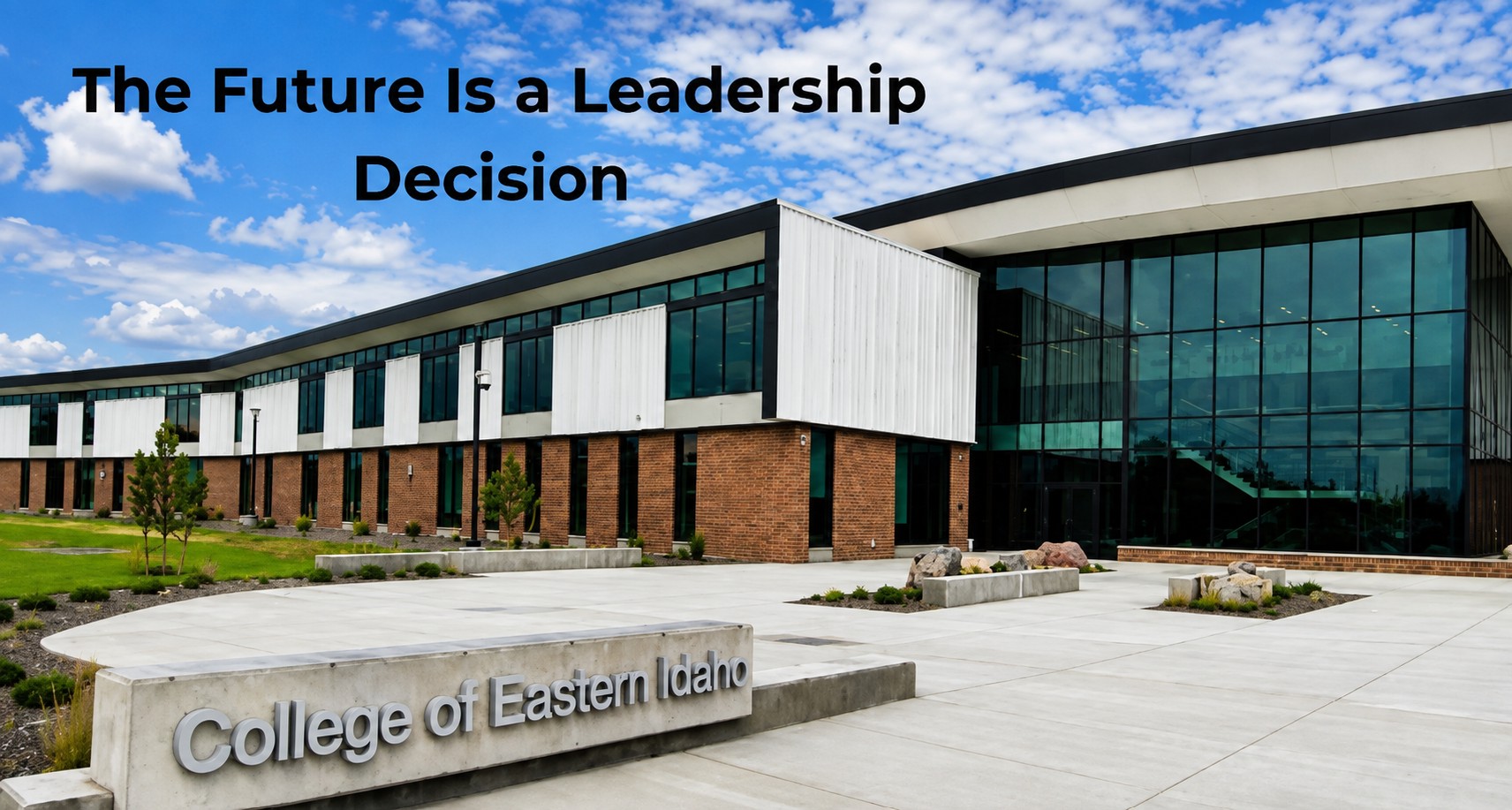
Author: Rick Aman

  • The Future is a Leadership Decision

    The Future is a Leadership Decision

    Why Leaders Must Choose What They Are Trying to Create

    Over the past two weeks, I have written about futuring from two perspectives. The first began with walking into the new Future Tech Building at the College of Eastern Idaho and realizing that I was standing inside something that, years earlier, had existed only as an idea. The second addressed the question that naturally followed: How do you actually create a preferred future? I described a process for understanding the present, considering possible and probable futures, defining a Preferred Future, and then working backward to determine what we should begin doing today.

    There is one more part of futuring that deserves attention, and perhaps it is the most important: the future is a leadership decision. Leaders certainly do not get to decide what the future will be. Markets change, technology advances, political and economic conditions shift, demographics change, and unexpected events intervene. Anyone who has led an organization knows how quickly circumstances nobody anticipated can disrupt a carefully developed plan. But that does not mean leaders are powerless in shaping what comes next. I have come to believe that one of the most important responsibilities of leadership is deciding what future is worth trying to create.

    Every Organization Is Headed Toward a Future

    During my years as a college president, I spent considerable time thinking about the future. Some of that was unavoidable. Higher education is constantly affected by forces outside its control: demographics, technology, workforce needs, and changing expectations from students and employers. The organization you lead today will not be the same one that exists five years from now. The important question is how much of that change will simply happen to the organization and how much will be influenced by choices its leaders make.

    That became especially clear during the development of the College of Eastern Idaho. When the community voted in 2017 to create a community college, we were taking responsibility for an institution that did not yet exist. There was no established CEI culture or predetermined picture of what the college had to become. We had the unusual opportunity and responsibility to ask what Eastern Idaho would need from its community college in the years ahead. That experience reinforced something I now see working with governing boards and executive teams: every organization is headed toward a future whether its leaders deliberately think about that future or not. Today’s decisions are already creating it. The people we hire, the technology we employ, the partnerships we form, and the buildings we construct have consequences beyond the current year. Even decisions we postpone shape what becomes possible later. The future, in that sense, is already under construction.

    Leaders therefore face a choice. We can allow today’s pressures and circumstances to largely determine where the organization eventually arrives, or we can develop a clear picture of where we would prefer to go and begin making decisions that increase the likelihood of getting there. The future will arrive. The leadership decision is whether we intentionally influence what that future becomes.

    Leadership Is Not About Predicting the Future

    One challenge with talking about the future is that conversation can quickly become an exercise in prediction. Leaders should pay attention to the forces shaping their environment. But the primary responsibility of leadership is not to correctly predict what happens next. I certainly could not have predicted everything that would happen during my years at CEI. We experienced leadership and legislative changes, technological developments, new partnerships, unexpected opportunities, and a global pandemic. Any detailed long-range plan developed at the beginning would have been obsolete long before we reached the end. Yet something important can remain relatively stable even as circumstances change: direction.

    This is why I find the distinction between the possible, probable, and Preferred Future useful. The possible future asks what could happen if technologies, circumstances, or assumptions change. The probable future asks where current trends are taking us. They both matter, but neither represents the fundamental leadership decision. That comes with the preferred future. After considering what is likely and what is possible, leaders must ask a different question: Given what could happen, what future do we want to purposefully create?

    That question moves the conversation from forecasting to agency. We cannot eliminate uncertainty or guarantee that the future we prefer will occur, but we can decide what we value, what kind of organization we want to become, what outcomes matter, and what direction is worth pursuing. Leadership does not require certainty about the future. It requires enough clarity about the destination to begin moving toward it.

    Choosing a Preferred Future Is a Leadership Decision

    This is where futuring becomes more than a planning exercise. A Preferred Future is not simply an attractive paragraph developed during a board retreat and inserted into a strategic plan. If it is meaningful, it represents choices, and choices are where leadership becomes consequential.

    Defining a Preferred Future requires leaders to move beyond describing what they hope will happen and decide what they actually intend to pursue. It creates a destination against which priorities, resources, and opportunities can be considered. Without that clarity, organizations can become extraordinarily busy launching initiatives, responding to immediate needs, and pursuing new opportunities without being certain that all of that activity is moving them in the same direction. I have often said that clarity precedes progress, and futuring has reinforced that conviction for me.

    Once leaders become clear about the future they are trying to create, the nature of the conversation changes. What do we want to become known for? Resources are finite, as are leadership attention and organizational capacity. Choosing a Preferred Future means choosing among competing possibilities. Some investments will become more important, while others may need to wait. Some opportunities will move the organization toward its future, while attractive alternatives may not. Longstanding programs or traditions may even need to be reconsidered. This is why creating a Preferred Future requires more than vision. Vision becomes meaningful only when it begins influencing choices.

    Lead from the Future, Not Just the Present

    Today, as I work with governing boards and executive teams, I see how difficult this can be. Leaders live under the gravitational pull of the present. There is always a budget issue, operational problem, new regulation, or unexpected challenge requiring attention. Responsible leaders cannot ignore those realities. But if every leadership conversation begins and ends with today’s problems, the present eventually becomes the architect of the future. A Preferred Future gives leaders another place from which to make decisions. Instead of looking only from today toward tomorrow, we can occasionally stand conceptually in the future we are trying to create and look backward. From that vantage point, today’s choices can look different. A partnership that seems optional may become essential. A technology investment that appears expensive may become foundational. A longstanding program may no longer contribute to where the organization is going. An opportunity that does not fit today’s organization may fit perfectly with the organization we are trying to become.

    During the development of CEI, strategies changed many times. They had to. People, circumstances, opportunities, and the environment changed. But the larger picture of what the college could become and what it could mean for Eastern Idaho provided continuity. Strategy could adapt without abandoning the destination. That may be one of the most important lessons of futuring: direction should provide continuity while strategy provides adaptability. A Preferred Future does not provide a detailed map of the next five years. It provides something more useful: a North Star against which today’s decisions can be considered. Governing strategy can all be evaluated by asking one recurring question: Does this move us toward our Preferred Future? Over time, that question can become a leadership discipline.

    Three weeks ago, I began this series with the experience of standing inside a future we had once only imagined. Last week, I described how leaders can begin creating a Preferred Future by looking beyond the present, defining a destination, working backward, and then acting forward. The final point may be the simplest: someone has to choose to lead toward it.

    The responsibility of leadership is not to predict the future perfectly. It is to see possibilities, remain grounded in purpose, choose a future worth pursuing, and make today’s decisions in light of tomorrow’s destination. So perhaps the question to take into your next board or executive team meeting is this: Are your most important decisions primarily helping you manage the organization you have today, or create the organization you intend to become tomorrow?

    ——

    The future is not something leaders can predict with certainty, but it is something they can intentionally influence. For governing boards, that begins by asking: What organization are we trying to become? Through Aman & Associates, I can facilitate a focused two-hour Zoom session with your board or executive team to help define that Preferred Future and the strategic direction needed to pursue it. The future will arrive; leadership determines how intentionally we meet it.

    Rick Aman, PhD | Aman & Associates

    rick@rickaman.com | rickaman.com

  • Creating the Preferred Future

    Creating the Preferred Future

    How Boards and Executive Teams Turn Futuring into a Leadership Discipline

    “The future is not something we enter. The future is something we create.” Leonard I. Sweet

    Last week I wrote about what it feels like to stand inside a future that once existed only as an idea. The Future Tech Building at the College of Eastern Idaho provided a very tangible example. Years earlier, there was no building. There were ideas, conversations, possibilities, and eventually a shared vision of something that could exist. Last week, we walked through its doors at the ribbon cutting. Several people responded to that story and particularly to the idea of futuring. Their comments led naturally to another question: How do you actually do it?

    I have spent much of my career thinking about that question, first as a college president working with governing boards and executive teams and now as a consultant helping organizations think about their own futures. Over time, I have become convinced that futuring requires a somewhat different way of thinking about strategy. It does not replace strategic planning, but it changes where the planning begins. Traditional planning usually begins with the organization we have today and asks how we can improve it. Futuring begins farther out. It asks what organization we want to become and then works backward to determine what we should begin doing today.

    The Hardest Part Is Getting Out of the Present

    One of the things I have noticed when working with boards and planning teams is how difficult it can be to escape the gravitational pull of the present. Put 10 leaders in a room and ask them to talk about the future, and before long the conversation often returns to the budget, staffing, facilities, competition, technology, or whatever issue dominated the last board meeting. That is understandable. Leaders are responsible for the organization that exists today, and those issues are real. But there is also a danger in allowing today’s realities to establish the boundaries of what we can imagine for tomorrow. We can become so immersed in managing what is that we have difficulty seeing what could be.

    That is why I usually begin futuring by helping leaders understand the present without asking them to plan from it. Tools such as SWOT and PESTEL can be useful. So can examining demographic trends, emerging technologies, disruptions, and what I sometimes describe as colliding technological S-curves; one way of doing things beginning to decline just as something new is accelerating. The purpose of this work is not to predict the future. It is to understand the forces that may shape it.

    Once we have looked carefully at the environment, the conversation can move beyond today’s organization to what I describe as the three futures. The probable future asks: What is likely to happen if we do nothing different? If today’s trends and momentum continue, where are they likely to take us? The possible future asks: What could be? What new opportunities, technologies, disruptions, or changing assumptions might create futures different from the one we currently expect? But neither is the central question of futuring. That comes when we consider the Preferred Future and ask: What do we want the future to be? Of all the futures that could emerge, what future do we want to help create?

    I have watched the nature of a conversation change when a board begins seriously considering that question. Leaders stop merely forecasting what might happen to them and begin discussing what they want to make happen. We cannot control the future, but neither are we simply passengers waiting for it to arrive. Futuring gives leaders a degree of agency by asking them to identify a future worth pursuing.

    Begin at the Destination and Work Backward

    Once a board begins looking beyond the present, the next challenge is to make that Preferred Future clear enough that people can actually see it. I generally ask organizations to look three to five years ahead. Ten years can become speculation, while next year tends to pull us immediately back into operational planning. Three to five years creates useful distance. It is far enough away that meaningful change is possible but close enough that today’s board and leadership team can begin influencing it. This is where questions become particularly powerful.

    If we were standing in our organization three years from now and the future had developed the way we hoped, what would be different? What would our students, customers, patrons, members, or community be experiencing that they do not experience today? What would we have become known for? What would people be saying about us? The goal is not to predict exactly what the organization will look like. We cannot. The goal is to make the destination sufficiently clear that people can begin seeing the same future.

    This is also where I have found three simple words particularly helpful: Why, What, and How. Purpose establishes why the organization exists and why the future matters. The Preferred Future describes what the organization intends to become. Strategy then determines how we begin moving from where we are today toward that destination. The order is important because leaders naturally want to move quickly to the how. We are comfortable with action. We want initiatives, goals, timelines, budgets, assignments, and measures. All of those things eventually matter, but I have learned that an organization can be extraordinarily busy without necessarily making meaningful progress. That is one reason I frequently return to a simple principle: clarity precedes progress. If the destination is unclear, more activity may simply get us somewhere faster without knowing whether it is where we wanted to go.

    Once the Preferred Future becomes sufficiently clear, however, the conversation changes again. We can begin standing conceptually in that future and looking backward toward today. If this is where we intend to be three years from now, what must be true for that future to exist? What capabilities must we develop? What might we need to stop doing? What must we begin doing? What relationships, partnerships, investments, or staffing will become important? From those questions, a relatively small number of strategic initiatives usually begin to emerge. Those initiatives create the bridge between today’s organization and tomorrow’s Preferred Future.

    We still will not know every step along the way, nor should we expect to. Circumstances will change, technology will change, leadership may change, and opportunities will emerge that no planning process could have anticipated. What matters is having enough clarity about the destination that we can recognize the right next step when we see it. In that sense, futuring asks leaders to do something that initially seems backward: begin at the destination, work backward toward the present, and then act forward toward the future.

    When the Preferred Future Becomes a Leadership Discipline

    Perhaps the greatest danger in any planning process occurs after the retreat. Everyone leaves encouraged by the conversation. Someone produces a polished document. It is presented at a board meeting, perhaps placed on the website or stored in a shared drive, and gradually the organization returns to business as usual. A Preferred Future becomes valuable only when it begins influencing decisions.

    The CEI experience I wrote about last week reinforced this for me. The journey from the creation of the college to the opening of Future Tech was never governed by a detailed plan extending nearly a decade into the future. Such a plan would have become obsolete long before the building opened. Presidents changed. Trustees changed. Governors and legislators changed. Technology evolved. New partnerships developed, and opportunities emerged that we could not have anticipated when the college was created. Strategies changed as well, and they should have. Strategy must be able to adapt to circumstances. What provided continuity was a larger picture of what CEI could become and what it could mean for Eastern Idaho. That picture allowed successive boards and leaders to keep asking a relatively simple question: Does this move us toward our Preferred Future? Over time, that question can become a leadership discipline. The Preferred Future becomes more than a destination. It becomes a filter through which important decisions can be considered.

    That is why I increasingly think of futuring as a cycle rather than an event. We understand the present, explore possible futures, define the Preferred Future, work backward, act forward, and then reassess. The environment changes, assumptions change, and new information becomes available, so we periodically look outward again and ask whether our understanding of the future has changed. The Preferred Future provides direction without pretending that leaders can predict the road. I think this distinction is particularly important for governing boards. Management understandably spends much of its time operating in the present. Boards have a different responsibility. Good governance certainly requires stewardship of the organization that exists today, but stewardship also carries responsibility for the organization that will exist tomorrow. Boards therefore need occasions when they deliberately lift their eyes beyond today’s agenda and today’s problems and ask where the organization is going. Futuring does not give them certainty about what will happen. It gives them clarity about the future they are trying to create. That clarity may be increasingly valuable in an environment where technology, demographics, economics, and social expectations can change faster than even a well-developed strategic plan can accommodate. We cannot know precisely what the next three to five years will bring, but we can decide what we value, what kind of organization we want to become, and what future is worth pursuing. Then we can begin making today’s decisions in light of tomorrow’s destination.

    Last week I wrote about the unusual privilege of eventually standing inside a future we had once only imagined. But long before anyone can stand inside a Preferred Future, someone has to see it, leaders have to describe it clearly enough for others to see it too, and an organization has to begin making choices that move toward it. Perhaps, then, the question for your next board or executive team meeting is not simply, “What should we do next?” A better question might be: “Are we spending most of our time managing the organization we have, or are we also creating the organization we intend to become?”

    —–

    Aman & Associates helps boards and executive teams move beyond managing the present to creating their Preferred Future. A focused two-hour Zoom session can introduce your leadership team to strategic futuring and help you begin seeing your organization’s future differently. Sometimes a few hours and the right questions are enough to change the direction of the conversation.

    Rick Aman, PhD | Aman & Associates rick@rickaman.com | rickaman.com


  • In the Beginning Was the Future

    In the Beginning Was the Future

    Futuring Envisions It. Unity Builds It. Perseverance Makes It Real.

    “The rewarding thing about futuring is occasionally getting the privilege of standing inside a future you once could only see in your mind.” — Rick Aman

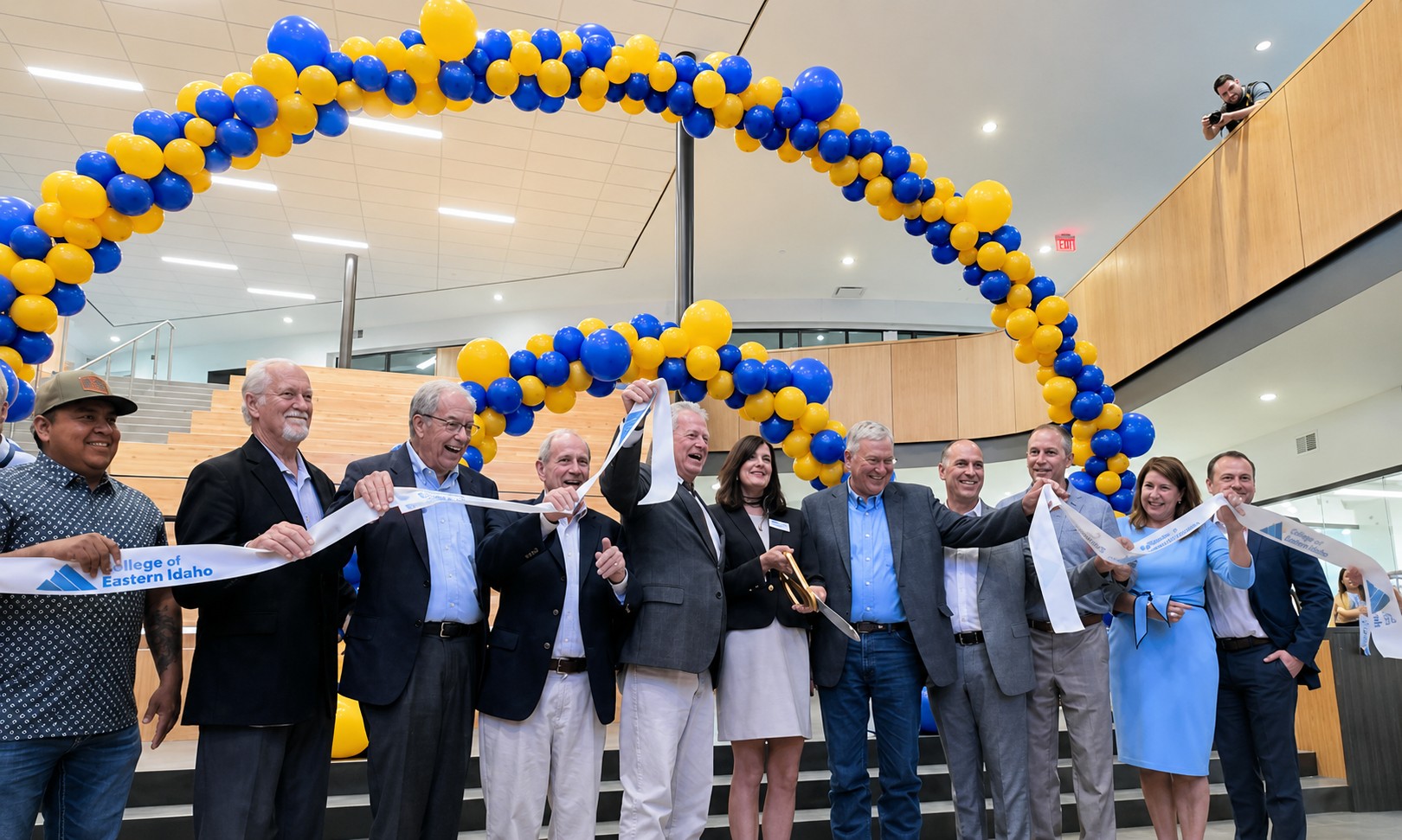
    This week I had the privilege of returning to the College of Eastern Idaho for the ribbon cutting of the Battelle Energy Alliance Future Tech Building in partnership with Frontier Credit Union. For me, the day represented much more than the completion of a building. It was a chance to see the full cycle of futuring; from an idea to a shared vision, through planning and perseverance, and ultimately into something tangible.

    I have spent much of my career thinking about how organizations create a preferred future rather than simply react to whatever future arrives. Future Tech is one of the clearest and most tangible examples I have experienced of the power of futuring.

    1. Seeing Something That Does Not Yet Exist

    Futuring begins with the ability to imagine something that doesn’t exist. A future must first exist in someone’s mind before it can emerge from concrete and steel. That is what distinguishes futuring from traditional strategic planning. Strategic planning often begins with where an organization is today and asks how it can improve or advance from there. Futuring emerges with where the organization wants to be and asks: What future do we want to create? From the beginning, CEI’s trustees and senior leadership, working with community and industry leaders, kept that question at the center of the college’s development. Eastern Idaho already had excellent educational institutions, so the goal was not simply to build another college. We needed to think beyond the present. What educational opportunities would students need in the years ahead? What would employers require from the workforce? How would technology change the nature of work? And what role should a comprehensive community college play in preparing Eastern Idaho for those changes? Those questions gave trustees and leadership a shared picture of what CEI could become and helped shape the preferred future that guided the college’s development. Future Tech eventually emerged as a tangible expression of that vision.

    We cannot control the future, but neither are we simply passengers waiting for it to arrive. Futuring gives us agency. It allows an organization to identify a future worth pursuing and begin making choices today that increase the likelihood of reaching it. The preferred future becomes the destination that gives those choices direction.

    Before there were architectural drawings, funding commitments, construction schedules, or a building, Future Tech was an idea about what CEI could become based on what Eastern Idaho might need. That is where every preferred future begins: someone sees a possibility that does not yet exist and believes it is important enough to pursue.

    2. From an Idea to a Shared Vision

    An idea alone rarely changes an organization. The real power of futuring begins when others can see the future too.

    Two years ago, in August 2024, we broke ground on Future Tech. It was also the month I retired as president of CEI, so the timing has always carried special meaning for me. One chapter was closing while another was literally beginning to rise from the ground

    By the time of the groundbreaking, Future Tech had traveled a considerable distance from its original idea. There were architectural drawings, funding commitments, partners, plans, and a shared understanding of why the building mattered. Yet it was still largely a preferred future, something we could describe and visualize, but not yet walk into. That moment illustrates an essential part of futuring. An idea gains power when it becomes a shared vision. People must be able to see not only what you are proposing, but why the future you are describing matters.

    That is how commitment grows. A governing board sees how the vision advances mission. Faculty and staff see new opportunities for students. Industry sees a stronger skilled workforce. Community leaders see regional opportunity. Donors and funding partners see something worth investing in. Each begins to see a place for themselves in creating the future. At that point, the idea is no longer owned by the people who first imagined it. It becomes our idea, our vision, and ultimately our preferred future.

    That is the power of unity. Unity does not mean everyone agrees on every decision or every detail. In my experience, that is neither realistic nor particularly useful. Unity comes from agreement around purpose and destination. When people share a clear understanding of why the future matters and where they are trying to go, they can work through considerable disagreement about how best to get there. Vision shows us what could be. Unity gives us the collective power to pursue it. 

    3. Building the Preferred Future

    If vision defines the preferred future and unity creates the commitment to pursue it, perseverance is what begins to make it tangible. We tend to photograph milestones. We take pictures at groundbreakings and ribbon cuttings, but rarely capture everything that happens in between. Yet the space between those two photographs is where a preferred future is actually built. 

    This is where futuring moves from concept to discipline. Purpose establishes why the future matters. The preferred future describes what we are trying to become. Strategy begins defining how we will get there. Plans, priorities, partnerships, resources, and decisions turn that framework into action. Vision alone does not build anything. Between an idea and an outcome are funding challenges, difficult decisions, changing circumstances, setbacks, problems to solve, and hundreds of conversations that keep the efforts moving forward. Some days progress is visible. On others, it may seem that very little has changed or the vision is dying. This is where perseverance becomes the tangible expression of vision.

    The difficult task is maintaining clarity and unity long enough for the idea to emerge. This is why I continue to believe that clarity precedes progress. A clear purpose keeps people grounded in why the work matters. A clear preferred future keeps everyone focused on the destination when the path becomes difficult or uncertain. But there is another dimension of perseverance that may be even more important: A strong preferred future must be able to outlast the people who first imagined it.

    Over the life of CEI, the people carrying the vision have changed. The college has experienced two presidents, eight trustees, two governors, multiple legislators and elected officials, industry partners, senior leaders, faculty, and staff. People have entered and left the story, responsibilities have shifted, and circumstances have changed. Yet the larger vision of what CEI could become and what it could mean for Eastern Idaho continued to provide direction.

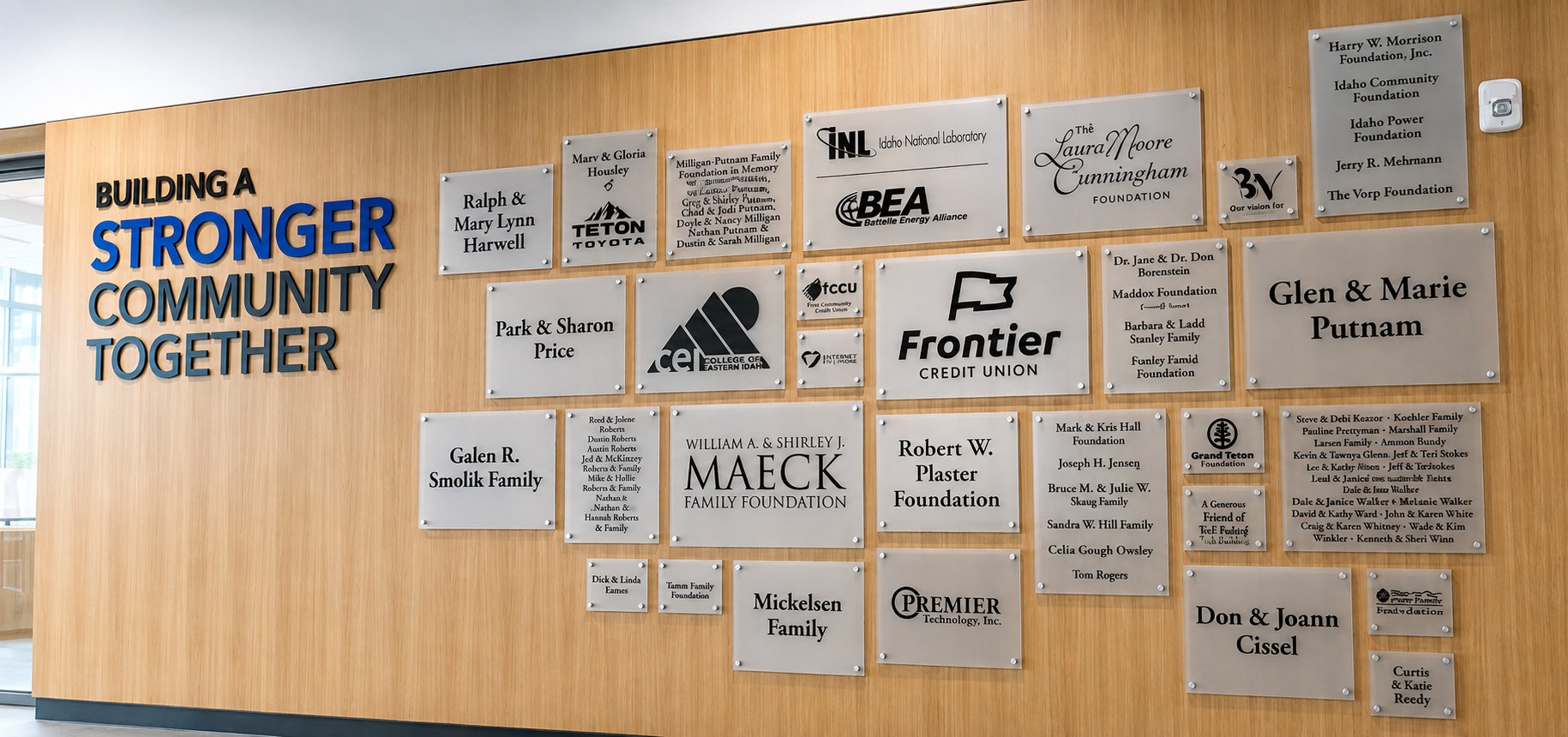
    That is one of the most powerful aspects of futuring. People change. Leadership changes. Strategies change. A compelling preferred future can provide continuity through upheaval. It gives successive leaders and partners a common destination while allowing them to adapt the path as circumstances require. Perhaps the donor wall inside Future Tech captures this better than anything I could write. It is a physical reminder that the building was not created by one leader, one organization, or one group acting alone. Boards, legislators, donors, community leaders, faculty, staff, industry partners, architects, contractors, and many others contributed their part to making it real.  

    That is perseverance at the organizational level: a shared vision strong enough to survive changes in people and circumstances, and clear enough to keep people moving toward the same preferred future.

    4. Standing Inside the Future

    Last week, two years after the groundbreaking, the community celebrated the ribbon cutting of Future Tech. What began as an idea had become something we could walk into; concrete and steel, and tangible evidence of what vision, unity, and perseverance can accomplish. We were standing inside the future we had once only imagined. Walking through Future Tech also reminded me that the building was never the ultimate preferred future. Concrete and steel were not the goal. They created the capacity for something larger. The real future begins now. It will be found in students who walk through those doors and discover possibilities they had not previously imagined. It will be found in graduates prepared for technologies and industries that continue to evolve, employers gaining the skilled workforce they need, and stronger partnerships among education, industry, government, and the community. Ultimately, its value will be measured by the opportunities it creates across Eastern Idaho.

    That is what makes the ribbon cutting particularly meaningful. It represents both an ending and a beginning. One preferred future has become reality, while that reality creates possibilities for futures we have not yet imagined. We arrive at a place that once existed only in our minds, look forward again, and ask: What becomes possible from here?

    5. The Power of Futuring

    The CEI experience illustrates why futuring can be so powerful for governing boards and leadership teams. The journey from the community vote in 2017 to the Future Tech ribbon cutting was never a nine-year strategic plan with every step predetermined. What endured was a clear vision of what CEI could become and what it could mean for Eastern Idaho. The path changed along the way. Technology evolved, leadership changed, new partnerships developed, and opportunities emerged that could not have been anticipated in 2017. Strategies adapted, but the preferred future continued to provide direction. Trustees and leaders could repeatedly ask a simple question: Does this move us toward our preferred future? Programs, partnerships, facilities, funding, and people could then be considered through that larger lens. Future Tech became one tangible result of that process. It was not the product of a nine-year plan; it was the product of a vision clear enough to guide thousands of decisions made by many people over nearly a decade.

    Last week, I had the unusual privilege of seeing where those decisions had led. Two years ago, we stood on a construction site and talked about what Future Tech might become. Last week, we stood inside it. 

    For me, that is the power of futuring. It does not give leaders certainty about what will happen. It gives them clarity about the future they are trying to create. That clarity can unite people, guide decisions, sustain perseverance, and help an organization recognize opportunities that move it toward its preferred future. Strategic plans will change. Strategies should change when circumstances require it. But a compelling preferred future can provide a north star through those changes.

    Every future begins as an idea. The real power comes when people see that future together, unite around it, and persevere long enough to make it real. Perhaps that is the question worth leaving with leaders and governing boards: Are you planning from where your organization is today, or are you creating a clear enough picture of the future that people can begin moving toward it together?

     —–

     Rick Aman, PhD | Aman & Associates

    rick@rickaman.com | rickaman.com

  • The Second Outcome: Writing – Week 3

    The Second Outcome: Writing – Week 3

    When AI Helps Us Write, What Happens to the Writer?

    “Writing is thinking. To write well is to think clearly. That’s why it’s so hard.” — David McCullough

    Artificial intelligence has changed the way we write remarkably quickly. It can draft an email, summarize a report, critique an article, prepare a proposal, or polish a speech in seconds. For boards, CEOs, executive teams, and educators, the productivity implications are significant. The First Outcome is easy to see: better writing, produced faster.

    But writing has never been only about producing words. Writing is also part of how we think. In developing an argument, searching for the right words, reconsidering a paragraph, or trying to explain a complex idea, we are doing more than creating a document. We are developing clarity, reasoning, judgment, and creativity. The writing is one outcome; what happens to the writer is another.

    AI changes that relationship because it can now perform more of the work that once belonged exclusively to us. That does not make AI good or bad for writing. It creates a new question about how much of the work should remain human and how much should be delegated to AI.

    That is the question I want to explore in this third article on the Second Outcome: When AI helps us write, what happens to the writer?

    Writing Has Always Produced Two Outcomes

    Writing produces a product, but at the same time it produces a Second Outcome. Through writing, we develop critical thinking, reasoning, creativity, personal voice, and the ability to organize complex ideas. The document matters. But so does the development of the person who created it.

    As I have thought about writing and the Second Outcome, I have begun to picture our use of AI on a continuum. At one end is all human; at the other is all AI. Between those endpoints are different combinations of human and artificial intelligence: human creation, human-led work with AI assistance, genuine human–AI collaboration, AI-led work with human review, and eventually work produced almost entirely by AI.

    ALL HUMAN ←────────────────────────────→ ALL AI

    The goal is not to find the midpoint of this continuum and declare it the proper balance. Different kinds of work should occur at different places on the continuum. If I have a 50-page report that I need summarized before a meeting, I may intentionally move toward the AI end. There is little developmental value in spending two hours manually summarizing information that AI can accurately organize in two minutes. Those two hours can be used for something requiring judgment, conversation, or leadership.

    But suppose the task is developing an argument about the future direction of an organization, preparing remarks intended to persuade people to think differently, working through a difficult board recommendation, or trying to understand an issue that is not yet resolved. An educator might be asking a student to construct an argument for the first time. In these situations, where we operate on the continuum matters differently because the process itself has value. That creates two very different questions. For the First Outcome, we might ask where on the continuum we can produce the best document. For the Second Outcome, we need to ask where on the continuum we develop the best thinker and writer.

    The AI Paradox

    This is what I think of as the AI paradox. AI can improve the First Outcome, the product, while potentially diminishing the Second, the human skill developed in producing it. The concern is not that AI writes poorly. The more interesting challenge is that AI can write remarkably well when prompted well and thoughtfully vetted. If the writing were obviously bad, we would simply reject it. Instead, AI increasingly gives us something that looks finished. It is organized, grammatically correct, persuasive, and sometimes even sounds like us. That makes it tempting to move directly from prompt to polished product.

    But think for a moment about what may have disappeared between the prompt and the product. Traditionally, much of the intellectual development associated with writing happened in that space. We wrestled with competing ideas, determined what mattered, discovered weaknesses in our arguments, made choices, and occasionally changed our minds. What looked like inefficiency was often where the thinking occurred. The struggle was not necessarily a flaw in the process; sometimes the struggle was the process. This has obvious implications for education. A beautifully written student paper no longer necessarily tells us how much the student learned in producing it. But this is not simply an educational issue. The same applies to executives preparing recommendations, CEOs developing strategy, and board members considering difficult issues. A sophisticated document does not necessarily reveal how much intellectual work occurred in producing it. That matters because organizations are not simply producing documents. They are also developing people. If AI helps us produce increasingly impressive work while the underlying human capacity for reasoning, judgment, creativity, and communication begins to decline, we may not recognize the trade until much later.

    The question, then, is not whether we should use AI to write. We already are, and its capabilities will only become more powerful. The more useful question is how we use it without unnecessarily surrendering the human development that has traditionally occurred through writing.

    Finding the Right Place on the Writing Continuum

    One way to think about that choice is to consider the process we use when writing with AI. The simplest model is to give AI a prompt and accept the resulting product. That may be perfectly appropriate for some routine tasks. But when the quality of our thinking matters as much as the efficiency of the output, a different model may better protect both outcomes:

    Human Insight → AI Dialogue → Human Judgment → Refined Product

    In this model, the human begins with the insight or question. AI helps challenge, organize, critique, and refine the thinking. The human then exercises judgment about what is useful, what is missing, what should be rejected, and ultimately what the final product should say. Used this way, AI becomes a thinking partner rather than a substitute thinker.

    For organizational leaders, this distinction will become increasingly important. We will all be making decisions, formally or informally, about where work should occur on the Human–AI Continuum. We should not assume that everything should move toward AI simply because it can. Some work absolutely should. If AI can remove routine writing, summarize information, improve grammar, organize background material, or reduce hours spent on low-value tasks, we should take advantage of those capabilities.

    Other activities, however, may need to remain intentionally more human because the process itself develops capabilities we value. A student learning to reason, an emerging leader learning to articulate a position, an executive wrestling with strategy, or a governing board considering the future of an organization may gain something important from the uniquely human intellectual work involved. Efficiency is still valuable, but it is not the only outcome that matters.

    Leaders therefore need to ask more than whether AI improved the document. We should also ask whether the process improved the thinker. That question has long-term implications for an organization. If AI continuously improves our immediate outputs while gradually weakening human critical thinking, we may achieve extraordinary productivity today while diminishing capabilities we will need tomorrow. On the other hand, if we learn to use AI in ways that challenge our thinking, expand our perspective, and improve our judgment, the Second Outcome could be as powerful as the First.

    The important leadership decision, then, may not be whether to use AI. It may be determining where on the continuum we want AI to operate for a particular activity and why. That choice should reflect not only the product we want to create, but also the human capability we want to preserve or develop.

    The Second Outcome Test

    This is not an argument for resisting AI or protecting old ways of working simply because they are familiar. The opportunity is to decide intentionally how much of a particular activity should belong to the human and how much should belong to AI. Sometimes we primarily need the product. Sometimes the development of the person matters more. Most of the time, we need both.

    Writing gives us a useful place to begin because the effects are already visible. AI is becoming an extraordinary writing partner, and it can make us more efficient and effective communicators. But the Second Outcome is not automatic. It depends on where we choose to place ourselves on the Human–AI Continuum and what part of the intellectual work we choose to retain.

    So, the next time you use AI to prepare a board recommendation, article, strategic plan, or important email, consider where you are operating on that continuum. Ask whether AI helped you produce a better document. Then ask the Second Outcome question: After using AI to write this, am I a better thinker and writer—or simply the owner of a better document?

     —-

    The challenge is not whether we will use AI, but whether we will use it in ways that strengthen both what we produce and who we become.

    If your governing board or executive team is exploring this challenge, I facilitate a two-hour retreat focused on AI, leadership, and the human capabilities organizations must preserve for their preferred future.

    Rick Aman, PhD, Aman & Associates

    rick@rickaman.com | rickaman.com


  • The Second Outcome – What AI Produces. What Humans Become.

    The Second Outcome – What AI Produces. What Humans Become.

    What AI Produces. What Humans Become.

    “The greatest question in the age of AI is no longer simply, ‘What did we produce?’ It is also, ‘Who did we become while producing it?’” — Rick Aman

    A Prelude

    Artificial intelligence is transforming leadership faster than most organizations can adapt. Every week brings new capabilities, new opportunities, and new questions. Governing boards, CEOs, educators, and community leaders are all wrestling with the same challenge: How do we harness AI while continuing to lead wisely?

    Over the past year, my writing has explored this challenge through three leadership frameworks. Ikigai for Organizations asked, Why do we exist? The Preferred Future explored, Where are we going? The Wisdom Triad examined, How do we make wise decisions?

    Artificial intelligence has shifted much of our attention toward production. AI can research, write, analyze, summarize, and generate ideas in seconds. Those capabilities are remarkable, and organizations that ignore them risk falling behind. Yet beneath these advances lies a growing leadership tension. Higher education is asking whether AI may reduce opportunities to develop research, critical thinking, writing, and communication. At the same time, organizations are embracing AI to increase productivity, redesign knowledge work, and improve efficiency. Both perspectives are understandable. One emphasizes developing human capability; the other emphasizes maximizing organizational performance.

    This series begins with a different question. What if every meaningful use of AI produces two outcomes? The first outcome is the work we produce. The second outcome is the person, leader, learner, or organization we become while producing it. AI will continue transforming what we produce. The more enduring leadership challenge may be ensuring it also strengthens who we become.

    Leadership Begins with Better Questions

    Over the past year, I’ve had the privilege of exploring these ideas through a series of LinkedIn articles and conversations with governing boards, CEOs, educators, and community leaders. Looking back, I now realize those conversations were leading me somewhere I didn’t fully anticipate. Looking back, I can see that each framework began with a single leadership question.

    The first explored Organizational WHY, drawing on the principles of Ikigai for Organizations. Every organization needs a clear center—a shared understanding of its purpose, mission, values, and identity. Without that center, strategy becomes fragmented, priorities compete with one another, and decision-making loses coherence. Before leaders can decide what to do, they must first understand Why the organization exists.

    That naturally led to the next question. Purpose without direction is incomplete. Organizations do not drift toward excellence. They intentionally choose the future they want to create. My series on the Preferred Future examined how leaders define a compelling destination, align strategic priorities, and build organizations capable of creating tomorrow rather than merely reacting to it. The question shifted from purpose to direction: Where are we going?

    As artificial intelligence rapidly expanded its capabilities, another leadership challenge emerged. Information was becoming abundant, analysis increasingly instantaneous, and answers easier to obtain. Yet leadership has never been about information alone. AI can discover patterns, but leaders must still determine what those patterns mean and how they should influence action. That realization led to the Wisdom Triad, a framework and an AI prompting methodology for moving from Revelation to Instruction to Application. The question became: How do we make wise decisions?

    Although each framework addressed a different aspect of leadership, they all shared a common purpose: helping organizations think more clearly about the future.

    A Question I Didn’t Expect

    As I continued writing, facilitating strategic planning sessions, and working with governing boards and executive teams, another question began to emerge.

    It wasn’t a question about organizational purpose.

    It wasn’t a about strategic direction.

    It wasn’t even about decision-making.

    It was a question about human development.

    Artificial intelligence is becoming remarkably effective at helping us produce work. It assists with writing, research, analysis, planning, and problem-solving. Each advance promises greater speed, greater efficiency, and better results. Those are worthwhile outcomes, and organizations should absolutely learn how to leverage them.

    But I found myself wondering whether we were paying equal attention to something else. While AI increasingly helps us produce better work, what is it producing in us?

    How is it shaping the way we think?

    How is it influencing our judgment?

    Is it affecting the development of future leaders?

    Is it changing the capabilities of the organizations we serve?

    These are not questions about technology. They are questions about leadership. And they are questions I believe deserve far more attention than they have received.

    Looking Ahead

    That realization became the foundation for my next leadership framework. I believe it begins with what may be the most personal leadership question I have explored. Like the frameworks that preceded it, it starts with a question. Yet this question reaches beyond purpose, strategy, governance, and decision-making. It asks us to consider not only the results we achieve, but also the people and organizations we are becoming in the process.

    I call this new framework The Second Outcome. This framework grew naturally out of the conversations we’ve shared over the past year. Ikigai for Organizations raised the question, Why do we exist? The Preferred Future investigated, Where are we going? The Wisdom Triad assessed, How do we make wise decisions?

    An Invitation

    Every generation of leaders faces defining questions. Some emerge gradually. Others arrive almost overnight. I believe artificial intelligence has introduced one of those defining moments.

    Over the coming weeks, we’ll explore that moment through familiar leadership domains; writing, learning, leadership, governance, and our evolving partnership with artificial intelligence. AI is an extraordinary tool, and I believe organizations should embrace its potential. My concern is not whether AI will transform our work, but whether we will continue developing the wisdom, judgment, and character needed to lead well while using it. Those qualities have never been more valuable than they are today.

    If you’ve followed my writing over the past year, thank you for joining me on this journey. Together we’ve explored purpose, direction, and wise decision-making. If you’re new to these conversations, I hope you’ll take time to explore those earlier frameworks. Each stands on its own, but together they provide the foundation for this next conversation. Purpose. Direction. Wisdom.

    And now, perhaps the defining leadership question of the AI era: Who are we becoming?

    —-

    If your governing board or executive leadership team is exploring how artificial intelligence will influence strategy, governance, and leadership, this conversation deserves more than a meeting agenda item.

    At Aman & Associates, I facilitate a two-hour executive leadership or governing board retreat designed to help organizations move beyond AI tools and toward AI-ready leadership. Together, we examine emerging opportunities, governance implications, strategic questions, and the uniquely human capabilities organizations must continue developing in the age of artificial intelligence.

    Because the future will not be shaped only by what AI produces. It will also be shaped by who we become while using it.

    Rick Aman, PhD – Aman & Associates – rick@rickaman.com | rickaman.com

  • The Second Outcome – Week 2

    The Second Outcome – Week 2

    Every Meaningful Activity Produces Two Outcomes

    “The greatest question in the age of AI is no longer simply, ‘What did we produce?’ It is also, ‘Who did we become while producing it?’”

    Artificial intelligence is transforming the way we work. It is helping us write, research, summarize, and solve problems with remarkable speed and increasing sophistication. Every month new capabilities emerge, and AI is becoming part of everyday leadership. Most conversations about AI naturally focus on results. We ask whether the report is better, whether the analysis is more accurate, whether productivity has improved, or whether decisions can be made more efficiently. Those are important questions because organizations exist to accomplish meaningful work, and better tools should help us produce better outcomes. At the same time, higher education is wrestling with a different concern. Its mission has never been simply to produce assignments, but to develop students who can think critically, reason effectively, communicate clearly, and solve complex problems. As AI becomes increasingly capable of performing many of those tasks, educators are asking an important question: How do we preserve the learning process that develops those uniquely human capabilities? Although business organizations and educational institutions approach AI from different perspectives, they are beginning to confront the same leadership challenge. How do we embrace AI’s extraordinary ability to improve what we produce while ensuring it also strengthens who we become? That simple observation became the foundation for what I call The Second Outcome.

    Every Meaningful Activity Produces Two Outcomes

    Every meaningful activity changes two things. It changes the work we produce, and it changes us in the process of producing it. The visible result is the one we naturally celebrate. It is the completed report, the strategic plan, the presentation, the budget, or the lesson. Organizations measure these outcomes because they are tangible. They can be evaluated, improved, and reported, becoming the milestones by which progress is measured. But another outcome is unfolding at the same time.

    Every project shapes the people who complete it. Every difficult decision develops judgment. Every strategic planning process strengthens or weakens the team’s ability to think together. Every challenge requires us to learn something new. The work leaves its mark not only on the organization but also on the people doing the work.

    That second outcome is easy to overlook because it is not immediately visible. It appears gradually in the form of wisdom, discernment, confidence, resilience, creativity, and leadership. It is reflected in the person who has become more capable because of the work they have done. The first outcome is what we produce. The second outcome is who we become while producing it.

    The Two Outcomes Have Always Been Connected

    For most of history, these two outcomes developed together. A physician became a better physician by caring for patients. A teacher became a better teacher through years in the classroom. A craftsman refined skill through practice. A leader developed judgment by making difficult decisions, learning from mistakes, and carrying responsibility over time.

    The work itself became the classroom. The process developed capabilities that could not be acquired by observation alone. Experience produced more than results. It developed wisdom, confidence, and discernment. It formed habits of thought and patterns of leadership that became part of the individual. Looking back, we often remember the accomplishments. We celebrate the bridge that was built, the organization that was transformed, or the strategy that succeeded. Yet those visible accomplishments tell only part of the story. Hidden within every achievement is another story, the story of the people who grew through the process of creating it.

    Perhaps this is why meaningful work has always been about more than completing tasks. It has always been one of the primary ways human beings learn, mature, and prepare themselves for greater responsibility. The work changes the world around us. The process changes the person within us. For generations, these two outcomes have been inseparable.

    Artificial Intelligence Changes the Relationship

    Artificial intelligence introduces something new. For the first time, many of the activities that once developed human capability can now be performed, at least in part, by a remarkably capable partner. AI can generate a first draft, organize information, summarize research, propose solutions, and even assist with strategic thinking.

    This is not something to fear. I believe organizations should embrace these capabilities. They will improve productivity, expand creativity, and help leaders focus their attention on higher-value work.

    Yet AI also presents a leadership challenge we have not faced before. If technology increasingly produces the visible outcome, who is intentionally developing the invisible one?

    If AI writes the first draft, how do we ensure the writer continues developing?

    If AI performs much of the analysis, how do we continue strengthening judgment?

    If AI accelerates decision support, how do leaders continue developing discernment?

    The issue is not whether AI can perform these tasks. Increasingly, it can. The question is whether our use of AI continues strengthening the human capabilities that effective leadership has always required. Technology has always changed the way we work. Artificial intelligence may be the first technology that also requires us to think intentionally about how the work continues to shape the worker.

    The New Responsibility of Leadership

    This is where the framework becomes a leadership responsibility. Boards, CEOs, executive teams, and educators have always been responsible for more than producing results. they have been responsible for developing people. That responsibility has become even more important in the age of AI. While organizations will continue to measure productivity, quality, and performance, leaders must also ask whether their people are becoming better thinkers, exercising stronger judgment, and growing in wisdom and discernment. Organizations that thrive will not simply be those that use AI most effectively, but those that simultaneously and intentionally develop the uniquely human qualities that technology cannot replace. That is the second outcome; the enduring human capacity developed while accomplishing the work.

    Summary

    Every meaningful activity produces two outcomes. One is the visible work we accomplish; the other is the person or organization we become through accomplishing it. The first outcome determines today’s results. The second outcome shapes tomorrow’s workforce. As artificial intelligence continues transforming how we work, I believe leaders must become just as intentional about developing people as they are about improving productivity.

    Over the coming weeks, we’ll explore how this framework applies to the everyday work of leadership. We’ll begin with one of the most familiar activities of all – writing. AI can help us produce a document with remarkable speed and quality, but only the human being becomes the writer. That distinction, I believe, offers our first practical glimpse into the power of the Second Outcome. Because in the end, leadership will never be measured solely by what we produce. It will also be measured by who we become while producing it.

    —–

    If these ideas resonate with your organization, let’s continue the conversation. I facilitate executive leadership and governing board retreats (as short as two hours) that help organizations move beyond AI tools and toward AI-ready leadership.

    Rick Aman, PhD Aman & Associates – rick@rickaman.com | rickaman.com

  • Mastering Delegation: The Three Types of Decisions Every Leader Should Understand

    Mastering Delegation: The Three Types of Decisions Every Leader Should Understand

    “Delegation requires the willingness to pay for short-term failures in order to gain long-term competency.” — Dave Ramsey

    As a leader and recently retired college president, I’ve come to realize that effective leadership is as much about empowering others as it is about making the right decisions myself. Delegation is a crucial aspect of leadership that not only frees up my time to focus on strategic priorities, yet also helps develop the skills and confidence of my team members.

    In my roles as a senior leader, whether I’m serving as a president, vice president, or other executive—there are certain decisions that only I can make. These might involve interactions with the governor’s office, strategies with trustees, or meetings with high-net-worth donors. It’s important for me to clearly identify these relationships and decisions that fall exclusively within my responsibility. Beyond these critical decisions, I’ve found that the strategy of delegation becomes essential.

    “Decide what you can delegate, what you must do yourself, and what you need help with.” — John Wooden

    Delegation requires a thoughtful approach to discerning which decisions I can entrust to my direct reports. Here, I want to share three types of decisions that I’ve learned to delegate: those that my direct reports can make independently, those that require communication, and those that should never be made alone.

    1. Decisions Direct Reports Can Make on Their Own

    The first type of decision I delegate is one that my direct reports can make independently, without needing to inform me. These decisions are usually operational or routine in nature, falling well within their area of responsibility. Examples include day-to-day management of their teams, assigning tasks, or making minor adjustments to project plans that do not significantly impact other areas of the organization.

    By delegating these decisions, I empower my direct reports. It fosters a sense of autonomy and trust, which are key to building a motivated and effective team. When I delegate such decisions, it demonstrates my confidence in their abilities and encourages them to develop their decision-making skills. This type of delegation also allows me to focus on higher-level strategic decisions that require my attention, optimizing the use of my time and expertise.

    Moreover, when my direct reports are given the authority to make decisions on their own, it not only builds their confidence but also creates opportunities for learning. They gain valuable experience in handling situations independently, which prepares them for more complex challenges in the future. Through this process, I strengthen the relationship between myself and my direct reports, building trust that is fundamental to effective teamwork.

    2. Decisions Direct Reports Can Make, However Need to Communicate

    The second type of decision I delegate involves those that my direct reports have the authority to make yet should still communicate to me. These decisions often have broader implications for the team or organization, and while they are capable of making the call, it’s essential that I stay informed. Examples include reallocating resources, making significant changes to project timelines, or adjusting team roles.

    “My primary directive, and likely yours, is to never let me be surprised if there’s anything with external ramifications.”

    This guideline emphasizes the importance of maintaining open lines of communication. Delegating decisions while requiring communication strikes a balance between autonomy and oversight. It allows my direct reports to exercise their judgment while ensuring that I remain aware of changes that could impact other areas of the organization. This approach fosters transparency and alignment, as I stay in the loop without needing to micromanage.

    Likewise, this type of delegation encourages my direct reports to think critically about their decisions, knowing they will need to explain and justify their choices. It enhances their decision-making process, as they must consider not only the immediate effects of their actions but also how they align with the organization’s broader goals. I benefit from staying informed without getting bogged down in every operational detail, allowing me to provide guidance only when necessary.

    3. Decisions Direct Reports Should Never Make Alone

    The third type of decision includes those that should never be made by my direct reports alone. These are typically high-stakes decisions with significant implications for the organization, its people, or its future. They may involve strategic shifts, major financial commitments, or decisions that could affect the college’s culture or reputation. While my direct reports can provide valuable input, these decisions require collaboration, buy-in, or final approval from me or even higher-level stakeholders or trustees.

    “You can delegate authority, but you cannot delegate responsibility.” — Byron Dorgan

    In these cases, my role is to guide the decision-making process, ensuring that all perspectives are considered and that the final decision aligns with the organization’s goals and values. By involving my direct reports in the discussion, I can leverage their insights and expertise while maintaining ultimate responsibility for the outcome. This collaborative approach not only leads to better decisions, but also reinforces the importance of shared accountability within the organization.

    When I involve my team in high-stakes decisions, it creates a culture of shared responsibility and ownership. My direct reports learn the importance of considering multiple viewpoints and understanding the broader implications of their choices. It also prepares them for future leadership roles by exposing them to the complexities of strategic decision-making.

    Conclusion

    Delegation is a powerful tool in leadership, but it must be applied thoughtfully. Understanding the three types of decisions includes those that can be fully delegated empowering direct report autonomy. Other more important decisions that needed to be communicated provide collaboration with me. Then finally, those decisions only I could make provided clarity in their lines of authority. I was able to include my team while maintaining control over critical strategy. Effective delegation not only develops the capabilities of my direct reports, but also allows me to focus on the strategic decisions that drive long-term success. As I learned to delegate appropriately, I created a more dynamic, responsive, and resilient senior leadership team.

    “It is in your moments of decision that your destiny is shaped.” — Tony Robbins

    The true strength of leadership lies not just in making decisions, but in knowing when to delegate. By empowering my direct reports with the right level of decision-making authority, I built stronger, more capable teams, and positioned our organization for sustained success. The additional benefit was improved decision-making outcomes not done by me in a vacuum.

  • Every Great Decision begin with a Question

    Every Great Decision begin with a Question

    “AI discovers patterns. Humans assign meaning. Wisdom emerges when meaningful questions connect the two.” — R. Aman

    We are entering an era where information is abundant, analysis is nearly instantaneous, and answers are increasingly generated by artificial intelligence. AI can search vast amounts of data, recognize patterns beyond human capability, and produce insights in seconds.  Yet as these capabilities accelerate, one truth becomes even more apparent: the KEY contribution of human leadership is no longer simply providing answers. It is asking the questions that inspire meaningful action. Questions arise from curiosity, experience, judgment, and purpose these are the qualities that remain uniquely human. They are the catalyst for discovery, innovation, and transformation. Great leaders are rarely remembered because they had all the answers. They are remembered because they asked the questions that changed the conversation.

    This distinction lies at the heart of what I call the Human–AI Interface. AI excels at discovering patterns, organizing information, and assisting with analysis, but AI discovers patterns. Humans assign meaning. Wisdom emerges when meaningful questions connect the two. Meaning is not found in the data itself. It comes from human values, purpose, experience, and judgment. People, not machines, determine what is significant, what aligns with an organization’s mission, and what deserves action. In previous articles, I introduced the Wisdom Triad AI Prompt as the progression from Revelation (Discovery) to Instruction (Interpretation) to Application (Action). As I have continued using this framework in my study, I have become convinced that every Wisdom Triad AI prompt begins one step earlier with a thoughtful question.

    Revelation: Discovery Begins with a Question

    Every significant advancement in leadership, science, business, or society has one thing in common: someone asked a question others had not considered. Before there was discovery, there was curiosity. Before there was innovation, there was inquiry. Revelation does not begin with data. It begins with a question that opens the door to discovery.

    In my work with governing boards, presidents, CEOs, and executive teams, I often find organizations trapped by the questions they fail to ask. They become consumed by budgets, compliance, operational issues, and immediate challenges. While these responsibilities matter, they rarely produce transformation. Transformational leadership begins by asking questions that move beyond today’s problems and toward tomorrow’s possibilities. What is changing that we have not yet recognized? What assumptions may no longer be true? What opportunities are emerging because of technology, demographics, or changing expectations?

    The questions leaders ask determine what organizations notice. If conversations remain focused only on current operations, innovation often remains hidden. When leaders begin asking about emerging trends, changing customer expectations, and future opportunities, their field of vision expands. Questions become the lens through which discovery occurs. Artificial intelligence has dramatically expanded our ability to discover patterns and analyze information. It can surface relationships that humans might otherwise overlook. But AI cannot determine which discoveries are strategically significant. That responsibility belongs to leadership. Revelation occurs when leaders combine AI’s analytical power with the uniquely human ability to recognize what truly matters.

    The organizations that flourish in the coming decade will not necessarily possess the most information. They will be led by people who consistently ask better questions. Discovery is not an accident. It is the product of intentional curiosity and the courage to ask, “What are we missing?”

    Instruction: Assigning Meaning to Discovery

    Discovery alone does not produce wisdom. Information, no matter how accurate, has little value until someone determines what it means. This is where the second dimension of the Wisdom Triad, Instruction becomes indispensable. If Revelation is discovering new information, Instruction is interpreting that information through the lens of mission, values, identity, and purpose. This represents one of the defining principles of the Human–AI Interface. AI can organize information, compare alternatives, and generate possibilities. But it cannot assign meaning. Meaning is never embedded within the data itself. It emerges through human experience, values, judgment, and purpose.

    Two governing boards may examine the same demographic trends and arrive at entirely different conclusions. Two CEOs may review identical financial reports and pursue completely different strategies. The difference is not the information they possess. The difference is the meaning they assign to that information.

    One of the primary responsibilities of governing boards is not simply approving decisions. It is ensuring that the organization is asking the right questions before decisions are made. Strong governance begins with thoughtful inquiry. Better questions almost always lead to better decisions. This is why the questions of Instruction differ from those of Revelation. Rather than asking, What is changing?, leaders begin asking, What does this mean for us? How does it align with our mission? What future are we intentionally creating?

    The greatest risk in the age of artificial intelligence is not a shortage of information. It is confusing information with wisdom. Data can inform decisions, but it cannot determine purpose. Instruction reminds us that leadership is ultimately about assigning meaning before making decisions.

    Application: Turning Wisdom into Action

    The final dimension of the Wisdom Triad is Application, because wisdom achieves its greatest value only when it influences action. Insight without execution becomes little more than intellectual exercise. Organizations rarely struggle because they lack strategic plans. More often, they struggle because those plans never become disciplined action. Leadership is measured not by the quality of our plans, but by the quality of the decisions those plans produce.

    Application begins with another set of questions. What should we do differently? What should we begin? What should we stop doing? What investments today will create our preferred future tomorrow?

    These questions transform vision into strategy and strategy into measurable results. Throughout my career, I have often reminded leadership teams that clarity precedes progress. Organizations frequently rush toward implementation before achieving clarity about purpose, direction, or the significance of what they have learned. The Wisdom Triad encourages a different discipline: seek Revelation through thoughtful questions, develop Instruction by assigning meaning, and then move confidently into Application. Each step builds upon the one before it. Artificial intelligence will become an indispensable partner throughout this process. It will strengthen our ability to gather information, evaluate alternatives, and monitor outcomes. Yet it cannot replace the distinctly human responsibilities of asking meaningful questions, assigning purpose, exercising judgment, and accepting accountability. Those responsibilities remain at the heart of leadership.

    Conclusion

    The Wisdom Triad is more than a decision-making framework. It is a model for leadership in the AI era. Every significant achievement begins with a thoughtful question. That question leads to Revelation. Revelation leads to Instruction. Instruction leads to Application. Through that progression, leaders do more than solve today’s problems, they intentionally build tomorrow’s preferred future.

    In an age increasingly defined by artificial intelligence, the greatest competitive advantage will not be better algorithms. It will be better leaders, leaders who ask better questions, assign deeper meaning, and intentionally build a preferred future.

    That is the enduring purpose of the Wisdom Triad.

    —–

    The future belongs to organizations that ask better questions before they seek better answers. If your governing board or executive team is exploring how AI, strategic futuring, and governance intersect, I would welcome the opportunity to help facilitate that conversation.

    At Aman and Associates, we partner with governing boards, presidents, CEOs, and executive teams to strengthen strategic thinking, governance alignment, and future-focused leadership. Our interactive two-hour session is an ideal addition to a board retreat or leadership workshop, providing practical tools for AI-assisted futuring, strategic inquiry, and informed decision-making in an era of accelerating change.

    Rick Aman, PhD – President, Aman and Associates

    rick@rickaman.com | rickaman.com

  • The Wisdom Triad – The Sanity Check Why Wisdom Requires Verification in the Age of AI

    The Wisdom Triad – The Sanity Check Why Wisdom Requires Verification in the Age of AI

    The Wisdom Triad Series – Week 9 The Sanity Check: Why Wisdom Requires Verification in the Age of AI

    “The first principle is that you must not fool yourself—and you are the easiest person to fool.” — Richard Feynman

    Over the past nine weeks, I have been writing with an audience of governing boards, presidents, executive teams, and nonprofit leaders in mind. I have explored the opportunities created by artificial intelligence and the use of an AI tool I developed, The Wisdom Triad. I remain amazed by what AI tools used in a disciplined way can accomplish. Questions that once required days of research can now be explored in minutes, and environmental scans that once consumed weeks of staff effort can be generated before a cup of coffee grows cold. Yet the longer I work with AI, the more I find myself returning to a simple leadership habit that predates technology entirely: the sanity check.

    Several months ago, I asked AI to summarize a leadership article and provide supporting citations. The response was impressive. The summary was coherent, the analysis was thoughtful, and the recommendations were practical. Had I stopped reading there, I would have considered the exercise a success. Then I checked the sources. A few of the references simply did not exist.

    The AI had confidently generated citations, authors, and supporting material that sounded entirely plausible but were completely fabricated. There was no warning or uncertainty. The incorrect information was presented with the same confidence as the portions that were accurate.

    That experience reinforced an important realization. Artificial intelligence is an extraordinary tool, but it is still only a tool. Wisdom requires something more.

    Part 1: AI Is Powerful, But It Cannot Protect Your “WHY”

    One of the primary reasons artificial intelligence is so powerful is also one of the reasons it can be so dangerous for organizations: it communicates with remarkable confidence. Unlike a hesitant colleague or a cautious consultant, AI rarely says, “I’m not sure”. It produces polished narratives, organized recommendations, and persuasive explanations. Most of the time, those responses are useful, but occasionally, they are completely wrong. What makes this particularly challenging for non-profit CEOs and boards is that AI does not always distinguish between the two.

    For non-profit organizations, the danger is not merely that AI makes mistakes, human beings make mistakes every day, but that AI often sounds right when it is wrong. A fabricated statistic can heavily influence a strategic board discussion, and a weak prompt can produce conclusions that appear sophisticated but are entirely disconnected from reality.

    This is where the role of governance becomes non-negotiable. Governing boards and executive leaders make decisions involving people, resources, and long-term direction. Ultimately, Boards and CEOs are responsible for the “WHY” in an organization. You are the protectors of the mission. Artificial intelligence can help you discover the “what” and it can suggest the “how,” but it is entirely incapable of understanding the “WHY.” AI does not hold mission, it does not carry responsibility, and it does not understand institutional context. A strategic recommendation generated by an algorithm may appear reasonable on the surface, but it may completely fail to align with your non-profit’s core values or community needs. AI cannot determine what kind of organization you want to become, and it cannot assume accountability for the outcomes. Protecting the mission remains a uniquely human responsibility.

    Part 2: The Leadership Discipline of Verification

    Because AI cannot protect your mission, leaders must resist the temptation to treat it as an authority. It is far better understood as a highly capable assistant that can accelerate discovery and expand perspective but cannot assume responsibility. Therefore, before leaders act on insight, before boards make decisions, and before organizations commit resources, wisdom requires verification. Wisdom requires a sanity check.

    One lesson I learned early in my leadership career is that verification is not the opposite of trust; rather, in governance, verification actively strengthens trust. Governing boards review financial audits not because they distrust their finance officers, but because responsible stewardship demands accountability. Non-profit leaders review budgets because responsible leadership requires diligence. Good governance has always depended upon disciplined inquiry, and artificial intelligence deserves the exact same treatment.

    The most effective boards and CEOs I know have developed a habit of asking one additional question whenever a conclusion appears obvious. They become deeply curious, probe underlying assumptions, and look for what may have been overlooked. Over time, I have developed a simple six-part sanity check that I run against important AI-generated insights. It is not a technology checklist. It is a leadership checklist. Before I rely on AI-generated information for strategic thinking, governance discussions, or organizational decisions, I work through six questions.

    Verify the Facts – Confirm that the information, data, and citations are accurate before using them in decisions.

    Examine the Sources – Ensure conclusions are based on credible and reliable sources.

    Challenge the Assumptions – Identify and test the assumptions that must be true for a recommendation to succeed.

    Look for What Is Missing – Consider what organizational context, history, or local knowledge may be absent.

    Seek an Alternative View – Explore opposing perspectives to uncover risks, blind spots, and unintended consequences.

    Apply Human Judgment – Evaluate whether the recommendation aligns with your mission, values, and preferred future.

    I continually encourage boards to think of AI as a first draft rather than a final answer. A first draft provides direction, surfaces ideas, and accelerates understanding. But wise leaders rarely confuse the first draft with the finished product. The discipline of verification slows us down just enough to think clearly, separating information from actual wisdom. In an era where answers arrive almost instantly, these six sanity checks may be among the most important leadership disciplines we possess.

    Part 3: Wisdom Is the Human Layer Above AI

    As we look to the future, the leadership advantage will not belong to the non-profits with the most information; it will belong to those with the greatest judgment. Information is becoming abundant and inexpensive, but wisdom remains scarce. Wisdom is the human layer that sits above the technology. Wisdom is what allows non-profit leaders to determine which information actually matters. Wisdom recognizes context, understands the mission, weighs competing values, and considers consequences that extend far beyond data and analysis.

    Artificial intelligence can help us discover patterns and interpret possibilities, but only leaders can define purpose. We should absolutely embrace artificial intelligence, experiment with it, and leverage its remarkable capabilities, but we must never surrender our responsibility to think critically, question carefully, and judge wisely. The future will not belong to leaders who reject AI, nor will it belong to leaders who blindly trust it. The organizations that thrive will be those led by people who combine the immense power of artificial intelligence with the irreplaceable discipline of human wisdom.

    Summary: The Sanity Check and the Wisdom Triad

    Ultimately, the sanity check is a reminder that every answer deserves examination, every AI insight requires context, and every recommendation must be filtered through the “WHY” of your organization. Wisdom is not found in accepting every AI-generated answer; wisdom is found in knowing which answers deserve another question and verifying those answers before acting.

    This discipline of verification sits at the very heart of the Wisdom Triad framework we have explored over the past nine weeks. We began this series by recognizing that in an AI-enabled world, leaders are drowning in data but starving for clarity, and that more information often leads to data paralysis. To cut through the noise, leaders need a structured search approach to move from insight to action.

    The Wisdom Triad AI Tool provides that disciplined structure through three sequential movements:

    • Revelation (Discovery): The first movement asks, What are we seeing?. This is the discipline of environmental awareness and pattern recognition. AI is extraordinary at scanning vast datasets to reveal hidden trends, shifting demographics, and emerging disruptions. However, Revelation only provides clarity on what is happening; it does not tell you what to do.

    • Instruction (Interpretation): The second movement asks, What does this mean for us?. This is where leadership judgment is applied. Information rarely speaks for itself, and AI cannot understand your specific non-profit context. Instruction is the bridge between observation and action, where boards and CEOs interpret the strategic implications of the data and filter it entirely through the lens of their unique mission and values.

    • Application (Action): The final movement asks, What should we do next?. Insight without action eventually becomes noise. Application is where clarity is translated into measurable momentum. It requires human courage, tradeoffs, and accountability to establish priorities and align organizational execution toward a preferred future.

    Together, Revelation helps us see, Instruction helps us understand, and Application helps us act. But it is the human discipline of wisdom—and the continuous, critical sanity check—that surrounds all three and ensures your non-profit remains true to its mission.

    —–

    Aman and Associates Closing At Aman and Associates, we work alongside governing boards, presidents, and executive teams to strengthen strategic thinking, governance alignment, and future-focused leadership. Our two-hour AI and strategic governance session is designed as an ideal addition to a board retreat, helping boards explore AI-assisted futuring, strategic inquiry, and the changing role of governance in a time of disruption.

    Rick Aman, PhD – Aman and Associates

    rick@rickaman.com | rickaman.com


  • From Governing Board Oversight to Strategic Vision Series

    From Governing Board Oversight to Strategic Vision Series

    Why Boards Must Shift from Oversight to Strategic Vision

    The greatest danger in times of turbulence is not the turbulence, it is to act with yesterday’s logic.  – Peter Drucker

    I’m launching a new series on governing boards and how leadership is evolving in today’s uncertain environment. Over the years, I’ve worked alongside board members who generously gave their time and insight to keep their institutions strong. Monitoring performance, especially fiduciary and compliance, is still essential. It protects the mission, ensures accountability, and upholds public trust. But in today’s climate, oversight alone is not enough.

    We are no longer operating in a stable landscape where past performance reliably predicts future outcomes. The boards that will lead well in the years ahead are those that embrace a dual responsibility: to provide thoughtful oversight and to engage in astute strategic vision. I’ve come to believe that in times of disruption purposeful vision is sensible.

    As a former college president and now as a consultant, I’ve watched this shift unfold firsthand. Boards that once viewed their work primarily through the lens of financial reviews, policy updates, and accreditation reports are now being asked to think differently. They are being invited into a higher level of leadership—one that anticipates change, aligns decisions with long-term purpose, and helps shape the institution’s preferred future.

    The Limits of Traditional Governance

    Historically, governing boards were designed to monitor stability. They focused on ensuring accountability, managing executive transitions, and keeping institutions within the boundaries of risk and policy, ensuring sustainability. That approach made sense in eras of slow-moving change. It rewarded continuity and caution. But today, that model often leaves boards reactive rather than resilient.

    Much of the governance work I see still centers around metrics from the past, last quarter’s enrollment, last year’s audit, last month’s budget forecast. These are necessary reports, but they are limited in scope. They rarely help a board understand if the organization is future ready. They answer how we are doing, but not necessarily where we are going. As a result, many boards find themselves navigating with a rearview mirror.

    Traditional governance tends to reinforce a posture of maintenance and not making a mistake or taking chances. It’s focused on whether the organization is staying on track, not whether the track itself still leads to a meaningful destination. In this environment, that leaves boards well-informed, but often unprepared.

    Disruption Is Now a Constant

    Colleges and universities are being asked to operate in a world for which they were not designed. – Arthur Levine, The Great Upheaval

    The pace of disruption has permanently changed the expectations placed on boards. Artificial intelligence is altering how people work and learn. Workforce needs are shifting faster than institutions can adapt. Donor behavior is evolving. Trust in public institutions is fragile. All of this creates pressure on leadership teams, but it also creates opportunity for boards and presidents to lead with greater clarity and purpose.

    Arthur Levine’s The Great Upheaval speaks directly to this moment. He describes a system in transformation, one where traditional assumptions about education, work, and identity are breaking down. Organizations that fail to adapt will not survive on legacy alone. I’ve seen this in community colleges, nonprofits, and cultural institutions alike. When boards remain anchored only in what used to work, they risk making decisions that don’t reflect today’s context. Leaders I work with now are being asked to do more with less. They’re being challenged to rethink legacy programs, reimagine student engagement, and retool entire institutions sometimes in a matter of months. And they’re doing so in an environment where the old playbook no longer applies.

    Strategic vision allows boards and CEO to engage differently. It invites them to move beyond operations and into direction. Instead of asking only “Are we compliant?” or “Did we meet our goals?”, boards begin to ask, “What future are we trying to create?” and “Are we aligned with the emerging needs of our community?” This kind of thinking doesn’t replace oversight, it elevates it. It ensures that fiduciary decisions are made in the context of a larger purpose. It opens space for the board and CEO to work as partners in shaping the future, not just managing the present.

    Boards as Stewards of the Preferred Future

    When I work with boards, I often introduce the concept of the preferred future. This is not a strategic plan in the traditional sense. It’s a shared vision of what the institution or organization intends to become. It’s grounded in mission, but it looks forward, not backward. It is shaped by both aspiration and awareness.

    Strategic visioning in the boardroom begins with questions like:

    • What kind of institution will our community need from us three years from now?

    • What is changing around us that we haven’t yet addressed?

    • How can we align our values with the challenges and opportunities emerging in our region?

    These questions lead to different kinds of conversations. They shift board meetings from reactive cycles to purposeful dialogue. They also deepen the relationship between the board and CEO. When both parties are working together toward a clearly defined future, trust grows, and leadership strengthens.

    To support this work, I use a futuring model that helps boards become stewards of a forward-thinking vision. It starts with environmental scanning, looking at trends, signals, and shifts that might affect the institution’s relevance. Then we define a preferred future statement that articulates where the organization wants to be. Finally, we identify a small number of key initiatives with associated measurable outcomes that create movement toward that future. This isn’t complicated work, but it does require a shift in mindset. Boards must become comfortable navigating uncertainty. They must balance long-term direction with short-term accountability. And they must see their role not just as evaluators of what has happened, but as guides for what could happen next.

    Every board I’ve worked with has the capacity to make this shift. It doesn’t require new bylaws or special training. It requires the willingness to lead with purpose, to ask better questions, and to see governance as both a protective and generative function.

    As I reflect on the most effective boards I’ve encountered, they all had one thing in common. They were not just looking for the next report. They were listening for the next opportunity. They understood that their job wasn’t simply to keep the institution safe, free of lawsuits, and compliant with policies, it was to help it grow, adapt, and matter. At the core, is the institution acting in a way that will assure sustainability through meeting the expectations of constituents and the region

    In Summary  

    Oversight remains a vital responsibility. Boards must ensure accountability, integrity, and transparency. But in today’s environment, that is necessary but not sufficient. Boards must also help shape vision, anticipate disruption, and guide strategic direction. The world has changed, and governance must change with it. Strategic vision is now a central function of effective boards. It enables institutions to stay aligned with their mission, respond to disruption, and lead with clarity in uncertain times. Boards that embrace this expanded role become partners in shaping the future, not just stewards of the past.

    “The first responsibility of a leader is to define reality. The last is to say thank you. In between, the leader is a servant.” – Max De Pree

    ———–

    If your board is ready to move beyond routine oversight and into purpose-driven strategy, let’s talk. At Aman and Associates, we design and facilitate board retreats that help clarify identity, sharpen vision, and align leadership around a preferred future. Using an Ikigai-based approach and strategic futuring tools, we guide boards through the conversations that matter most. If you’re looking to strengthen your board’s focus, direction, and impact, I’m ready to help.

    Rick Aman, PhD – Aman and Associates

    rick@rickaman.com  | rickaman.com/articles