
Category: Uncategorized

  • In the Beginning Was the Future

    In the Beginning Was the Future

    Futuring Envisions It. Unity Builds It. Perseverance Makes It Real.

    “The rewarding thing about futuring is occasionally getting the privilege of standing inside a future you once could only see in your mind.” — Rick Aman

    This week I had the privilege of returning to the College of Eastern Idaho for the ribbon cutting of the Battelle Energy Alliance Future Tech Building in partnership with Frontier Credit Union. For me, the day represented much more than the completion of a building. It was a chance to see the full cycle of futuring; from an idea to a shared vision, through planning and perseverance, and ultimately into something tangible.

    I have spent much of my career thinking about how organizations create a preferred future rather than simply react to whatever future arrives. Future Tech is one of the clearest and most tangible examples I have experienced of the power of futuring.

    1. Seeing Something That Does Not Yet Exist

    Futuring begins with the ability to imagine something that doesn’t exist. A future must first exist in someone’s mind before it can emerge from concrete and steel. That is what distinguishes futuring from traditional strategic planning. Strategic planning often begins with where an organization is today and asks how it can improve or advance from there. Futuring emerges with where the organization wants to be and asks: What future do we want to create? From the beginning, CEI’s trustees and senior leadership, working with community and industry leaders, kept that question at the center of the college’s development. Eastern Idaho already had excellent educational institutions, so the goal was not simply to build another college. We needed to think beyond the present. What educational opportunities would students need in the years ahead? What would employers require from the workforce? How would technology change the nature of work? And what role should a comprehensive community college play in preparing Eastern Idaho for those changes? Those questions gave trustees and leadership a shared picture of what CEI could become and helped shape the preferred future that guided the college’s development. Future Tech eventually emerged as a tangible expression of that vision.

    We cannot control the future, but neither are we simply passengers waiting for it to arrive. Futuring gives us agency. It allows an organization to identify a future worth pursuing and begin making choices today that increase the likelihood of reaching it. The preferred future becomes the destination that gives those choices direction.

    Before there were architectural drawings, funding commitments, construction schedules, or a building, Future Tech was an idea about what CEI could become based on what Eastern Idaho might need. That is where every preferred future begins: someone sees a possibility that does not yet exist and believes it is important enough to pursue.

    2. From an Idea to a Shared Vision

    An idea alone rarely changes an organization. The real power of futuring begins when others can see the future too.

    Two years ago, in August 2024, we broke ground on Future Tech. It was also the month I retired as president of CEI, so the timing has always carried special meaning for me. One chapter was closing while another was literally beginning to rise from the ground

    By the time of the groundbreaking, Future Tech had traveled a considerable distance from its original idea. There were architectural drawings, funding commitments, partners, plans, and a shared understanding of why the building mattered. Yet it was still largely a preferred future, something we could describe and visualize, but not yet walk into. That moment illustrates an essential part of futuring. An idea gains power when it becomes a shared vision. People must be able to see not only what you are proposing, but why the future you are describing matters.

    That is how commitment grows. A governing board sees how the vision advances mission. Faculty and staff see new opportunities for students. Industry sees a stronger skilled workforce. Community leaders see regional opportunity. Donors and funding partners see something worth investing in. Each begins to see a place for themselves in creating the future. At that point, the idea is no longer owned by the people who first imagined it. It becomes our idea, our vision, and ultimately our preferred future.

    That is the power of unity. Unity does not mean everyone agrees on every decision or every detail. In my experience, that is neither realistic nor particularly useful. Unity comes from agreement around purpose and destination. When people share a clear understanding of why the future matters and where they are trying to go, they can work through considerable disagreement about how best to get there. Vision shows us what could be. Unity gives us the collective power to pursue it. 

    3. Building the Preferred Future

    If vision defines the preferred future and unity creates the commitment to pursue it, perseverance is what begins to make it tangible. We tend to photograph milestones. We take pictures at groundbreakings and ribbon cuttings, but rarely capture everything that happens in between. Yet the space between those two photographs is where a preferred future is actually built. 

    This is where futuring moves from concept to discipline. Purpose establishes why the future matters. The preferred future describes what we are trying to become. Strategy begins defining how we will get there. Plans, priorities, partnerships, resources, and decisions turn that framework into action. Vision alone does not build anything. Between an idea and an outcome are funding challenges, difficult decisions, changing circumstances, setbacks, problems to solve, and hundreds of conversations that keep the efforts moving forward. Some days progress is visible. On others, it may seem that very little has changed or the vision is dying. This is where perseverance becomes the tangible expression of vision.

    The difficult task is maintaining clarity and unity long enough for the idea to emerge. This is why I continue to believe that clarity precedes progress. A clear purpose keeps people grounded in why the work matters. A clear preferred future keeps everyone focused on the destination when the path becomes difficult or uncertain. But there is another dimension of perseverance that may be even more important: A strong preferred future must be able to outlast the people who first imagined it.

    Over the life of CEI, the people carrying the vision have changed. The college has experienced two presidents, eight trustees, two governors, multiple legislators and elected officials, industry partners, senior leaders, faculty, and staff. People have entered and left the story, responsibilities have shifted, and circumstances have changed. Yet the larger vision of what CEI could become and what it could mean for Eastern Idaho continued to provide direction.

    That is one of the most powerful aspects of futuring. People change. Leadership changes. Strategies change. A compelling preferred future can provide continuity through upheaval. It gives successive leaders and partners a common destination while allowing them to adapt the path as circumstances require. Perhaps the donor wall inside Future Tech captures this better than anything I could write. It is a physical reminder that the building was not created by one leader, one organization, or one group acting alone. Boards, legislators, donors, community leaders, faculty, staff, industry partners, architects, contractors, and many others contributed their part to making it real.  
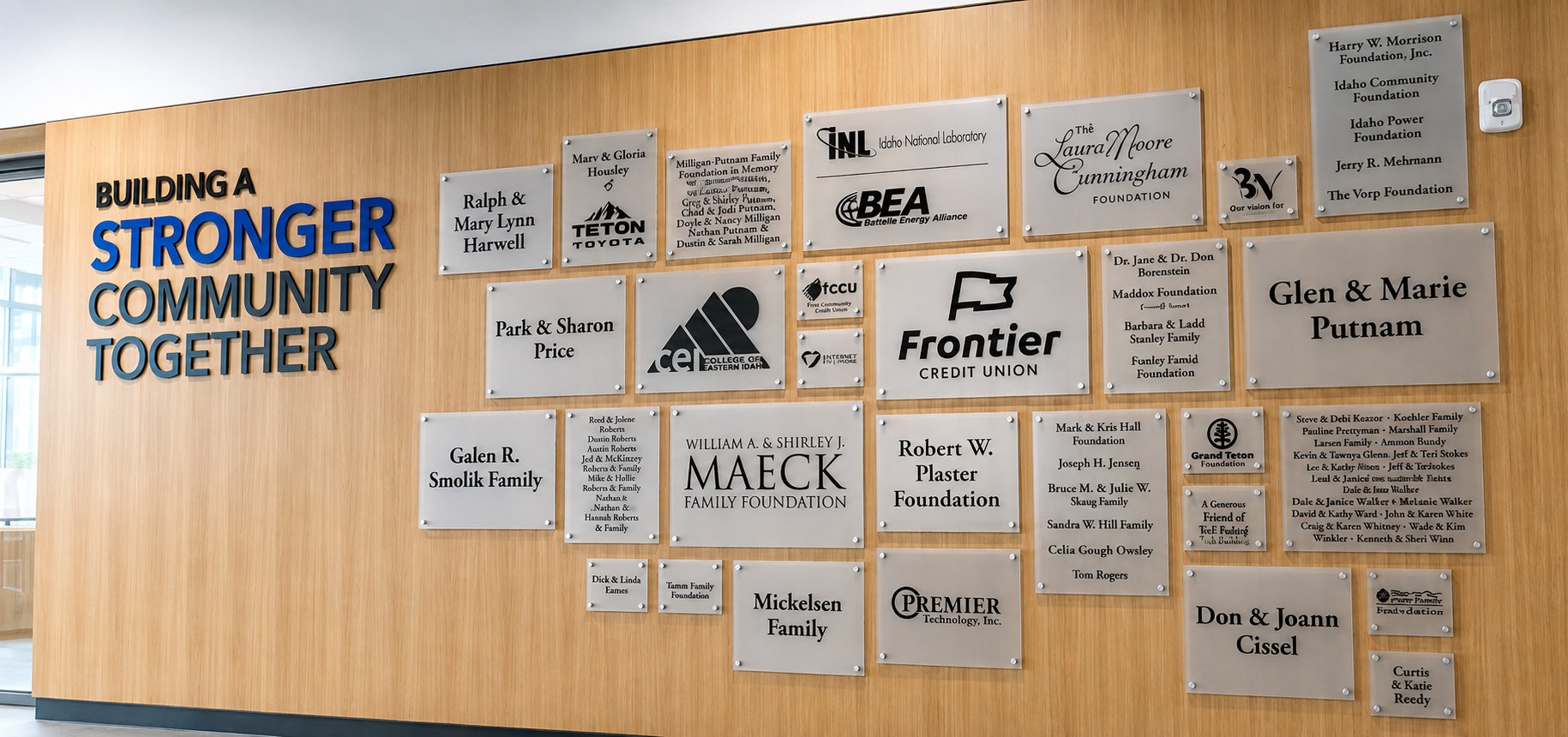
    That is perseverance at the organizational level: a shared vision strong enough to survive changes in people and circumstances, and clear enough to keep people moving toward the same preferred future.

    4. Standing Inside the Future

    Last week, two years after the groundbreaking, the community celebrated the ribbon cutting of Future Tech. What began as an idea had become something we could walk into; concrete and steel, and tangible evidence of what vision, unity, and perseverance can accomplish. We were standing inside the future we had once only imagined. Walking through Future Tech also reminded me that the building was never the ultimate preferred future. Concrete and steel were not the goal. They created the capacity for something larger. The real future begins now. It will be found in students who walk through those doors and discover possibilities they had not previously imagined. It will be found in graduates prepared for technologies and industries that continue to evolve, employers gaining the skilled workforce they need, and stronger partnerships among education, industry, government, and the community. Ultimately, its value will be measured by the opportunities it creates across Eastern Idaho.

    That is what makes the ribbon cutting particularly meaningful. It represents both an ending and a beginning. One preferred future has become reality, while that reality creates possibilities for futures we have not yet imagined. We arrive at a place that once existed only in our minds, look forward again, and ask: What becomes possible from here?

    5. The Power of Futuring

    The CEI experience illustrates why futuring can be so powerful for governing boards and leadership teams. The journey from the community vote in 2017 to the Future Tech ribbon cutting was never a nine-year strategic plan with every step predetermined. What endured was a clear vision of what CEI could become and what it could mean for Eastern Idaho. The path changed along the way. Technology evolved, leadership changed, new partnerships developed, and opportunities emerged that could not have been anticipated in 2017. Strategies adapted, but the preferred future continued to provide direction. Trustees and leaders could repeatedly ask a simple question: Does this move us toward our preferred future? Programs, partnerships, facilities, funding, and people could then be considered through that larger lens. Future Tech became one tangible result of that process. It was not the product of a nine-year plan; it was the product of a vision clear enough to guide thousands of decisions made by many people over nearly a decade.

    Last week, I had the unusual privilege of seeing where those decisions had led. Two years ago, we stood on a construction site and talked about what Future Tech might become. Last week, we stood inside it. 

    For me, that is the power of futuring. It does not give leaders certainty about what will happen. It gives them clarity about the future they are trying to create. That clarity can unite people, guide decisions, sustain perseverance, and help an organization recognize opportunities that move it toward its preferred future. Strategic plans will change. Strategies should change when circumstances require it. But a compelling preferred future can provide a north star through those changes.

    Every future begins as an idea. The real power comes when people see that future together, unite around it, and persevere long enough to make it real. Perhaps that is the question worth leaving with leaders and governing boards: Are you planning from where your organization is today, or are you creating a clear enough picture of the future that people can begin moving toward it together?

     —–

     Rick Aman, PhD | Aman & Associates
    rick@rickaman.com | rickaman.com

  • Mastering Delegation: The Three Types of Decisions Every Leader Should Understand

    Mastering Delegation: The Three Types of Decisions Every Leader Should Understand

    “Delegation requires the willingness to pay for short-term failures in order to gain long-term competency.” — Dave Ramsey

    As a leader and recently retired college president, I’ve come to realize that effective leadership is as much about empowering others as it is about making the right decisions myself. Delegation is a crucial aspect of leadership that not only frees up my time to focus on strategic priorities, yet also helps develop the skills and confidence of my team members.

    In my roles as a senior leader, whether I’m serving as a president, vice president, or other executive—there are certain decisions that only I can make. These might involve interactions with the governor’s office, strategies with trustees, or meetings with high-net-worth donors. It’s important for me to clearly identify these relationships and decisions that fall exclusively within my responsibility. Beyond these critical decisions, I’ve found that the strategy of delegation becomes essential.

    “Decide what you can delegate, what you must do yourself, and what you need help with.” — John Wooden

    Delegation requires a thoughtful approach to discerning which decisions I can entrust to my direct reports. Here, I want to share three types of decisions that I’ve learned to delegate: those that my direct reports can make independently, those that require communication, and those that should never be made alone.

    1. Decisions Direct Reports Can Make on Their Own

    The first type of decision I delegate is one that my direct reports can make independently, without needing to inform me. These decisions are usually operational or routine in nature, falling well within their area of responsibility. Examples include day-to-day management of their teams, assigning tasks, or making minor adjustments to project plans that do not significantly impact other areas of the organization.

    By delegating these decisions, I empower my direct reports. It fosters a sense of autonomy and trust, which are key to building a motivated and effective team. When I delegate such decisions, it demonstrates my confidence in their abilities and encourages them to develop their decision-making skills. This type of delegation also allows me to focus on higher-level strategic decisions that require my attention, optimizing the use of my time and expertise.

    Moreover, when my direct reports are given the authority to make decisions on their own, it not only builds their confidence but also creates opportunities for learning. They gain valuable experience in handling situations independently, which prepares them for more complex challenges in the future. Through this process, I strengthen the relationship between myself and my direct reports, building trust that is fundamental to effective teamwork.

    2. Decisions Direct Reports Can Make, However Need to Communicate

    The second type of decision I delegate involves those that my direct reports have the authority to make yet should still communicate to me. These decisions often have broader implications for the team or organization, and while they are capable of making the call, it’s essential that I stay informed. Examples include reallocating resources, making significant changes to project timelines, or adjusting team roles.

    “My primary directive, and likely yours, is to never let me be surprised if there’s anything with external ramifications.”

    This guideline emphasizes the importance of maintaining open lines of communication. Delegating decisions while requiring communication strikes a balance between autonomy and oversight. It allows my direct reports to exercise their judgment while ensuring that I remain aware of changes that could impact other areas of the organization. This approach fosters transparency and alignment, as I stay in the loop without needing to micromanage.

    Likewise, this type of delegation encourages my direct reports to think critically about their decisions, knowing they will need to explain and justify their choices. It enhances their decision-making process, as they must consider not only the immediate effects of their actions but also how they align with the organization’s broader goals. I benefit from staying informed without getting bogged down in every operational detail, allowing me to provide guidance only when necessary.

    3. Decisions Direct Reports Should Never Make Alone

    The third type of decision includes those that should never be made by my direct reports alone. These are typically high-stakes decisions with significant implications for the organization, its people, or its future. They may involve strategic shifts, major financial commitments, or decisions that could affect the college’s culture or reputation. While my direct reports can provide valuable input, these decisions require collaboration, buy-in, or final approval from me or even higher-level stakeholders or trustees.

    “You can delegate authority, but you cannot delegate responsibility.” — Byron Dorgan

    In these cases, my role is to guide the decision-making process, ensuring that all perspectives are considered and that the final decision aligns with the organization’s goals and values. By involving my direct reports in the discussion, I can leverage their insights and expertise while maintaining ultimate responsibility for the outcome. This collaborative approach not only leads to better decisions, but also reinforces the importance of shared accountability within the organization.

    When I involve my team in high-stakes decisions, it creates a culture of shared responsibility and ownership. My direct reports learn the importance of considering multiple viewpoints and understanding the broader implications of their choices. It also prepares them for future leadership roles by exposing them to the complexities of strategic decision-making.

    Conclusion

    Delegation is a powerful tool in leadership, but it must be applied thoughtfully. Understanding the three types of decisions includes those that can be fully delegated empowering direct report autonomy. Other more important decisions that needed to be communicated provide collaboration with me. Then finally, those decisions only I could make provided clarity in their lines of authority. I was able to include my team while maintaining control over critical strategy. Effective delegation not only develops the capabilities of my direct reports, but also allows me to focus on the strategic decisions that drive long-term success. As I learned to delegate appropriately, I created a more dynamic, responsive, and resilient senior leadership team.

    “It is in your moments of decision that your destiny is shaped.” — Tony Robbins

    The true strength of leadership lies not just in making decisions, but in knowing when to delegate. By empowering my direct reports with the right level of decision-making authority, I built stronger, more capable teams, and positioned our organization for sustained success. The additional benefit was improved decision-making outcomes not done by me in a vacuum.

  • When Disruption Strikes, Identity Guides the Organization Forward

    When Disruption Strikes, Identity Guides the Organization Forward

    Innovation is not about saying yes to everything. It’s about saying no to all but the most crucial things. — Steve Jobs

    Over the past several weeks, I have been writing about how governing boards can lead differently in an era of disruption. The framework is simple but powerful: Vision — Questions — Tools — Identity.

    In Week 1, I described why boards must shift from oversight to vision. Oversight will always matter, but boards that stop there are steering through the rearview mirror. Strategic vision is what allows an institution to anticipate change, stay relevant, and align with purpose.

    In Week 2, I focused on the power of questions. The best boards do not succeed because they have all the answers. They succeed because they know how to frame the right questions, questions that surface blind spots, challenge assumptions, and invite new thinking.

    In Week 3, I introduced futuring tools that elevate board conversations. Frameworks like PESTEL and SWOT, Community listening, and vision-focused retreats boards and CEO a structured way to move from opinion to insight, from guesswork to strategy.

    But tools alone are not enough. Questions alone are not enough. Even vision is not enough. Every board needs an anchor. And that anchor is Identity. I have learned through both my presidency and my consulting work that when organizations drift, the cause is often not a lack of energy, intelligence, or resources. The cause is fuzziness around identity. Before a board can shape a future, it must be clear about who the institution is and what it exists to do.

    When Activity Outpaces Purpose

    In times of disruption, boards and CEOs often find themselves approving new programs, expanding services, and adding initiatives, moves that appear to demonstrate innovation and responsiveness. Yet when growth is driven more by urgency than by vision, activity can overshadow identity. Core principles risk being diluted, and the organization’s sense of purpose begins to blur. True progress requires more than motion; it requires clarity about who we are and why we exist.

    This challenge is not limited to higher education. Nonprofits, cultural institutions, and community organizations all face the same temptation. Under pressure, it is easy to confuse activity with progress. Boards launch initiatives to chase revenue, presidents expand programs to show responsiveness, teams multiply projects to prove relevance. On the surface, it looks like forward motion. But beneath the surface, the core mission grows cloudy.

    When activity outpaces purpose, strategy drifts. The organization works harder but feels less successful. Resources scatter. Leaders make decisions in reaction to the moment instead of in alignment with long-term direction. And eventually, trust erodes among students, employees, donors, and the community.

    In these moments, the most important work a board and CEO can do is pause and return to the central question: Who are we? Without clarity of identity, vision cannot hold. But with identity as the anchor, the organization can navigate disruption with focus, alignment, and trust.

    The Power of Identity Questions

    Boards that want to reclaim focus must begin with a different kind of inquiry. Not “What should we do next?” but “Who are we at our core?” I often guide boards through a series of identity questions that help anchor strategy and prevent mission drift.

    1. What is ours to do and not do? Every organization faces the temptation to say yes to every opportunity. But clarity often comes from drawing boundaries as much as from setting direction. A board that can name what falls outside of its mission sends a powerful signal to leadership and staff about focus and discipline. This prevents mission creep and allows resources to be invested where they have the greatest impact.

    2. Who do we serve, and why? Beyond demographics, this is about transformation. Are we here primarily for traditional students, adult learners, regional employers, or the broader community, and what change do we exist to deliver for them? When a board revisits this question, it ensures that strategy aligns with real human needs, not just institutional habits. The “why” creates a path from mission statement to program design to student or client outcomes.

    3. What promise do we make? An institution’s identity comes alive in the promises it makes and keeps. A promise might be access, affordability, workforce readiness, or transformational education, but it must be specific and lived out consistently. When boards help articulate this promise, it becomes a standard for accountability and a compass for decision-making. Every new initiative should be tested against the question: Does this fulfill our promise?

    4. What strengths truly set us apart? It is easy for organizations to imitate others, but identity depends on distinctiveness. A board that takes time to identify core strengths, whether it is a signature program, a regional partnership, or a cultural commitment, gains a strategic advantage. By naming what is truly unique, boards free their institutions from chasing competitors and instead double down on their own differentiating value. This question often unlocks pride and renewed energy across the organization.

    5. What must end to create space for what is next? Identity requires pruning as well as planting. Boards that ask what programs, traditions, or habits no longer align with mission are better positioned to create room for future growth. These conversations are rarely easy, but they are essential for institutional health. Letting go of what no longer fits mission is often the most courageous act of leadership, and it allows the preferred future to take shape.

    One framework I find particularly valuable is Ikigai, adapted for organizations. Originally a Japanese concept meaning “reason for being,” Ikigai invites leaders to reflect at the intersection of four questions: What do we love? What are we good at? What does our region need from us? What generates sustainable revenue? When boards map their work against these four circles, clarity often emerges. They can see where their identity is strongest and where they may be drifting. I have used this process with colleges, museums, and nonprofits. I have watched the conversation shift from scattered ideas to a crisp sense of organizational center. These four circle overlap with mission fulfillment or the organizational “Why.”

    The beauty of identity questions is that they do not just guide strategy. They build culture. When board members can articulate who the organization is and what it promises, they govern with more confidence. Presidents lead with more alignment. And teams feel more connected to direction.

    Identity as the Foundation for the Preferred Future

    As I look back on my presidency, I realize that some of the hardest decisions were not about budgets or policies. They were about identity. Do we stay true to mission or chase the next trend? Do we protect legacy or pivot toward relevance? Do we try to be everything to everyone, or do we focus on what only we can do? Identity does not answer every question, but it frames all of them. It turns vision into direction. It turns tools into alignment. It turns questions into clarity. Without identity, boards risk building castles on sand. With it, they can lead through disruption with courage and steadiness. The work of governance is not just to safeguard today. It is to steward tomorrow. That stewardship begins with identity. Before approving budgets, launching initiatives, or setting goals, boards should pause and ask: Who are we, really? Because when boards lead from clarity of identity, something powerful happens. Strategy stops being guesswork. Initiatives align with mission. Partnerships become purposeful. And institutions step into their preferred future with coherence and trust.

    Closing Reflection

    This four-week LinkedIn series has traced the arc from Vision — Questions — Tools — Identity. Along the way, I have tried to show that boards are not passive overseers. They are active shapers of the future. – Vision gives direction.  – Questions open possibilities.  – Tools ground and support decisions.  – And Identity anchors purpose. 

    If you serve on a board, or work alongside one, I encourage you to pause at your next meeting and ask not just what are we doing, but who are we becoming. In times of disruption, that may be the most important question of all.

    —

    Aman and Associates partners with CEOs and boards to design purposeful retreats and leadership training that create alignment, vision, and momentum. We bring proven futuring and strategy tools to help leaders clarify identity and chart a path forward. Together, we equip boards and executives to lead with clarity and confidence.

    Rick Aman, PhD – Aman and Associates 

    rick@rickaman.com | rickaman.com/articles


  • The Three Leadership Archetypes: How Startup, Growth and Turnaround Leaders Shape Community Colleges

    The Three Leadership Archetypes: How Startup, Growth and Turnaround Leaders Shape Community Colleges

    “Leadership is the capacity to translate vision into reality.” – Warren Bennis

    Leadership is a complex and multifaceted discipline, with different types of leaders excelling in different environments. Broadly speaking, organizational leadership can often be categorized into three distinct types: Startup Leaders, Growth Leaders, and Turnaround Leaders. Each archetype of leader brings unique strengths and skills to their role, often thriving in specific phases of an organization’s life cycle. We likely can agree that each of us as leaders have and use these three attributes as needed, but most of us favor one of these three styles.  Drawing from my own experiences and as one who would self-identify as a Startup Leader; I’ll explore these three types of leadership and the characteristics that define them.

    Startup Leaders: Pioneers of New Beginnings

    “The best way to predict the future is to create it.” – Peter Drucker

    Startup Leaders are creators, the ones who thrive in environments where there is little to no established structure. They are visionaries who can see the potential in a blank slate and have the drive to build something new from the ground up. They can live in a world of ambiguity.  This type of leader is comfortable with uncertainty and is energized by the challenge of creating something where nothing existed before.

    I have always identified as a Startup Leader, and my career reflects this affinity. My journey began after I graduated from college and joined the Air Force as a pilot. My first experience as a Startup Leader came when I became part of a new Reserve Search and Rescue Reserve Unit in Portland, Oregon. The 304th Aerospace Rescue and Recovery Squadron (ARRS) was added to the unit in Portland to provide support to existing helicopters. At the time, nothing was in place, no planes, no established protocols, just a vision to add HC-130 aircraft to a rotary wing unit. I was among the first pilots hired, and together, we built the unit from scratch. I was at home in this environment, contributing directly to the squadron’s mission of combat rescue and helping to shape its future as an instructor pilot.

    My second major startup experience was with the creation of the College of Western Idaho (CWI) in 2016 in Boise, that was at the time the largest metropolitan area in the U.S. without a community college. I was intrigued by the idea of being part of starting a new community college, and when the opportunity arose, I applied and was hired to manage the academic programing and ultimately VP of Academic and Student Affairs. I joined CWI before there were any students or faculty, tasked with hiring faculty, planning the academic schedule, and preparing for the college’s first semester. The thrill of building something new was exhilarating, and it reaffirmed my love for startups.

    My third and most recent startup experience was with Eastern Idaho Technical College (EITC), now the College of Eastern Idaho (CEI) in Idaho Falls. I was asked to step in as the interim president during a critical time of transition. From the beginning, I saw the potential for EITC to become a full comprehensive community college, and with the support of community leaders, we transformed it into CEI. Again, I found immense satisfaction in being part of something new and helping to lay the foundation for the future.

    For Startup Leaders like myself, the appeal lies in the ability to shape and mold an organization’s early direction. These leaders are adept at navigating the chaos that often accompanies the early stages of an organization, using their vision and entrepreneurial spirit to bring structure and clarity. However, once the startup phase is complete and the organization is ready to move into a more stable, growth-oriented phase, a different type of leadership is often required.

    Growth Leaders: Navigators of Expansion

    “True leadership lies in guiding others to success—in ensuring that everyone is performing at their best, doing the work they are pledged to do, and doing it well.” — Bill Owens

    Growth Leaders excel in environments where the foundational work has been done, and the organization is ready to scale and expand. These leaders are skilled at building upon the initial vision, refining processes, and driving the organization toward greater efficiency and productivity. They focus on optimizing operations, expanding the customer base, and ensuring sustainable growth. Unlike Startup Leaders, who thrive in the uncertainty of creating something new, Growth Leaders are more methodical and strategic. They are adept at managing larger teams, implementing systems, creating policy, budgets, and ensuring that the organization can handle the demands of rapid expansion. These leaders understand the importance of maintaining the organization’s core values and vision while scaling up operations.

    Critical to the long-term success of any organization, Growth Leaders bring stability and structure to the groundwork laid by Startup Leaders, ensuring that a college can sustain its growth and continue to fulfill its mission. They possess a strategic vision, developing and implementing long-term plans that can guide a college  through expansion while staying aligned with its mission and goals. Their expertise in operational efficiency allows them to optimize processes, resources, and systems, improving productivity and supporting sustainable growth.

    A Growth Leader’s scalability mindset is crucial, as it focuses on building infrastructure and teams that can handle increased demands as the organization grows, ensuring that growth is both manageable and sustainable. Strong communication skills are another key attribute, enabling these leaders to articulate the vision, inspire teams, and maintain clear, consistent communication across the organization. This ensures that everyone is aligned and motivated toward common goals. Additionally, Growth Leaders are highly adaptable, capable of responding to changing market conditions, new challenges, and emerging opportunities, and adjusting strategies as needed to continue driving growth. Unlike Startup Leaders, who thrive in the uncertainty of creating something new, Growth Leaders are more methodical and strategic

    Turnaround Leaders: Architects of Renewal

    “Success is not final, failure is not fatal: it is the courage to continue that counts.” — Winston Churchill

    Turnaround Leaders are a unique breed, brought in when a college is facing significant challenges or is in decline. These leaders are experts at diagnosing problems, implementing corrective measures, and leading the organization back to stability and success. They thrive in crisis situations, where swift and decisive action is needed to prevent further decline. Turnaround Leaders possess a unique combination of skills: they are strategic, resilient, and highly analytical. They are often brought in during times of financial distress, cultural dysfunction, or when the organization has lost its way. Their ability to assess the situation, make tough decisions, and rally the team around a new vision is what sets them apart.

    A critical attribute of Turnaround Leaders is their problem-solving ability; the skill to quickly identify core issues within an organization, diagnose problems, and implement effective solutions to reverse negative trends. This is complemented by their decisiveness, the capacity to make tough, sometimes unpopular decisions swiftly and confidently, often under pressure, to steer the organization back on course. Resilience is another key trait, as these leaders must persevere and remain focused and composed during crises, driving the organization through challenging periods without losing momentum.

    Turnaround Leaders are also masters of change management. They have the ability to lead and manage significant organizational changes, including restructuring, cultural shifts, and operational overhauls, to create a more stable and successful environment. Their analytical acumen allows them to critically assess the college’s financial health, operational processes, and overall strategy to pinpoint areas of failure and prioritize corrective actions. Visionary insight is essential as well; these leaders can re-envision the organization’s future, creating a clear and compelling turnaround plan that motivates and unites stakeholders toward common goals.

    Resourcefulness rounds out their skill set with an ability to maximize limited resources, creatively solve problems, and make strategic decisions that optimize the organization’s path to recovery. These leaders are not afraid to make difficult changes, whether it involves restructuring the institution, cutting costs, or revamping the college culture. They understand that in order to save the organization, they may need to make unpopular decisions. However, their focus is always on the long-term health and sustainability of the organization.

    While I have not specifically served as a Turnaround Leader, I have seen the impact that effective turnaround leadership can have. In my experience, organizations that are willing to bring in a Turnaround Leader during times of crisis are often able to recover and emerge stronger. These leaders play a critical role in revitalizing struggling colleges and setting them on a path to renewed success.

    Conclusion: Understanding Your Leadership Style

    Understanding the type of leader you are and the type of leader your college needs is crucial for long-term success. Startup Leaders are visionaries who excel in creating something new and navigating the uncertainties of the early stages. Growth Leaders are strategists who bring stability and scalability to the organization, ensuring sustainable expansion. Turnaround Leaders are problem solvers who thrive in crisis situations, guiding organizations back to health and stability.

    Every style of leader contributes unique strengths, and an organization’s success often hinges on having the right leader at the right moment. As I prepared for retirement, I did so with the understanding that my role as a Startup Leader at CEI had reached its conclusion. The college is now poised for its next chapter under the direction of a Growth Leader who can build upon the foundation we’ve established.

    Leadership isn’t a one-size-fits-all discipline. By identifying your leadership style and recognizing when your skills are most valuable, you can leave a lasting impact on the colleges you serve.

    ————-

    If your organization is ready to explore its preferred future using advanced futuring tools or seeks to enhance collaboration between its board of directors and CEO, Aman and Associates is here to support you. We specialize in facilitation for strategic futuring, AI-driven trend analysis, scenario planning, and executive coaching. Let us partner with you to align your vision with actionable strategies, ensuring your organization thrives in a rapidly changing world. Together, we can chart a course for sustainable success.

    Rick Aman, PhD
    208.850.6707
    rick@rickaman.com
    www.rickaman.com/articles

  • The Four Agreements: Guiding Principles for Community College Leaders

    The Four Agreements: Guiding Principles for Community College Leaders

    In my journey as a community college president, I’ve encountered numerous challenges and opportunities that have required me to navigate complex situations with both empathy and insight. Throughout this journey, I’ve found that personal development frameworks can offer valuable guidance in shaping effective leadership practices. One such framework that has profoundly influenced my approach is The Four Agreements™ by Don Miguel Ruiz.

    The Four Agreements was published in 1997 and has sold over 15 million copies in the United States alone. It has been on the New York Times Bestselling list for multiple decades. These agreements are with ourselves, with other people, with God, and with life. They are simple, yet deeply impactful.

    The Four Agreements outlines four key principles that are rooted in ancient Toltec wisdom, but have applicability. These principles are: Be Impeccable with Your Word, Don’t Take Anything Personally, Don’t Make Assumptions, and Always Do Your Best. Each of these agreements offers specific guidance on how to lead with integrity, resilience, and purpose. They provided guidelines for how I attempt to conduct myself as a leader, how I engage with others, and how I address the multifaceted demands of my role. They are aspirational, certainly my leadership team would agree I was far from competent, but at least self-aware.

    The Four Agreements Website

    1 – Be Impeccable with Your Word

    The first agreement, Be Impeccable with Your Word, is a cornerstone of effective leadership, underscoring the profound influence that language wields. As a leader, I recognize that words are far more than a method of communication; they are powerful instruments that can either build or dismantle, inspire or demoralize. With this understanding, I have committed to ensuring that my communication is not only clear and honest, but also aligned with the core values and mission of our college.

    “Be careful with your words. Once they are said, they can be only forgiven, not forgotten.” — Carl Sandburg

    In leadership, clarity and integrity in communication are paramount, especially when navigating strategic initiatives or addressing challenges. By being transparent and forthright, I’ve been able to cultivate a culture rooted in trust and accountability. When people know that my words reflect my genuine intentions, they are more likely to engage openly and collaboratively, which strengthens the entire community.

    Moreover, I have come to appreciate the importance of using my words to uplift and inspire. Positive reinforcement is not merely a leadership tool, but an attitude that shapes the way I interact with students, faculty, and staff. By recognizing and celebrating their achievements, I contribute to an environment where excellence is not only expected, but nurtured. This practice of acknowledging contributions boosts morale, enhances motivation, and solidifies a collective commitment to our shared goals.

    2 – Don’t Take Anything Personally

    The second agreement has transformed my approach to leadership by strengthening my emotional resilience and clarity of purpose. This may be the most difficult of the four agreements to apply. In any leadership role, criticism is inevitable whether it comes from students, faculty, or external stakeholders. It’s natural to feel tempted to internalize this criticism, but the wisdom of The Four Agreements reminds us that the actions and opinions of others are not reflections of our worth or competence.

    “People’s opinions of you are a reflection of them, not you.” — Anonymous

    By embracing the principle of not taking things personally, I attempted to cultivate the ability to view feedback through an objective lens. Instead of letting negative feedback erode my confidence, I’ve learned to see it as valuable insight. This approach has made me more adaptable and open to change, which is essential in an evolving educational environment.

    Furthermore, this agreement has been instrumental in helping me stay aligned with the broader mission and goals of our college. In leadership, it’s easy to become sidetracked by negative opinions or challenges, but by not taking things personally, I’ve attempted to maintain a steady focus on what truly matters. I understand that not all criticism is about me; often, it reflects the perspectives, experiences, or frustrations of others. You would be amazed to realize how infrequently others think about you. This understanding has allowed me to navigate conflicts with greater empathy and composure, ensuring that I respond to challenges thoughtfully rather than reactively.

    Ultimately, by attempting to not take anything personally, I’ve been able to lead with greater clarity, purpose, and resilience. This agreement has been the basis in my journey to becoming a more effective and empathetic leader, capable of guiding our college through both opportunities and challenges with unwavering focus and integrity.

    3 – Don’t Make Assumptions

    The third agreement has been crucial in improving communication and collaboration within a diverse educational environment. As a leader, it’s easy to assume we understand the needs, thoughts, or intentions of others, but these assumptions often lead to miscommunication, unnecessary conflict, and missed opportunities.

    “Clarity over agreement” – Brené Brown

    One effective strategy I’ve adopted is to prioritize clarity in communications. This involves not just listening passively, but actively engaging to ensure I fully comprehend others’ viewpoints. Asking thoughtful questions has proven to be a powerful tool, helping to clarify intentions and uncover underlying concerns. Whether in individual conversations or group discussions, these questions help to prevent misunderstandings and ensure that everyone’s voice is heard.

    Active listening is another key aspect of avoiding assumptions. It requires hearing not just the words being spoken, but understanding the meaning behind them. By practicing active listening, I can better grasp the nuances of what others are expressing, allowing me to respond more effectively and empathetically. I know I need to set my cell phone down when I am listening.

    By consistently prioritizing clarity over assumptions, I’ve made more informed decisions and created a more inclusive environment. This commitment has helped build a culture of transparency and trust, where everyone feels valued and understood. Ultimately, avoiding assumptions has made me a more effective leader, capable of navigating complex challenges with a focus on understanding and inclusion.

    4 – Always Do Your Best

    The fourth agreement is a powerful reminder that excellence is not about perfection, but about consistently striving to perform at our best under any circumstances. This principle has been instrumental in helping me balance ambition with self-compassion in my leadership role.

    “The only way to do great work is to love what you do. Always do your best.” — Steve Jobs

    This approach has taught me to recognize and respect my limits. Some days, my best might mean tackling complex challenges with energy and focus, while on other days, it might mean simply managing to meet basic responsibilities due to external pressures or personal circumstances. By accepting this variability, I’ve been able to stay motivated and avoid the trap of self-criticism that often accompanies the pursuit of perfection.

    By applying this agreement, I’ve also fostered an environment where others feel empowered to give their best without fear of judgment. When people see that their leader values effort and resilience, they are more likely to adopt the same style. This creates a supportive atmosphere that promotes continuous improvement and collective achievement. This approach has also allowed me to lead by example, demonstrating to others the importance of resilience and continuous improvement.

    The Four Agreements

    Adopting The Four Agreements has been transformative for me as a leader. It’s not just about adopting new behaviors; it’s about fostering a deeper sense of awareness and intentionality in everything I do. Here are a few practical ways I’ve integrated these principles into my leadership approach:

    1. Reflecting on My Communication: I try to assess how I use my words, ensuring that they align with my values and the mission of our institution.

    2. Practicing Emotional Detachment: When faced with criticism or challenges, I take a step back and remind myself not to take things personally. This helps me focus on constructive solutions.

    3. Seeking Clarity: Before making decisions, I make sure to gather all the necessary information. I engage in conversations with those affected and seek to fully understand their perspectives. When my team is sharing solutions, I try to share last in order to not bias input.

    4. Striving for Excellence, Not Perfection: I encourage myself and my team to do our best, focusing on progress and growth rather than unattainable perfection. Incremental improvement may be the best we can hope for.

    Conclusion

    Incorporating The Four Agreements into my leadership strategy at my college has profoundly shaped both my approach and the institution’s culture. These agreements serve as a guiding compass, helping me navigate the complexities of leadership with clarity, purpose, and effectiveness. In an ever-changing landscape, The Four Agreements offers a timeless framework that encourages leading with integrity, compassion, and wisdom, ultimately benefiting everyone within the college community. In the end, these are critical skills for leaders.

  • The Ceramic Mug vs Paper Cup

    The Ceramic Mug vs Paper Cup

    I’m now in my first month of retirement after eight extraordinary years serving as President of the College of Eastern Idaho. It’s a time for reflection, and one YouTube that has been resonating with me comes from Simon Sinek, who speaks about the difference between a ceramic mug and a paper cup at retirement.

    For those unfamiliar with the analogy, Sinek explains that titles and positions often afford us privileges—a ceramic mug, so to speak. But when retirement comes, the title is gone, we’re left with a paper cup, which represents the essence of who we are without the trappings of status. The ceramic mug symbolizes the perks and respect given to the role, not necessarily to the individual. It’s a reminder that the true measure of our impact isn’t in the title we hold but in the connections we build, the lives we touch, and the legacy we leave behind.

    Simon Sinek – Styrofoam Coffee Cup | a Lesson in Humility – YouTube

    As I step away from my role as President of CEI, this analogy has deeply resonated with me. The position granted me a certain level of respect, access, and influence—my own ceramic mug. But now, as I transition out of this role, what remains isn’t the title, but the relationships, the achievements we’ve accomplished together, and the memories we’ve created.

    Over the last eight years, we’ve achieved so much together—transforming CEI from a technical college to Idaho’s fourth comprehensive community college, expanding our programs, enhancing our facilities, and breaking ground on a new Future Tech building. We’ve navigated challenges, celebrated successes, and, most importantly, impacted the lives of countless students, helping them to build better futures for themselves and their families through employable skills.

    In an unexpected twist, our soon-to-be President, Lori Barber, presented me with a parting gift that, following Sinek’s analogy, should have been a paper cup. Instead, she chose a beautiful ceramic mug. This wasn’t just any mug; it was thoughtfully crafted with care and attention to detail—much like the work we’ve accomplished together at CEI.

    This mug sits on my shelf, and it serves as a reminder of the community we’ve built, a community grounded in shared values, mutual respect, and a collective commitment to advancing education. It symbolizes the enduring relationships and shared experiences that will continue even as I move into this next chapter of my life.

    To all my colleagues, students, and friends at CEI and beyond—thank you. Thank you for your trust, your collaboration, and your unwavering commitment to our shared mission. As I move forward, I carry with me not just a ceramic mug, but memories of gratitude, and a deep sense of fulfillment.

    Here’s to the future—may it be filled with new opportunities, continued growth, and the lasting impact of the work we’ve done together. And may we all remember that while titles may fade, the difference we make in the lives of others is what truly lasts.

    ——————-

    If your organization is ready to explore its preferred future using advanced futuring tools or seeks to enhance collaboration between its board of directors and CEO, Aman and Associates is here to support you. We specialize in facilitation for strategic futuring, AI-driven trend analysis, scenario planning, and executive coaching. Let us partner with you to align your vision with actionable strategies, ensuring your organization thrives in a rapidly changing world. Together, we can chart a course for sustainable success.

    Rick Aman, PhD
    208.850.6707
    rick@rickaman.com
    www.rickaman.com/articles

  • Leading Change Through Trust: 8 Strategies for College Leaders

    Leading Change Through Trust: 8 Strategies for College Leaders

    “Trust is the glue of life. It’s the most essential ingredient in effective communication. It’s the foundational principle that holds all relationships.” — Stephen R. Covey

    Trust is the foundation of effective leadership, especially in times of change. When trust is strong, leaders can guide their organizations through transitions with greater ease, ensuring that their teams remain committed, motivated, and aligned with the institution’s goals. Without trust, even the most well-intentioned changes can lead to resistance, mistrust, confusion, and ultimately — failure. This is particularly true in higher educational settings like community colleges, where the stakes are high, and the impact of decisions can be far-reaching. Building trust is not a one-time task, but an ongoing process that requires thoughtful strategies and consistent effort. Here are eight actionable ideas that college leaders can implement to build trust before initiating change.

    1. Cultivate Trust Early: Lay the Foundation

    Before any significant change is introduced, it’s crucial to establish a strong foundation of trust. This is where a leader can nurture a culture of trust, some leaders are more naturally inclined by their style. Trust simply takes time to build and can be destroyed instantly. Leaders should engage with their teams regularly, fostering open lines of communication and demonstrating a genuine commitment to the organization’s mission and values. This early investment in trust-building creates a reservoir of goodwill that can be drawn upon during times of change. Regular interactions, informational meetings, and informal check-ins can help leaders connect with their teams on a personal level, making employees feel valued and heard.

    2. Communicate Transparently: Keep the Dialogue Open

    Transparency is key to building and maintaining team and institutional trust. College leaders should strive to communicate openly about the reasons behind upcoming changes, what the changes will entail, and how they will impact the organization. This means not only sharing the positives, but also addressing potential challenges and concerns. By providing consistent updates and being honest about what is known and what is still uncertain, leaders can reduce anxiety and rumors, fostering a culture of trust.

    3. Involve Stakeholders: Encourage Inclusive Decision-Making

    Trust is strengthened when people feel they have a voice in the process. Leaders should actively involve stakeholders especially those who will be directly affected by the changes in the planning and decision-making stages. This can be done through focus groups, advisory committees, or even one-on-one consultations. By soliciting feedback and genuinely considering it in the final decisions, leaders show that they value their team’s input, which in turn builds trust.

    4. Demonstrate Empathy and Support: Address Concerns Head-On

    Change can be unsettling, and it’s important for leaders to acknowledge this. Demonstrating empathy by recognizing the challenges and fears that employees might have shown that the leader understands their perspective. Additionally, providing the necessary resources, training, and support to help employees adapt to the changes reinforces the leader’s commitment to their success. When employees feel supported, they are more likely to trust the process and the leader guiding it.

    5. Lead by Example: Model the Change

    Leaders who exemplify the changes they wish to see can inspire confidence in their teams. If a leader is advocating for a new way of operating, they should be the first to adopt these practices. By consistently demonstrating the behaviors and attitudes that align with the proposed changes, leaders can effectively model the change, making it easier for others to follow suit. Integrity and consistency in leadership actions are crucial to maintaining trust.

    “People may doubt what you say, but they will believe what you do.” — Lewis Cass

    6. Set Realistic Expectations: Manage the Change Narrative

    One of the most important aspects of building trust is managing expectations. College leaders should be clear about what can realistically be achieved through the proposed changes, including potential obstacles that may arise. Setting achievable goals and being upfront about the timeline and scope of changes helps prevent disappointment and keeps the team grounded in reality. When expectations are aligned with actual outcomes, trust is reinforced.

    7. Articulate a Vision and Shared Purpose: Unite the Team

    A compelling vision can unite a team and give meaning to the changes being implemented. Leaders should clearly articulate how the changes align with a future vision of the institution and how they contribute to a shared purpose. By connecting the change to the core values of the organization, leaders can help employees see the bigger picture and understand the positive impact these changes will have on the college’s mission and the community it serves. Leaders are in the “vision” business.

    8. Celebrate Progress: Recognize and Reinforce Trust

    As the change process unfolds, it’s important to recognize and celebrate small wins along the way. Celebrating milestones and acknowledging the efforts of the team not only reinforces trust but also keeps the momentum going. Expressing gratitude and recognizing hard work shows that the leader values their team’s contributions, further strengthening the trust that has been built.

    Conclusion: Building Trust as a Prerequisite for Change

    Trust is not a given; it must be earned through consistent actions and thoughtful leadership. For college leaders, building trust before implementing changes is not just a best practice—it’s a necessity. By cultivating trust early, communicating transparently, involving stakeholders, demonstrating empathy, leading by example, articulating a shared vision, and celebrating progress, leaders can create a solid foundation of trust that will support the organization through times of change. The journey may be challenging, but with trust as the cornerstone, college leaders can guide their institutions toward a brighter, more resilient future.

    “Without trust, we don’t truly collaborate; we merely coordinate or, at best, cooperate. It is trust that transforms a group of people into a team.” — Stephen M.R. Covey

  • Community College Culture: Discovered or Created

    Community College Culture: Discovered or Created

    One of my favorite quotes about organizational culture comes from Simon Sinek – “Culture, the distinct ways we think, speak, feel, and act TOGETHER — because of what we believe.”

    Culture is a powerful force within any organization, shaping its identity, guiding its actions, and influencing its outcomes. This is especially true for community colleges, where the culture not only reflects the values of the institution, but also reflects the communities they serve. Having spent years at the helm of the College of Eastern Idaho (CEI), I’ve often considered whether culture is something we discover or create. As community college leaders, understanding this duality is crucial for any of us whether advising or teaching students, or leading the institution. If our future is to guide our institution toward success, the idea of culture is important, maybe critical factor.

    Discovered: The Roots of Culture

    At its core, community college culture is deeply rooted in the community it serves. When we moved to eastern Idaho as an interim president, I quickly realized that the college’s culture reflected the values, needs, and aspirations of eastern Idaho. Although CEI is a relatively new comprehensive community college formed eight years ago, its history emerged through Idaho’s only technical college, Eastern Idaho Technical College (EITC). My discovery process was akin to peeling back layers of an onion, revealing the foundational beliefs that had guided the technical college for decades, yet as a founding president of CEI, it held the promise of creating a new culture, aligned with the concepts of a comprehensive community college mission.

    The culture we “discover” in a community college often includes a commitment to accessibility and affordability encompassing a focus on practical and skill-based education, with a deep connection to local industries. These elements are not imposed but are rather born out of the community’s expectations and historical context. For CEI, this meant understanding the rural roots of our region overlaid with the presence of Idaho National Laboratory (INL). INL is one of 17 Department of Energy national labs which was located in eastern Idaho 75 years ago. For EITC and now CEI the importance of workforce development, technical skills and the need to provide opportunities for non-traditional students was at our core and discovered.

    Leaders should take the time to discover and understand these cultural foundations. We would be wise to listen, observe, and immerse themselves in our communities to appreciate the historic  and economic context that formed existing values. This discovery process is not passive; it’s an active engagement with the past and present, allowing leaders to identify what makes their institution unique. If you don’t look, you won’t find your existing culture.

    Created: The Future of Culture

    While culture has its roots in discovery, it is also something that is continuously emerging and shaped. The culture of an institution like the College of Eastern Idaho (CEI) is not static; it evolves with the times, influenced by leadership, policy decisions, and the collective actions of the entire community including students, faculty, staff, and our broader partners in the region.

    At CEI, we recognized the importance of embracing change while staying true to our discovered roots. Transitioning from Eastern Idaho Technical College (EITC) to CEI marked more than a name change; it was a deliberate effort by our voters to create a culture that not only honored our technical college heritage, but also expanded to encompass a broader, more comprehensive two-year educational mission. This meant fostering a culture that values innovation, inclusivity, and student success across all areas of study.

    In Eastern Idaho, where our college serves a diverse population, creating this culture required intentional efforts. We introduced new degrees and programs that included transfer of our associate level students into bachelors’ completion with our university partners. We needed to align with the region’s needs, particularly in partnership with the Idaho National Laboratory (INL), a leader in nuclear research, technology and energy innovation. Collaborating with INL and our local hospitals, we’ve been able to ensure our programs are relevant, forward-thinking, and beneficial to both our students and the community.

    Creating culture is about setting a vision and aligning actions with that vision. At CEI, this involves cultivating an environment where everyone feels empowered to contribute to the college’s mission. We’ve fostered a spirit of collaboration that extends beyond the campus, encouraging partnerships that enhance educational opportunities and workforce development throughout eastern Idaho. This also means prioritizing student support services, ensuring that every student, regardless of their background, has the resources and encouragement they need to succeed.

    Leadership plays a critical role in shaping culture. By modeling the values we wish to see such as commitment to excellence, openness, and continuous improvement we demonstrate our intent. Through consistent messaging, and by creating structures that support our mission, we actively create a culture that is not only responsive to the present, but also anticipates and prepares for the future. This dynamic and forward-looking culture is what will continue to drive CEI’s success and its role as a vital educational resource in rural eastern Idaho.

    Two Things can be True at Once: Discovering and Creating Culture

    In the end, the culture of any community college like CEI is a blend of discovery and creation. We can honor the past, understanding and respecting the culture that has been shaped by the community we serve. At the same time, we should be proactive in creating a culture that aligns with our vision for the future, one that embraces change and prepares our students for the challenges ahead.

    As college leaders, our responsibility is to navigate this balance with care and intention. By doing so, we ensure that our colleges remain vibrant, relevant, and true to their mission. At CEI, this approach has allowed us to build a culture that not only reflects who we are but also guides who we aspire to be.

    In the end I have always believed Peter Drucker – “Culture eats strategy for breakfast.”

    I would enjoy your comments regarding Culture: Discovered or Created…

  • Building Resilient Teams: Strategies for Higher Education Leaders

    Building Resilient Teams: Strategies for Higher Education Leaders

    Amid the constant shifts and uncertainties in the present post-secondary educational landscape, resilience emerges as an essential quality for teams to succeed. A resilient team consists of individuals who can collectively navigate challenges, swiftly recover from setbacks, and sustain both their effectiveness and morale, even in the face of adversity.

    For leaders in higher education, the ability to cultivate and sustain resilient teams is essential not only for surviving challenges, but for thriving in an environment that demands constant adaptation. Resilient teams can navigate uncertainty, embrace change, and maintain productivity and effectiveness during difficult times. Drawing from both higher education and military flying experience, I will explore strategies for building resilient teams that can withstand the pressures of today’s academic world and emerge stronger.

    Understanding Resilience in Teams

    In the context of teams, resilience refers to the collective ability to adapt to disruptions, overcome challenges, willingness to solve problems, and continue moving forward with a sense of purpose. A resilient team doesn’t just bounce back; it learns from setbacks and becomes more robust in the process. This quality is particularly vital in higher education where teams often face budget constraints, shifting/unclear policies, legislative challenges, adaptation of technological advancements, and complex student support issues. Three techniques to enhance team resilience could include:

    1.   Foster Adaptability

    One of the foundational elements of a resilient team is adaptability. In higher education, where change is constant, teams must be flexible and open to new ways of thinking and working. Leaders play a pivotal role in fostering this adaptability by encouraging innovation and creating an environment where experimentation is safe and even celebrated.

    • Openness to Change: The team is willing to embrace new ideas, processes, and technologies, and members are comfortable stepping out of their comfort zones to meet evolving demands. This adaptability ensures that the team remains resilient and proactive in the face of uncertainty.

    • Resourcefulness: The team can creatively solve problems, efficiently manage resources, and quickly pivot strategies when faced with unexpected challenges or constraints. This ability to innovate under pressure allows the team to navigate obstacles and achieve their goals despite limitations.

    • Collaboration: Team members work well together, leveraging each other’s strengths and knowledge to adjust to new situations and find the best solutions to emerging challenges. This collective approach fosters a culture of shared responsibility and continuous improvement, driving the team towards success.

    “Experimentation is the key to innovation. Without the willingness to fail, you cannot innovate.” — Peter Diamandis

    2.  Create a Supportive Culture

    A supportive culture is another critical component of team resilience. When team members feel supported by their leaders and peers, they are more likely to persevere through challenges and maintain their commitment to the team’s goals.

    • Promote Open Communication: As a leader, actively encourage and model open and honest communication within the team. Create an environment where team members feel safe to voice their concerns, share their ideas, and seek help when needed. Your leadership in fostering this transparency ensures that everyone feels heard, valued, and empowered to contribute to the team’s success.

    • Prioritize Well-Being: The well-being of team members should be a top priority. Recognize the signs of burnout and stress and take proactive steps to address them. Implement wellness programs, offer mental health resources, and encourage a healthy work-life balance.

    • Celebrate Successes and Learn from Failures: Acknowledge and celebrate the team’s achievements, no matter how small. Recognition boosts morale and reinforces a sense of purpose. Similarly, view failures as learning opportunities rather than setbacks. Analyze what went wrong, discuss what can be improved, and move forward with a renewed sense of determination.

    3.  Lead by Example

    Leadership is crucial in building resilient teams. Leaders who model resilience themselves set the tone for their teams. By demonstrating a calm and composed demeanor during crises, showing empathy towards team members, and maintaining a focus on the long-term vision, leaders can inspire their teams to adopt a resilient mindset.

    • Demonstrate Emotional Intelligence: Emotional intelligence, the ability to recognize and manage one’s own emotions and the emotions of others, is essential for leaders. By showing empathy, understanding, and compassion, leaders can build stronger relationships with their teams and create a more supportive environment.

    • Stay Focused on the Vision: During challenging times, it’s easy for teams to become discouraged or lose sight of their goals. As a leader, it’s your responsibility to keep the team focused on the bigger picture. Remind them of the team’s purpose, reinforce the vision, and guide them towards achieving their goals despite the obstacles.

    • Accepting Blame as a Leader: One of the most important aspects of leadership in building resilient teams is the willingness to accept blame when things go wrong. When a failure occurs, a resilient leader doesn’t shift the blame onto team members, but instead takes responsibility, analyzes what happened, and leads the team in learning from the experience. This approach not only builds trust within the team, but also strengthens the team’s ability to bounce back and move forward with renewed commitment. By accepting blame, leaders model accountability and foster a culture where mistakes are seen as opportunities for growth rather than causes for blame.

    “The true mark of a leader is not how they perform in times of success, but how they take responsibility in times of failure.” — John C. Maxwell

    Actionable Steps a Leader Might Consider in Building a Resilient Team

    To build and support a resilient team a higher education leader could consider the following four actionable steps:

    1. Assess and Understand the Team’s Resilience: Begin by evaluating the current level of resilience within your team. Identify areas where the team excels and where improvement is needed. Gather feedback through surveys, one-on-one meetings, and by observing how the team handles challenges and honestly debrief the results. Use your assessment as a baseline to understand strengths and weaknesses, which will guide future actions.

    2. Develop and Implement a Resilience Plan: Based on the assessment, create a plan to intentionally enhance the team’s resilience. This plan should focus on fostering adaptability, building a supportive culture, and strengthening leadership. Set clear goals and timelines and include strategies like regular debriefs after major tasks or events to continuously refine and adjust the plan. Ensure that the plan addresses the specific areas for improvement identified in the assessment phase.

    3. Recognize Gossip as one of the most Destructive Elements to Team Resilience: Members who fail to uphold team agreements or engage in gossip exhibit behaviors that can rapidly erode trust and disrupt team cohesion. As a leader, it’s essential to set clear expectations for respectful communication and actively discourage gossip, fostering a culture of transparency and trust that fortifies the team’s unity and strengthens their resilience against challenges.

    4. Model and Cultivate Resilient Teamwork: As a leader, actively model the qualities you want to see in your team. Demonstrate emotional intelligence, maintain a clear focus on the team’s vision, and foster collaboration. Create a supportive environment by encouraging open communication, prioritizing team well-being, and celebrating successes. Address challenges with empathy and a solution-oriented approach. Your leadership will set the tone for a resilient team culture that sustains long-term growth and success.

    “Persistence and resilience only come from having been given the chance to work through difficult problems.” — Gever Tulley

    Conclusion

    Building resilient teams is not a one-time effort, but an ongoing process that requires dedication, empathy, and strategic plans. For leaders in higher education, the ability to create and sustain resilient teams is essential for navigating the complexities of today’s educational landscape. By fostering adaptability, building a supportive culture, and leading with resilience, leaders can ensure that their teams are not only prepared for challenges, but are also positioned to thrive in the face of adversity.

    In the end, resilient teams are the cornerstone of an effective organization, one that can adapt, grow, and succeed in an ever-changing world. As you continue to lead and inspire, remember that the resilience of your team reflects your leadership. Embrace the challenge of building resilient teams, and you will create a legacy of strength, innovation, and success in higher education.

    “The strength of the team is each individual member. The strength of each member is the team.” — Phil Jackson

  • Leading the Future: Visionary Leadership in Community Colleges

    Leading the Future: Visionary Leadership in Community Colleges

    “In times of change, learners inherit the earth, while the learned find themselves beautifully equipped to deal with a world that no longer exists.” – Eric Hoffer

    In today’s rapidly evolving educational landscape, the role of a leader has never been more critical, particularly within community colleges. Visionary leaders do more than manage, they inspire, innovate, and guide their institutions toward a preferred future. By focusing on core elements of educational leadership, such as vision, communication, alignment, innovation, and resilience, these leaders can drive meaningful change that benefits students, staff, and the broader community.

    Community colleges, in particular, face unique challenges and opportunities. These institutions are at the forefront of providing affordable, accessible education, serving diverse student populations, and responding to the ever-changing technical demands of the workforce. Visionary leadership within this context is not just a desirable quality, it is essential for navigating the complexities of modern education and ensuring that these institutions can continue to fulfill their critical role in society.

    1. Visionary Leadership

    At the core of effective leadership is the ability to foresee and articulate a compelling vision for the future. Visionary leaders are not confined to the present; they look ahead, identifying opportunities and challenges that others may overlook. In the context of community colleges, this forward-thinking approach may be referred to as “futuring.” These two-year institutions are often the gateways to higher education, family wage jobs and workforce development, providing knowledge, essential academics, and life skills to students from diverse backgrounds.

    Traditional strategic planning typically starts by aligning with the organization’s mission, vision, and values. In contrast, futuring takes a different approach, beginning with college leadership envisioning and defining what is needed to achieve a “preferred future.”

    A characteristic of a visionary leader is the willingness to project into the upcoming needs of a region and articulate a preferred future from which to work backward. Futuring is a tool for a visionary leader and involves recognizing an ideal future for a college based on its regional needs. The leader can then guide the college toward fulfilling its mission in innovative and impactful ways. It’s about understanding the broader trends shaping higher education and positioning the institution to thrive in a changing environment. Visionary leaders are adept at recognizing shifts in technology, workforce needs, and societal expectations, and they use this awareness to steer their institutions in a planned direction. For community colleges, this often means balancing the pursuit of academic excellence with a commitment to accessibility, equity, and responsiveness to local economic conditions and workforce demands.

    Visionary leadership is also characterized by a willingness to take calculated risks. Leaders must be bold enough to pursue new opportunities and challenge the status quo, even when the path forward is uncertain. This kind of leadership requires courage, creativity, and a steadfast belief in the potential of the institution and its people.

    In the journey of organizational transformation, as highlighted by the core premise of The Great Upheaval by Arthur Levine and Scott Van Pelt, higher education is undergoing a significant transformation driven by profound societal, technological, and economic changes. The authors argue that the traditional model of higher education, which has remained largely unchanged for centuries, is being disrupted by factors such as technological advancements, shifts in the job market, changing demographics, and evolving expectations of students and employers. If Levine and Van Pelt are correct, visionary leaders within community colleges will be essential to shift into this new model of higher education.

    2. Articulation and Communication of Vision

    A vision, no matter how compelling, is only as powerful as its communication. A leader’s ability to clearly articulate a vision to all members of the organization, board members, faculty, staff, students, and stakeholders is critical. Effective communication ensures that everyone understands the direction in which the institution is headed and its role in achieving it.

    In a community college setting, leadership’s vision might center on transforming the institution into a hub for workforce development and lifelong learning. This vision can be communicated through technical advisory committees, public forums, planning sessions, and direct engagement with all levels of the college. These efforts ensure the vision is effectively conveyed to the community, fostering support and alignment among key stakeholders.

    Another aspect of communication is consistency of message. Visionary leaders ensure that their message is consistent across all platforms and interactions, reinforcing the vision and its importance. Consistency builds trust and credibility, which are essential for gaining buy-in from all stakeholders. Good leaders are adept at staying on message.

    3. Alignment and Shared Purpose

    One of the most significant challenges for any leader is aligning their team around a shared purpose. This requires more than just clear communication; it demands the ability to inspire and motivate others to see the value in the vision. A shared purpose creates a sense of belonging and commitment, driving engagement and motivation across the organization.

    In many community colleges, alignment is achieved by fostering a culture of innovation and collaboration. As teaching and learning organizations, faculty buy-in is essential. Faculty can be encouraged to develop new programs that meet local industry needs, supported by the necessary resources for success. By aligning the college’s programs with workforce demands, leadership ensures that everyone is working toward a common goal, reinforcing the institution’s shared purpose.

    Alignment also involves creating a supportive environment where everyone feels that their contributions are valued and that they are integral to the success of the institution. This means recognizing and celebrating achievements, providing opportunities for professional development, and creating spaces for collaboration and shared decision-making.

    Visionary leaders understand that alignment is not a one-time task, but an ongoing process. It requires continuous engagement, feedback, and adjustment to keep the team focused and united. This process is particularly important in community colleges, where the needs of students and the community can evolve rapidly. Leaders must be flexible and responsive, ensuring that the institution remains aligned with its mission and vision even as particular circumstances change.

    In addition, aligning teams around a shared future can help to overcome resistance to change. When people understand how their work contributes to the broader vision and feel connected to a common goal, they are more likely to embrace new initiatives and support efforts to innovate and improve.

    4. Innovation and Adaptation

    Innovation is a hallmark of visionary leadership. Leaders who are not content with the status quo continually seek new ways to improve and adapt their institutions. In the context of education, this might involve integrating new technologies, rethinking traditional teaching methods, innovative methods to deliver training or degrees to meet the needs of non-traditional students or developing new partnerships with local businesses and industries.

    In an era of rapid technological change and shifting workforce demands, the ability to innovate is more important than ever. Visionary leaders must be attuned to emerging trends and willing to experiment with new approaches to education. This might include exploring the potential of online learning, developing programs in high-demand fields like healthcare and technology, or creating flexible learning pathways that accommodate the needs of non-traditional students.

    Presently, one of the most interesting and controversial technology related subjects for discussion within higher ed is that of Artificial Intelligence (AI). Being new and emerging, it’s use within the teaching and learning realms as well as the operational and administrative functions has multiple facets. AI is certainly a provocative topic on most community college campuses. It will be important for visionary leaders to address this topic in a thoughtful manner.

    A community college embracing innovation might adopt a competency-based education model, allowing students to progress at their own pace while mastering the necessary skills. This approach not only better serves students but, also positions the college as a leader in workforce development. Innovation is not just a strategy it becomes a culture cultivated by leadership, ensuring the institution remains relevant and competitive in a rapidly changing world.

    However, innovation is not without its risks. Visionary leaders must be willing to take calculated risks, knowing that not every new idea will succeed. They must create an environment where failure is seen as an opportunity for learning and growth, rather than a setback. This kind of culture encourages creativity and experimentation, which are essential for driving innovation.

    Adaptation is also a critical component of innovation. As the external environment changes, visionary leaders must be able to pivot and adjust their strategies to stay ahead of the curve. This might involve reevaluating the institution’s priorities, reallocating resources, or exploring new opportunities for growth. Adaptability ensures that the institution can thrive even in the face of uncertainty and change. Resilience and adaptability are key. Visionary leaders must navigate these complexities, maintaining their focus on the future while managing the present.

    5. Challenges and Resilience in Leadership

    Finally, visionary leadership is not without its challenges. Maintaining momentum and enthusiasm for the vision, especially in the face of obstacles, is one of the most difficult aspects of leadership. Change often meets resistance, and not everyone will immediately buy into the vision.

    Leaders must remain resilient, keeping their teams focused and motivated even when progress is slow or difficult. Balancing the long-term vision with the day-to-day operations of the institution is another challenge that requires careful delegation and empowerment of others to take ownership of their roles.

    Resilience in leadership involves staying committed to the vision, even when faced with setbacks or opposition. It requires a deep belief in the mission and the ability to inspire others to stay the course, even in challenging times. Visionary leaders are those who can maintain their focus on the future while navigating the complexities of the present.

    Moreover, resilience involves a willingness to learn and grow as a leader. Visionary leaders are constantly seeking feedback, reflecting on their experiences, show a willingness to compromise, and look for ways to hone their leadership skills. This commitment to personal growth not only enhances their effectiveness as leaders, but also sets a powerful example for others to follow.

    Summary:

    The power of visionary leadership lies in the ability to see beyond the present, to inspire and align others around a shared purpose, and to drive innovation and adaptation in response to change. For community colleges, a hallmark is adaptability and service to our students. This type of visionary leadership is essential for not only surviving, but thriving in today’s educational landscape.

    Visionary leadership is not just about having a dream for the future, it is about turning that dream into reality through planning, effective communication, and commitment to mission. Community colleges, with their unique position in the education landscape require leaders who can navigate the challenges of today while preparing for the opportunities of tomorrow. By understanding, embracing and implementing five key leadership themes of: visionary leadership, communication, shared purpose, innovation/adaptation, and resilience — visionary leaders could transform their institutions. Transformation which can create lasting impacts for their students and communities. The future belongs to those who can envision it and are bold enough to lead the way. The journey may be complex, but with visionary leadership, the possibilities are endless, and the impact is profound.

    “A leader’s job is to look into the future and see the organization not as it is, but as it should be.” – Jack Welch

    ———————————–

    If your organization is ready to explore its preferred future using advanced futuring tools or seeks to enhance collaboration between its board of directors and CEO, Aman and Associates is here to support you. We specialize in facilitation for strategic futuring, AI-driven trend analysis, scenario planning, and executive coaching. Let us partner with you to align your vision with actionable strategies, ensuring your organization thrives in a rapidly changing world. Together, we can chart a course for sustainable success.

    Rick Aman, PhD
    208.850.6707
    rick@rickaman.com
    www.rickaman.com/articles