Category: Uncategorized

  • Predicting the Future: Using AI to Enhance Strategic Futuring Processes

    Predicting the Future: Using AI to Enhance Strategic Futuring Processes

    “Prediction is very difficult, especially if it’s about the future.” — Niels Bohr

    Forecasting the future has long been a challenge for individuals, institutions, and entire regions. Strategic futuring, the process of envisioning and planning for potential futures, has evolved from guesswork and speculation into a more structured and insightful approach, particularly with the integration of artificial intelligence (AI). In the futuring process, AI is increasingly used as pre-work to support committee discussions, providing data-driven insights and trend analyses that inform human deliberation. By analyzing available public data and identifying emerging patterns, AI sets the stage for more focused and informed conversations about the future. In this third article in my series on strategic futuring, I’ll explore how AI enhances the preparation phase of committee-based or leadership team futuring and share examples related to community colleges, Eastern Idaho, and in-demand jobs for technical graduates.

    As I reflect on the role of AI in strategic futuring, I’ve come to appreciate how it enhances accuracy, reduces bias, and speeds up predictions compared to traditional methods. Instead of relying on instinct or anecdotal evidence, AI allows us to analyze data in ways that were once unimaginable. The central question I’ve been exploring is: How can AI be used not only to enhance predictions but also to help leadership draft outlooks that shape strategic decisions? AI plays a critical role in the early stages, aiding institutions in conducting draft environmental scans, guiding leadership discussions, and engaging with business and community stakeholders. This foundational work helps colleges move toward a “preferred future” as part of their strategic planning efforts.

    The Advantage of AI in Predicting a Draft of Future Trends

    One of the key advantages of AI is its ability to process large amounts of data and identify patterns. By leveraging machine learning algorithms, natural language processing (NLP), and predictive analytics, AI can generate forecasts based on historical trends, real-time data, and emerging signals from various sectors. This is done with publicly available regional data. This ability to find correlations and patterns hidden within complex datasets gives organizations an advantage when planning.

    In my work with strategic futuring, I’ve used AI to provide high level insights that traditional forecasting methods might have missed. It’s not just about numbers or trends; it’s about connecting the dots in ways that weren’t previously possible. AI does this by processing and analyzing a variety of data sources, everything from economic reports and industry projections Department of Labor reports, and academic research. This capability makes it invaluable in predicting future developments in industries as varied as education, regional economic development, and workforce trends.

    Conducting Environmental Scans with AI

    Before diving into any strategic planning or futuring work, one of the most important steps is to conduct an environmental scan. This process involves systematically analyzing external and internal factors that could affect a region and organization’s future. It involves assessing trends, opportunities, and threats in areas such as politics, economics, society, technology, and the competitive landscape. Colleges often turn to consulting firms for thorough research, but I propose leveraging AI to identify trends and themes before embarking on the time-intensive process of a formal environmental scan. AI has the capability to quickly analyze vast amounts of data, uncovering patterns that may not be immediately apparent to human analysts. By automating the early stages of this process, AI can deliver valuable insights, laying a strong foundation for team discussions and informed decision-making.

    Here are key components of a draft environmental scan:

    1. Trend Identification: AI can sift through extensive datasets, including government reports, industry studies, economic forecasts, and even social media, to identify emerging trends relevant to your institution. Whether it’s demographic shifts, technological advancements, or policy changes, AI can highlight crucial factors that should shape your strategic conversations.

    2. Competitive Analysis for Community Colleges: AI can benchmark your institution in real time by analyzing enrollment trends, program offerings, and workforce alignment at peer colleges. By scanning public reports, industry data, and regional job market trends, AI offers a clear view of how other institutions are adapting and evolving. This competitive analysis helps your college identify program gaps, position offerings effectively, and anticipate challenges prior to strategic planning.

    3. SWOT Analysis: AI can support the identification of Strengths, Weaknesses, Opportunities, and Threats by comparing your college’s data such as graduation rates, enrollment figures, and community impact against broader industry benchmarks. This helps reveal areas of opportunity and highlights vulnerabilities that may need to be addressed.

    4. Regional Focus: AI can delve into specific regional economic and workforce data crucial for community colleges. For instance, in Eastern Idaho, AI can analyze trends in sectors like energy, agriculture, and technology, providing insights into how these shifts might influence future workforce needs and inform program development at your college.

    By the time the team gathers for strategic futuring sessions, AI-generated insights would allow the group to focus on higher-level decision-making rather than data gathering. This kind of AI-enhanced environmental scan ensures that everyone starts the conversation with the same, up-to-date, and comprehensive information.

    Community Colleges and the Future of Education

    Community colleges play a vital role in preparing students for the workforce, particularly in an era where technological advancements and economic shifts require continuous skill upgrades. However, predicting how the educational landscape will evolve over the next decade can be difficult. This is where AI can provide some clarity, or at least some ideas.

    By using AI to analyze educational patterns, we can identify and predict key opportunities for growth in community colleges.

    1. AI-Enhanced Learning: Community colleges are increasingly adopting AI-driven tools to boost student engagement, personalize learning pathways, and optimize course offerings. AI can forecast which programs will see rising demand by analyzing labor market trends and societal needs. For example, AI can scan regional and national employment data to pinpoint emerging industries that require specific technical skills, allowing colleges to adjust their curricula to meet future workforce demands.

    2. Student Retention and Success: AI models can predict which students are at risk of dropping out by analyzing factors such as attendance, academic performance, and social involvement. Predictive analytics can guide timely interventions, enabling colleges to build personalized support systems that improve student retention and overall success rates.

    3. Program Offerings and Future Demand: AI is already assisting colleges in determining which programs to expand or phase out based on job market projections. For example, AI can assess job postings and employment data to reveal growing fields like healthcare professions, renewable energy, and cybersecurity. This insight enables community colleges to adapt their course offerings, ensuring students are equipped with the skills required for tomorrow’s job market.

    I will provide several sample AI “prompts” to help guide leadership in exploring futuring opportunities for community college initiatives. AI excels at generating ideas and lists, and its effectiveness increases with more focused and precise prompts.

    These AI-generated insights are key for community colleges leadership to adapt and stay relevant as the workforce evolves. AI offers guidance in determining which sectors to invest in, which programs to cut, and how to realign missions around workforce needs.

    Eastern Idaho: Predicting Regional Growth with AI

    For the purposes of an example, Eastern Idaho has a unique economic landscape, shaped by industries such as agriculture, energy (particularly nuclear energy), and manufacturing. As the region evolves, predicting its economic future is crucial for ensuring sustainable growth and job creation.

    AI Prompt Example: “List five potential future two-year technician jobs for eastern Idaho in the next five years”

    Results:

    Nuclear Energy Expansion: Continued growth in nuclear energy research and innovations, particularly at the Idaho National Laboratory (INL).

    Renewable Energy Projects: Increased investment in solar, wind, and energy storage technologies in the region.

    Agri-Tech Growth: Expansion of precision agriculture and automation in farming to enhance productivity and sustainability.

    Manufacturing and Advanced Technologies: Growth in advanced manufacturing sectors, including robotics and automation-driven industries.

    Tourism and Outdoor Recreation: Moderate growth in tourism, outdoor recreation, and eco-friendly industries due to the region’s natural attractions.

    AI Prompt Example: “Analyze the future economic growth and industry trends for Eastern Idaho, focusing on health care, energy and agriculture sectors”

    Results:

    Energy: Continued expansion in nuclear energy research at the Idaho National Laboratory (INL), along with growth in renewable energy sectors like wind, solar, and energy storage technologies.

    Health: Increasing demand for healthcare services driven by an aging population, with telemedicine and healthcare technology playing significant roles in regional healthcare infrastructure.

    Agriculture: Growth in precision agriculture, with innovations in automation, robotics, and sustainable farming techniques improving efficiency and crop yields.

    Manufacturing: Advanced manufacturing and automation technologies will support local industries, particularly in energy and agricultural equipment production.

    Workforce Development: Regional workforce training will increasingly focus on technical skills for energy, healthcare, and agri-tech sectors, aligning with the evolving demands of these growing industries.

    These AI insights can help educational institutions prepare for the programs that will serve for a future where energy, health and agriculture are bolstered by technological advancements. By understanding where the growth is happening, stakeholders can better allocate resources, support higher ed, and plan for a prosperous future.

    In-Demand Jobs for Two-Year Technical Graduates

    Another key area where AI has proven invaluable is in predicting future job markets, especially for technical graduates. As the workforce continues to evolve, understanding which careers will be in high demand can help community colleges tailor their programs to better serve students and local economies.

    Here’s how AI enhances our ability to forecast the job market for two-year technical graduates:

    Job Market Analysis: AI can analyze job posting data, salary trends, and employment rates to predict which jobs will be most in demand over the next five to ten years. Fields like healthcare technology, advanced manufacturing, and green energy are currently showing signs of strong growth, but AI allows us to drill down further to discover specific job roles that are emerging.

    Skill Matching: AI tools are becoming increasingly adept at matching students’ skills with future job markets. This goes beyond simply looking at current job titles. AI can analyze trends in required skills and qualifications, helping institutions design programs that teach the most relevant and in-demand competencies.

    Critical Skills Identification: AI can identify not only key technical skills, but also soft skills that are becoming essential across all industries. Skills such as teamwork, critical thinking, adaptability, writing, and communication are increasingly valued alongside technical proficiency in fields like renewable energy, data analytics, and cybersecurity. AI can analyze job market trends to pinpoint which soft skills, in combination with technical expertise, will give graduates a competitive edge, allowing colleges to integrate these competencies into their programs and better prepare students for the existing workforce.

    Automation and Future-proofing Careers: AI is also instrumental in predicting which jobs are most likely to be affected by automation. This enables technical programs to focus on roles that require a human touch or those that involve the maintenance and operation of automated systems fields that are less likely to be replaced by AI itself.

    Conclusion: AI as a Strategic Futuring Tool

    The examples I’ve shared represent only a glimpse of how AI is reshaping the process of strategic futuring. Whether it’s forecasting the future of education, regional development, or workforce trends, AI provides unparalleled insights that enable more informed decision-making. It’s important to remember that while AI tools are valuable, they don’t replace leadership retreats, planning sessions, expert input, employer feedback, or economic forecasts. Instead, AI serves as a starting point, enhancing the efficiency and focus of the overall planning process.

    In my work, AI has become an indispensable tool for exploring different scenarios and preparing for a preferred future. What excites me most about AI is not just its ability to analyze data or identify patterns, but its potential to challenge our assumptions and expand our thinking. When used effectively, AI can help us see possibilities that we might have otherwise missed.
  • PESTEL Analysis for Futuring: A Strategic Framework for Navigating Change

    PESTEL Analysis for Futuring: A Strategic Framework for Navigating Change

    Colleges and organizations must continually assess and adapt to their external environment to envision and achieve their preferred future. This article series explores various strategic tools that aid in this vital process. In previous discussions, I examined Environmental Scanning to gather crucial insights about a region and explored how SWOT analysis can provide a snapshot of an organization’s current position. In this article, we will delve into another essential tool for futuring: PESTEL analysis.

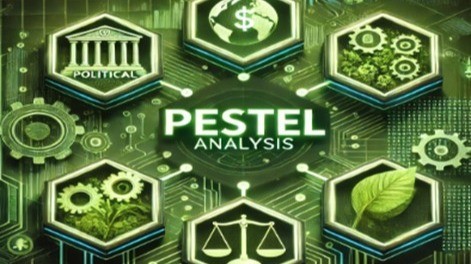
    PESTEL is a well-established and structured framework that allows organizations to systematically evaluate the external factors influencing their strategic decisions. By breaking down the complexities of the external environment into six key categories: Political, Economic, Social, Technological, Environmental, and Legal. PESTEL provides a comprehensive lens through which organizations can anticipate changes and prepare for future challenges.

    I will explore the definition of PESTEL, analyze its individual components, and discuss its application within futuring committees, particularly in conjunction with AI technologies. Additionally, I will compare PESTEL with environmental scanning to highlight its unique strengths and benefits. This exploration will demonstrate how PESTEL analysis not only enhances strategic foresight but also empowers organizations to navigate change with greater confidence and resilience. The most important factor to keep in mind while considering the value of PESTEL is its unique characteristic of highlighting potential trends permitting your organization to plan for the future. Trends will produce either headwinds or tailwinds for an organization. Recognizing the potential for headwinds or tailwinds can add valuable insights to a futuring process.

    What is PESTEL Analysis?

    PESTEL is an acronym representing six critical external factors of Political, Economic, Social, Technological, Environmental, and Legal that affect organizational planning. The framework is designed to help organizations understand trends in their environment and identify opportunities or risks. By organizing external influences into specific categories, PESTEL provides leaders with a clear picture of the factors they need to monitor and evaluate as they plan for the future.

    The Six Elements of PESTEL Analysis

    1. Political Factors Political factors involve government policies, regulations, trade agreements, and political stability. Changes in political leadership, tax policies, or regulatory frameworks can significantly impact industries. — Example: New policies promoting renewable energy may alter the energy market, presenting both risks and opportunities for traditional energy companies.

    2. Economic Factors Economic considerations include variables such as interest rates, inflation, unemployment, and economic growth. These elements determine consumer spending patterns, labor markets, and business growth potential. — Example: An economic downturn could reduce employment yet increase the demand for colleges to provide skill and workforce training to update a workforce.

    3. Social Factors Social factors encompass cultural trends, demographic changes, lifestyle shifts, and customer behaviors. Understanding these factors helps businesses align with evolving consumer expectations. — Example: The aging population may increase demand for healthcare services, while younger generations might drive innovation in technology.

    4. Technological Factors Technological considerations refer to the pace of technological advancements, digital innovation, and industry disruption. Organizations must monitor these developments to remain competitive. — Example: Companies adopting artificial intelligence (AI) early gain a competitive edge by improving efficiency and customer experiences.

    5. Environmental Factors Environmental factors include sustainability trends, resource availability, and ecological conservation efforts. Companies are increasingly expected to adopt sustainable practices to comply with regulations and align with public expectations. — Example: Businesses that implement sustainable practices, such as reducing waste or conserving energy, are better positioned to meet evolving regulations and align with public expectations for environmental responsibility.

    6. Legal Factors Legal may cover laws, regulations, intellectual property rights, and compliance requirements that impact operations. Adapting to new laws is essential for long-term stability. – Example: Changes to local building codes, such as stricter seismic standards in regions requiring contractors and developers to adjust designs and construction methods, impacting project budgets and timelines.

    Characteristics of PESTEL Analysis

    PESTEL analysis is a valuable tool for futuring because of several unique characteristics. It is comprehensive, covering six distinct areas to ensure that no external forces are overlooked. This thoroughness is complemented by a long-term focus, as PESTEL helps identify trends that may evolve over time, providing crucial insights for long-term planning. Additionally, the structured framework of PESTEL categorizes external factors, promoting systematic thinking and strategic alignment. This analysis tool also facilitates scenario development, allowing organizations to create multiple future scenarios that enhance their preparedness. Moreover, PESTEL is a dynamic tool that can be revisited regularly to capture new developments or changing trends. Together, these characteristics make PESTEL a powerful resource for strategic planning and futuring, enabling organizations to build resilience and agility in uncertain environments.

    Using PESTEL in AI-Assisted Analysis and Futuring Committees

    Artificial intelligence (AI) can significantly enhance PESTEL analysis by acting as an early brainstorming tool, allowing futuring committees to explore various scenarios more effectively. AI can analyze large datasets and identify hidden patterns in real time, providing insights that inform initial discussions. For instance, AI can process historical data to forecast future trends with greater accuracy, such as predicting shifts in consumer behavior. Additionally, AI tools can conduct sentiment analysis on public opinion related to political or social issues, offering valuable real-time insights. AI-powered models can run multiple simulations to explore different PESTEL-based scenarios, enabling committees to visualize potential outcomes. Furthermore, the automation of data collection from news sources, reports, and databases streamlines the process, saving valuable time for the futuring team. Overall, AI not only enhances the speed and accuracy of PESTEL analysis but also serves as a crucial resource for organizations focused on futuring.

    In conjunction with AI, futuring committees typically are comprised of executive leadership, governing boards, subject-matter experts, and constituents with an interest in exploring future scenarios. Utilizing PESTEL analysis as a foundational tool guides their discussions. The process begins with data gathering, where the committee collects insights related to each PESTEL category, such as monitoring political developments, economic forecasts, and technological trends. By categorizing this information, the committee identifies significant trends in each area. They then build multiple future scenarios based on the insights from the PESTEL analysis, exploring various outcomes influenced by factors like economic growth. This structured approach ensures that the organization’s strategy is aligned with the most likely or preferred future scenarios identified through the analysis. Together, AI and PESTEL create a robust framework for strategic planning and foresight.

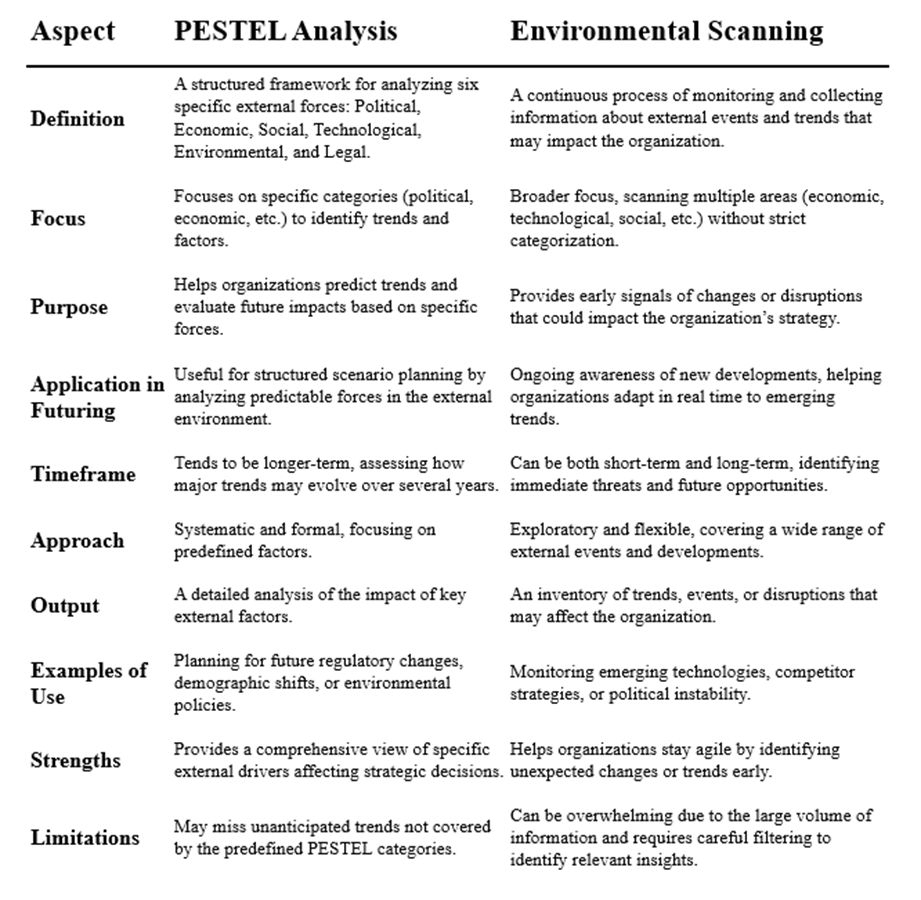
    PESTEL analysis and Environmental Scanning are complementary tools used in strategic planning, but they differ in several ways. Below is a comparison:

    Comparing PESTEL Analysis with Environmental Scanning

    Compare and Contrast PESTEL with Environmental Scan

    How PESTEL and Environmental Scanning Complement Each Other

    Environmental scanning plays a crucial role in the strategic planning process by providing the raw data and insights that inform PESTEL analysis. This foundational step involves systematically gathering information about various external factors, which serves as the input for a comprehensive PESTEL evaluation.

    PESTEL’s structured framework ensures that the insights derived from environmental scanning are not only organized but also actionable. By categorizing these insights into political, economic, social, technological, environmental, and legal factors, PESTEL helps organizations distill complex information into clear, strategic implications.

    Together, environmental scanning and PESTEL create a dynamic and iterative planning process. Environmental scanning keeps organizations attuned to emerging trends and shifts in the external landscape, while PESTEL aligns these insights with long-term strategic objectives. This synergy enhances an organization’s ability to anticipate changes and adapt proactively, ultimately fostering resilience and informed decision-making in an ever-evolving environment.

    Conclusion

    PESTEL analysis is a powerful tool for futuring, enabling organizations to systematically evaluate external forces and develop future-ready strategies. Whether used by a futuring committee or enhanced with AI analysis, PESTEL helps identify trends, anticipate risks, and align strategies with future opportunities. While environmental scanning offers a broader, more exploratory approach, PESTEL’s structured framework ensures that critical factors are not overlooked.

    By combining PESTEL with Environmental Scanning, organizations can stay agile, informed, and strategically aligned, ready to face the challenges and seize the opportunities of an uncertain future. Embracing futuring tools like PESTEL ensures that leaders are not just reactive but proactive, positioning their organizations for long-term success while creating a Strategic Visioning Document.

  • Futuring Tools: The Power of SWOT Analysis

    Futuring Tools: The Power of SWOT Analysis

    Organizations need tools to position themselves for both present challenges and future opportunities. One such essential tool is SWOT analysis, an effective framework for identifying and leveraging Strengths, Weaknesses, Opportunities, and Threats. A SWOT analysis provides a structured way to evaluate an organization’s internal and external environments, offering leaders the clarity needed to align present strategies with long-term goals. When integrated into futuring efforts, SWOT lays a solid foundation for strategic visioning, scenario planning, and future-proof decision-making. One of the important uses of SWOT is to determine the current status of an organization before the consideration of what may be in the future of that organization. It is the present state. A place to begin as a preferred future is considered.

    What is SWOT Analysis?

    SWOT analysis focuses on two internal and two external dimensions that impact organizational performance:

    • Strengths: Internal capabilities, such as skilled leadership, strong brand identity, or unique expertise.

    • Weaknesses: Internal gaps or challenges, such as outdated technology, limited resources, or operational inefficiencies.

    • Opportunities: External possibilities, such as emerging markets, industry trends, or technological advancements.

    • Threats: External risks, including economic downturns, market disruptions, or competitive pressures.

    This framework allows organizations to assess what they control internally and prepare for factors beyond their control. Strengths and weaknesses lie within the organization’s reach, offering areas for optimization, while opportunities and threats arise from the market or external environment. SWOT analysis ensures that an organization’s strategy reflects both its current capabilities and the evolving realities of its operating environment.

    The Role of SWOT Analysis in Futuring

    SWOT analysis is a supportive tool for futuring because it grounds long-term planning in the organization’s current reality. Before leaders can explore future scenarios or develop innovative strategies, they must first understand where the organization stands today. A clear snapshot of strengths, weaknesses, opportunities, and threats helps align future actions with present capabilities, ensuring that strategies are practical, achievable, and forward-looking.

    Consider a community college performing a SWOT analysis. The analysis might identify strong partnerships with local industries as a strength and outdated technology programs as a weakness. Opportunities could include the growing demand for AI and cybersecurity credentials, while a threat could be the increasing competition from online education providers. With these insights, the college’s leadership can design a strategy that updates its technology offerings, strengthens partnerships, and develops competitive online programs, ensuring its relevance in a fast-changing educational landscape.

    How to Conduct an Effective SWOT Analysis

    Conducting a meaningful SWOT analysis requires careful planning and thoughtful execution. Here are several possible key steps:

    • Involve a Diverse Team: Engage individuals from various departments to provide multiple perspectives. This ensures that all relevant areas of the organization are evaluated.

    • Gather Data and Insights: Use performance reports, surveys, interviews, and industry data to assess internal strengths and weaknesses, as well as external opportunities and threats.

    • Analyze Internal Strengths and Weaknesses: Focus on areas such as leadership, operations, finances, and infrastructure to determine what the organization excels at and where it needs improvement.

    • Evaluate External Opportunities and Threats: Identify emerging trends, technological developments, and regulatory changes that could affect the organization’s future.

    • Prioritize Key Findings: Not all strengths, weaknesses, opportunities, or threats are equally important. Rank them by relevance to the organization’s goals and potential impact.

    • Develop an Action Plan: Use the SWOT insights to inform strategy development. Design specific actions to leverage strengths, address weaknesses, pursue opportunities, and mitigate threats.

    Common Pitfalls to Avoid in SWOT Analysis

    Although SWOT analysis is a straightforward tool, it can be undermined by several challenges if not properly managed. One key issue is the use of vague findings. It is important to go beyond generic statements like “good leadership” and instead describe how leadership drives specific improvements, such as fostering innovation or improving decision-making processes. Clear, actionable descriptions help leaders better understand how strengths and weaknesses impact the organization.

    Another frequent challenge is the lack of prioritization. While it can be tempting to list every strength, weakness, opportunity, and threat, without ranking them, the analysis risks becoming overwhelming. Organizations should focus on the most critical factors that directly align with their strategic objectives, allowing for clearer decision-making and resource allocation. Prioritizing key findings ensures the team concentrates efforts on areas with the greatest potential for impact.

    A major pitfall of SWOT analysis is the failure to implement findings. The insights gained through the process are only valuable if they lead to concrete actions. Each identified priority should be assigned to a responsible individual or team, with timelines set for execution and measurable outcomes defined. Without clear follow-through, the value of the analysis is lost, as insights remain theoretical and disconnected from day-to-day operations.

    Lastly, ignoring external trends poses a serious risk. Organizations that focus exclusively on internal factors may miss critical external developments, such as technological advancements or market shifts, leaving them vulnerable to disruption. To remain competitive, it is essential to complement SWOT analysis with tools like environmental scanning, which helps detect emerging trends, risks, and opportunities. This ensures that the organization’s strategy not only addresses current challenges but also anticipates future changes in the market or industry landscape.

    SWOT Analysis and Strategic Visioning

    SWOT analysis lays the foundation for strategic visioning, enabling organizations to connect today’s efforts with future aspirations. By understanding internal strengths and external opportunities, leaders can design strategies that align with market trends and operational capabilities. For example:

    • Aligning Strengths with Opportunities: Focusing on areas where the organization’s strengths match emerging opportunities ensures faster implementation and higher success rates.

    • Turning Weaknesses into Opportunities: Identifying gaps provides a roadmap for improvement. Addressing weaknesses—such as upgrading technology—can become a competitive advantage.

    • Developing Contingency Plans for Threats: Recognizing potential risks allows organizations to create contingency plans, ensuring resilience in the face of unexpected challenges.

    SWOT-driven strategies help leaders make proactive decisions that prepare the organization for future uncertainties. This approach ensures that strategies are not only practical but also forward-looking, equipping organizations to thrive in unpredictable environments.

    Sample of a SWOT Analysis: Fictitious River Valley Community College.

    Using RVCC as a typical college with a possible SWOT analysis

    Strengths (Internal)

    1. Workforce-Focused Programs: Strong alignment with regional workforce needs through programs like cybersecurity, advanced manufacturing, and renewable energy.

    2. Community Partnerships: Creation of a Regional Workforce Council ensures relevance in curriculum and job placements.

    3. Technology Integration: Investment in digital platforms and hybrid learning to accommodate diverse learners, including working adults.

    4. Commitment to Sustainability: Green Campus Initiative promotes energy efficiency, waste reduction, and sustainable practices.

    Weaknesses (Internal)

    1. Resource Constraints: Expansion of programs and infrastructure upgrades may strain financial and staff resources.

    2. Dependence on Partnerships: Success of new programs and workforce alignment relies heavily on effective collaboration with industry partners.

    3. Limited Brand Recognition: Competing with other institutions for regional leadership and attracting students may require further marketing efforts.

    4. Adoption of New Technology: Faculty and students may face challenges adapting to new digital learning tools and AI-driven services. Costs of implementing new technologies and high cost of technicians and faculty.

    Opportunities (External)

    1. Emerging Industries: New programs in robotics, healthcare informatics, and entrepreneurship position RVCC for future growth in high-demand sectors.

    2. Regional Economic Growth: The college’s strategic role in workforce development can strengthen its position as a key driver of regional prosperity.

    3. Lifelong Learning Demand: Increasing need for career transitions offers opportunities for continuous education programs.

    4. Hybrid and Online Learning: Flexibility in learning formats can attract more part-time and working students.

    Threats (External)

    1. Economic Uncertainty: Regional economic shifts may impact enrollment and the availability of partnerships or funding.

    2. Competition: Other colleges or online education providers could compete for students and partnerships.

    3. Technological Disruptions: Rapid technological changes could outpace curriculum development and training efforts.

    4. Changing Student Expectations: Students demand more personalized and flexible education, which could require ongoing investments.

    This SWOT analysis will help RVCC identify areas where it can leverage its strengths and opportunities while addressing weaknesses and mitigating external threats.

    Conclusion: SWOT as the Gateway to Futuring

    SWOT analysis is a powerful tool that provides a clear understanding of where an organization stands today and where it can go in the future. By identifying strengths, weaknesses, opportunities, and threats, leaders can align their strategies with both internal capabilities and external realities. This alignment ensures that strategies are actionable, proactive, and future-focused, giving organizations a competitive edge in an uncertain world.

    As part of the futuring toolkit, SWOT analysis paves the way for deeper exploration through tools like scenario planning and environmental scanning. These tools build on SWOT insights to help organizations anticipate change, seize opportunities, support agility, and mitigate risks effectively.

  • Futuring in Action: Creating a Future-Ready Mission for Community Colleges

    Futuring in Action: Creating a Future-Ready Mission for Community Colleges

    As the former president of a community college in Idaho, I witnessed firsthand the rapid and often unpredictable changes impacting higher education and workforce development. Navigating these complexities was not always easy, especially when the future felt uncertain. Over time, it became evident that the traditional approaches to planning and decision-making were no longer enough to ensure the college’s long-term relevance and success. It was time to embrace a new, forward-thinking methodology – futuring.

    Futuring is more than just planning for tomorrow; it’s about anticipating a range of potential futures and positioning an institution to thrive no matter what comes. It moves beyond the boundaries of conventional strategic planning, which often focuses on the present or the near-term future and normally begins with an institutions mission, vision, values and core themes. Instead, futuring enables institutions to anticipate long-term challenges and opportunities and actively shape their destinies.

    For community colleges like the one I led, especially in regions such as Idaho, where industries such as energy, technology, health professions and advanced manufacturing are evolving rapidly, futuring becomes an indispensable tool for shaping institutional missions and visions. It’s about aligning the college’s mission with the anticipated economic, technological, and social changes that will define our communities in the years to come.

    The Definition and Purpose of Futuring in Higher Education

    Futuring is the process of systematically anticipating and planning for multiple possible futures by analyzing regional industries, demographics, economics, trends, exploring potential scenarios, and envisioning preferred outcomes. This method allows institutions to remain agile, adapting to the unpredictable nature of the future while pursuing their long-term goals. It’s essential to understand that futuring isn’t about predicting the future with certainty; rather, it’s about preparing for various possibilities.

    When I think about futuring in the context of a community college, three types of futures come to mind:

    • Possible futures: What could happen based on a wide range of factors—technological advancements, economic shifts, and demographic changes. These are hypothetical futures that represent an expansive view of what might be possible.

    • Probable futures: What is likely to happen based on current trends. These futures are grounded in present-day realities, like workforce demands, industry developments, and regional economic conditions.

    • Preferred futures: What we hope to create. These are the ideal outcomes we strive for, aligned with the college’s mission, values, and strategic vision.

    This article will apply these futuring concepts to a specific Idaho community college, but the concepts may apply to any number of colleges in any region.

    Shaping the Future: Key Opportunities for a Community Colleges in Idaho

    Our college is uniquely positioned to leverage several regional opportunities that can help shape its future. By focusing on industries that are present and emerging such as:  renewable energy, technology, cybersecurity, advance manufacturing and healthcare, colleges can play a pivotal role in preparing the next generation of skilled technicians and professionals while addressing the evolving needs of these sectors and the workforce. Here’s how these industries might define the mission and programs of a community college in the region:

    Eastern Idaho’s workforce growth is defined at some level by the I-15 corridor that extends from southern Idaho’s boarder through Canada. The region is at the forefront of several rapidly evolving industries, providing colleges with unique opportunities to align their missions with regional employers and workforce needs. By focusing on these existing and emerging industries, colleges can develop programs that prepare students for high-demand, family-wage careers while contributing to the economic and social growth of the region.

    1. Renewable Energy: Powering the Future

    Eastern Idaho is witnessing rapid growth in renewable energy sectors, particularly in solar, geothermal, nuclear and battery storage technologies. As the world moves toward greener energy solutions, the region is becoming a key player in this transition. Community colleges can seize this opportunity by developing comprehensive programs that train the next generation of energy technicians and operators. These students will maintain and expand the renewable energy infrastructure while contributing to sustainable energy innovations. By offering hands-on training in nuclear and solar power, colleges can ensure their graduates are equipped to meet the region’s clean energy goals. Skills at a two-year level will serve as the first two years of a bachelor’s degree at a university.

    2. Technology: Networking, Coding, and IT Support

    As the tech industry continues to grow, there is an increasing demand for networking, coding, and IT support professionals in Idaho. Technology skills are foundational across many sectors, and community colleges can meet this demand by offering programs in network design, software development, and IT management. By preparing students with these essential technology skills, colleges will equip graduates for jobs that are critical to the region’s digital infrastructure.

    3. Cybersecurity: Protecting the Digital Frontier

    As industries from energy to healthcare become more reliant on digital technologies, the demand for skilled cybersecurity professionals continues to surge. Cybersecurity plays a vital role in safeguarding critical infrastructure, including energy grids, healthcare systems, and financial services. Community colleges must anticipate this growing need by offering programs that prepare students to defend against cyber threats. By developing a workforce skilled in cybersecurity, colleges will help protect the region’s critical infrastructure from emerging risks.

    4. Two-Year Health Professions: Meeting Critical Healthcare Needs

    Healthcare is a rapidly growing industry, and Idaho faces a demand for well-trained healthcare professionals in two-year programs such as nursing, medical assisting, dental, surgery tech and allied health professions. Community colleges can expand their healthcare education offerings, ensuring students receive relevant training that meets industry standards. Graduates from these programs will enter high-demand roles in local hospitals, clinics, and long-term care facilities, contributing to the region’s healthcare system and improving access to quality care.

    5. Advanced Manufacturing: Emerging Opportunities

    Advanced manufacturing technician jobs can drive community college programming by offering specialized training in areas like CNC machining, automation, robotics, and mechatronics. Through hands-on learning, partnerships with local manufacturers, and industry-recognized certifications, students gain practical skills and real-world experience. These programs prepare graduates for high-demand, well-paying careers in modern manufacturing, while supporting local economic growth and innovation.

    By recognizing and aligning with these key regional opportunities of renewable energy, technology, cybersecurity, advance manufacturing and healthcare a college can use futuring to define a mission that is not only relevant today, but also positions the institution as a driver of innovation and workforce development in the future. Emphasizing these sectors ensures that students are prepared for critical roles in industries that are vital to the region’s growth and sustainability, while also supporting the broader economic and social fabric of a service region.

    Developing a Futuring-Based Mission

    When I served as president of a college, we used futuring strategies to guide our key decisions. We recognized that traditional strategic planning, which often begins with an institution’s mission, vision, and values, can sometimes fall short because it is rooted in current conditions rather than future possibilities. Futuring, on the other hand, begins with an exploration of potential futures and uses those to shape the mission and strategic vision.

    Here are four tools that can be helpful for an organization to approach futuring by exploring a mission that aligns with our vision for the future:

    1. SWOT Analysis: Useful for establishing the current state of a college and providing a foundation to project into a preferred future state. When colleges incorporate SWOT analysis into their futuring processes, they can identify internal strengths and weaknesses along with external opportunities and threats to guide strategic planning. For example, a college looking to adapt to shifting educational demands might conduct a SWOT analysis to identify the following:

    • Strengths: Strong transfer agreements with four-year institutions, high-quality faculty, diverse program offerings, and well-established student support services.

    • Weaknesses: Limited capacity for online course delivery, aging infrastructure, and a lack of specialized career services to meet evolving workforce needs.

    • Opportunities: Growth in demand for technical skills and workforce training programs, increased availability of grants for innovation in teaching methods, and potential for expanding partnerships with local industries.

    • Threats: Declining enrollment due to demographic shifts, increased competition from online educational platforms, and potential changes in government funding policies.

    By conducting this analysis, the college gains a clear understanding of its current position. This baseline is essential for projecting how it can leverage its strengths and opportunities—such as expanding workforce training programs in response to local industry needs—to achieve its mission, while simultaneously planning strategies to address weaknesses and mitigate threats like declining enrollment.

    2. Environmental Scanning: We conducted thorough environmental scans, analyzing workforce trends, technological developments, and regional economic forecasts. The insights gained from this analysis allowed us to identify industries that were likely to experience growth like nuclear energy, cybersecurity, health professions, and renewable energy. These scans formed the foundation of our futuring process, highlighting both opportunities and challenges that the college would face in the coming years.

    3. Scenario Planning: We then engaged in scenario planning, where we mapped out various futures for the college. This involved exploring possible, probable, and preferred futures for our service region. For example, in one scenario, the region might see rapid growth in the health technology sector, driven by advancements healthcare simulations. In another scenario, the demand for renewable energy technicians could skyrocket, requiring the college to ramp up its training programs for solar energy and battery storage.

    4. Alignment of Mission with Preferred Futures: Once we had explored several potential futures, we focused on crafting a mission that aligned with our preferred future. This preferred future envisioned the college as a central hub for workforce development, particularly in the sectors of energy, technology, and healthcare. Our mission emphasized preparing students for high-demand, high-paying jobs in industries that would shape the future of our service region.

    Preferred Future: A Hub of Innovation and Workforce Development

    In this preferred future, the community college has fully embraced its role as a workforce development hub for the region. The college is closely integrated with regional employers, collaborating on training programs for nuclear energy, technology, advanced manufacturing, cybersecurity and two-year health professionals. Students graduate with the skills needed to work in advanced technologies, contributing to both the region’s and the regions health and energy independence.

    A Resilient and Agile Institution

    The preferred future also envisions the college as a resilient institution, capable of adapting to unforeseen challenges. Whether it’s an economic downturn, a public health crisis, or a technological disruption, the college is prepared to pivot quickly and continue serving its students and community. This agility is made possible by a culture of continuous improvement, informed by regular scenario planning and AI-powered decision-making.

    By focusing on futuring, the college fosters a spirit of innovation and adaptability, ensuring that it remains relevant in a rapidly changing world. Faculty, staff, and students are encouraged to think creatively about the future and contribute to the continuous evolution of the institution.

    Conclusion: Shaping a Future-Ready Mission

    This article provided a specific example of how futuring can help envision a preferred future for a college in Idaho, but the broader lesson is that any college can apply these techniques to shape its own future based on the needs of its region. By adopting futuring strategies, community colleges can craft missions that respond to current demands while proactively preparing for future challenges and opportunities. Through thoughtful analysis, scenario planning, and aligning with regional industries, these institutions can actively shape their futures and ensure long-term success.

    Ultimately, futuring is about more than just adapting to change, it’s about leading the way. Colleges that are willing to embrace this approach won’t just survive in an uncertain future; they’ll thrive, becoming essential drivers of regional growth and innovation while providing needed skills for their graduates.

  • Forecasting Regional Trends with AI: The Next Generation of College Environmental Scans

    Forecasting Regional Trends with AI: The Next Generation of College Environmental Scans

    “Planning is bringing the future into the present so that you can do something about it now.”— Alan Lakein

    AI has become an essential tool for college leaders, allowing them to forecast regional education programming trends with greater accuracy amidst shifting demographics, evolving technology, and dynamic labor markets. To stay competitive, institutions must regularly engage in environmental scanning for the purposes of operational efficiencies, for futuring and for strategic planning. Environmental scanning involves gathering and interpreting external information to identify trends, threats, and opportunities. By integrating AI into these efforts, colleges can quickly and inexpensively draft forecasts, stimulating dialogue within teams and enhancing their ability to make informed strategic decisions.

    Traditionally, environmental scans have relied on human analysts or consulting firms to comb through data, reports, and expert opinions. But with the advent of Artificial Intelligence (AI), we are witnessing a revolution in how environmental scans might be conducted. AI promises to make these scans faster, utilize a broader data set, and cost-effective, empowering college leaders to recognize potential regional changes as they emerge. However, AI is still a developing field, and there are many limitations to its application as an environmental scanning tool. This article explores how AI can enhance environmental scans for college leaders while comparing its use with traditional methods such as hiring consulting firms.

    My Journey into AI-Driven Environmental Scans

    When I first explored the potential of AI for conducting environmental scans, I was both excited and skeptical. The idea of using AI to analyze data in real time and uncover trends that could help inform strategic decisions was appealing. However, I also recognized that AI is still relatively new and prone to hallucinations (errors in generating logical outputs), inaccuracies, and biases depending on the quality of data it’s trained on. Despite these limitations, I believed AI could be a powerful tool when combined with human expertise, so I began exploring its capabilities.

    What Is an Environmental Scan?

    An environmental scan is a strategic tool used by college leaders to systematically gather, analyze, and interpret information about the internal and external factors that could impact an institution’s future direction. This tool is essential for longer term planning and decision-making, helping colleges stay agile in an ever-changing environment. The goal of an environmental scan is to equip institutions with a comprehensive understanding of the landscape, allowing them to anticipate emerging trends, adapt to challenges, and seize opportunities.

    At its core, an environmental scan allows planning teams to navigate the complexities of the educational ecosystem by identifying the forces that can either propel the institution forward or hinder its growth. By systematically examining these influences, institutions can align their strategies with both present realities and future possibilities, ensuring they remain competitive, relevant, and responsive to the needs of students, faculty, and the broader community.

    Purpose of Environmental Scans for College Futuring

    For colleges, environmental scans may serve several key purposes:

    1. Strategic Planning: Environmental scans inform strategic decisions by providing data-driven insights into trends and challenges that may affect the institution’s future. This includes decisions around program development, resource allocation, and campus investments.

    2. Risk Management: By identifying potential threats such as economic downturns, shifts in policy, or changing labor market demands environmental scans enable institutions to anticipate risks and develop contingency plans.

    3. Identification of possible Opportunities: Scanning the environment allows colleges to discover new opportunities for growth, such as emerging employers, workforce demands, new academic fields, new technologies, or partnerships that could enhance their competitiveness and attractiveness to prospective students.

    4. Continuous Improvement: Environmental scans encourage ongoing evaluation and adaptation. By regularly updating their understanding of internal and external conditions, colleges can continuously improve their existing operations, programs, and services to meet evolving expectations.

    5. Market Responsiveness: Colleges operate in a competitive environment, vying for students, faculty, and funding. Environmental scans help institutions monitor competitors and adjust their strategies to maintain or enhance their market position.

    6. Environmental scanning, as discussed in The Great Upheaval, plays a crucial role in identifying external factors that influence education, such as economic shifts and changes in labor markets. Institutions that regularly engage in environmental scanning can better anticipate disruptions and align their strategies, accordingly, allowing them to stay competitive in an evolving landscape (Levine & Van Pelt, 2021). By incorporating AI into these scans, colleges can more effectively gather and analyze large amounts of data, identifying trends that would otherwise be missed.

    However, it’s important to recognize that while AI significantly enhances the environmental scanning process, it is not without limitations. AI tools depend on the quality and diversity of the data they are trained on, and biased or incomplete data can lead to inaccurate conclusions. As a result, a hybrid approach where AI-driven insights are combined with human expertise and contextual knowledge can offer the most reliable outcomes for college leaders.

    Elements Evaluated in an Environmental Scan

    An environmental scan typically evaluates a variety of factors that could potentially influence a college’s operations, reputation, and strategic direction. Some of the most important elements include:

    1. Student Demographics and Enrollment Patterns: Monitoring changes in student demographics, such as age, geographic origin, income, and educational preferences, is crucial for anticipating enrollment shifts and developing targeted recruitment strategies. Institutions need to adapt to evolving student needs to remain attractive and relevant.

    2. Workforce Trends and Labor Market Demands: By prioritizing the analysis of local and regional labor market data, colleges can align their academic programs with the specific skills and knowledge required by growing industries in their area. This localized focus ensures that graduates are well-prepared to meet the demands of the regional workforce, boosting their employability, use of demonstrated skillset, and strengthening the institution’s role in supporting the local economy.

    3. Technological Advancements: Keeping abreast of emerging technologies, such as artificial intelligence, augmented reality, simulations, or new learning management systems, enables colleges to innovate in teaching, learning, and administrative processes. By integrating cutting-edge technologies, institutions can enhance student experiences, improve operational efficiency, and remain competitive in a tech-driven world.

    4. Policy and Regulatory Changes: Higher education is subject to complex and ever-changing regulations. Environmental scans help institutions stay informed about shifts in government policies, funding models, accreditation standards, and other regulatory frameworks. This is critical for ensuring compliance and adapting to policy changes that could affect the institution’s operations or funding streams.

    5. Economic Factors: Analyzing broader economic trends, such as inflation, unemployment rates, and public funding for higher education, allows colleges to anticipate financial challenges and opportunities. Institutions can use this data to make informed decisions about tuition rates, financial aid, budget allocation, and capital investments.

    6.  Social and Cultural Trends: Social and cultural shifts, such as changing attitudes toward higher education, evolving societal values, the increasing focus on mental health and well-being, and the growing demand for flexible learning options, can significantly impact a college’s policies, culture, and student engagement strategies. For example, as highlighted in The Great Upheaval by Arthur Levine, the shift toward lifelong learning and the need for continuous skill development is reshaping higher education. Colleges must adapt to these changes by offering more flexible programs and credentials to meet the needs of a constantly evolving workforce. Understanding these trends helps institutions remain relevant and responsive to societal expectations.

    AI-Driven Environmental Scan vs. Hiring a Consulting Firm

    Of course, not everything is perfect with AI. While AI-driven scans offer clear advantages, they are not without their limitations. As I began exploring AI solutions, I also considered the traditional approach of hiring consulting firms, which we’ve used in the past. Here’s a breakdown of the key differences:

    1. Cost

    • AI-Driven Scan: Once the AI tools are in place, running environmental scans is relatively low-cost. The system can operate continuously with minimal human intervention, making it ideal for institutions with tight budgets.

    • Hiring a Consulting Firm: External firms often charge high fees for conducting environmental scans, especially for in-depth, region-wide analysis. Every new scan typically incurs additional costs, making this approach expensive for long-term use.

    2. Speed

    • AI-Driven Scan: AI processes vast amounts of data in real time, providing immediate insights. This allows institutions to respond to trends as they happen, rather than waiting for a manual report that could take months to complete.

    • Hiring a Consulting Firm: Consulting firms often require several months to collect and analyze data, especially if the scan is comprehensive. While the results can be detailed, the process is slower, which might delay critical decision-making.

    3. Accuracy and Data Processing

    • AI-Driven Scan: AI excels at processing large datasets and identifying patterns that might be missed by human analysts. However, the accuracy of AI depends on the quality of data it’s trained on. If the training data is biased, AI can produce skewed results.

    • Hiring a Consulting Firm: Human consultants bring context and experience, which is valuable when interpreting complex, qualitative data. While manual analysis is slower, it may provide deeper insights into areas that require nuanced understanding.

    4. Adaptability and Customization

    • AI-Driven Scan: AI systems can easily be updated to focus on different regions or priorities. If I need to adjust the scan to target a specific area, the AI tool can recalibrate with little to no downtime. AI is only as good as the prompt input into the data set. Expertise in AI prompt creation is the primary factor in delivering useful results.

    • Hiring a Consulting Firm: Consulting firms can customize their scans, but this often requires new contracts or engagements, leading to additional costs and delays.

    5. Expertise and Human Insight

    • AI-Driven Scan: AI can process data and flag trends, but human interpretation is still necessary to contextualize insights and make strategic decisions. I’ve found that while AI is great at flagging patterns, human leaders are needed to assess their relevance.

    • Hiring a Consulting Firm: Consulting firms provide tailored recommendations based on their experience with similar institutions. This level of human expertise is difficult for AI to replicate, especially when dealing with complex issues that require strategic interpretation.

    6. Bias and Transparency

    • AI-Driven Scan: AI models can reflect biases present in the training data. Moreover, AI’s decision-making process is sometimes opaque, making it hard to understand how conclusions were reached.

    • Hiring a Consulting Firm: Human consultants offer more transparency in their methodologies, which can be helpful for ensuring accountability and trust in their conclusions.

    Conclusion: Which is Better?

    The choice between an AI-driven environmental scan and hiring a company depends on an institution’s specific needs, resources, and timelines.

    • AI-Driven Environmental Scans offer speed, cost-efficiency, and the ability to continuously monitor trends in real time. They are ideal for institutions that need to stay agile in a rapidly changing environment and have the internal expertise to interpret the data provided by AI tools.

    • Hiring a Company provides a higher level of human expertise and nuanced analysis. For institutions facing complex challenges or needing strategic advice tailored to their specific context, a consulting firm might be the better option, despite the higher cost and longer time frame.

    A hybrid approach, where AI tools are used to collect and analyze data and human experts provide strategic recommendations, might be the most effective solution. This allows institutions to benefit from the speed and efficiency of AI while still leveraging the deep insights and experience of human consultants.

    My Conclusion: A Hybrid Approach

    Ultimately, the choice between AI-driven environmental scans and hiring a consulting firm depends on your institution’s specific needs. AI-driven scans offer significant advantages in terms of speed, cost, and adaptability. However, AI is still evolving, and its limitations such as the potential for bias and the need for human interpretation mean that it’s not a perfect solution.

    On the other hand, consulting firms bring valuable expertise and can provide deeper, more nuanced insights, though at a higher cost and slower pace. By using AI to gather and analyze data quickly and then leveraging human experts to interpret those insights, we will likely receive the best of both worlds. AI-driven tools provide the speed and efficiency we need, while consulting firms add the strategic depth that only humans can offer.

    The Future of Environmental Scanning in Higher Education

    As higher education continues to evolve, AI-driven environmental scans will play an increasingly critical role in helping college leaders stay ahead of emerging trends and add the key advantage of agility to a college. The ability to process vast amounts of data in real time, predict future developments, and track technological innovations gives institutions a powerful tool for proactive decision-making. However, as I’ve learned, AI is not a silver bullet. Combining AI’s capabilities with human expertise will be essential for maximizing the value of environmental scans and guiding institutions toward long-term success.

  • Crafting a Strategic Vision Document: Executive Summary for an Organization’s Preferred Future

    Crafting a Strategic Vision Document: Executive Summary for an Organization’s Preferred Future

    A Strategic Vision Document represents the culmination of an in-depth futuring process involving multiple committees and leadership teams collaborating to envision the organization’s preferred future within its service district or region. It is anchored in the institution’s mission, vision, and values statements, which serve as foundational pillars. The futuring process can range from an informal lunch meeting with an executive to a highly structured, AI-assisted process that synthesizes input from diverse committees to outline what the college’s ideal future might look like. Ultimately, the document should reflect a consensus of both the current landscape of the service region and a projection into the emerging future of the college.

    This high-level document provides a clear summary of the strategic planning process, key insights, and priority areas identified. At its core, the Strategic Vision Document is a future-focused statement that anticipates changes in the college’s region and service environment. It is designed to communicate a shared understanding of the organization’s direction, align decision-making, and inspire action to achieve long-term goals. As a comprehensive yet concise guide, it is an essential tool for engaging key stakeholders such as the governing board, advisory council, legislators, the president and leadership team, and faculty members ensuring everyone is united in working toward a common vision.

    From the book, The Great Upheaval, Levine and Van Pelt in Chapter 12 – Reinventing the Institutional Model, outline how traditional college models are being challenged by new educational providers. They recommend that institutions focus on building a distinct brand that communicates their unique strengths, such as innovative programming, strong community ties, or specialized fields of study, to stand out in a competitive landscape. The Strategic Vision Document is a tool to help college leadership consider and highlight those characteristics that make their institution unique and will stand out for students and supporters.

    The Structure of a Strategic Vision Document

    For purposes of my consulting practice, the Strategic Vision Document is a client deliverable and provides a high-level summary of an institution’s long-term goals and strategic priorities. I prefer three sections providing a concise, clear, and organized summary normally projecting operations five years into the future. The three sections include:

    1. College Purpose for Preferred Future

    2. Implementation of Programs and Services for the Preferred Future

    3. Expected Outcomes from Implementation

    This structure ensures that the document is easy to navigate and clearly communicates the college’s strategic vision to all stakeholders.

    Section 1 – College Future Purpose: Setting the Strategic Foundation

    The first section of a strategic vision document defines the future purpose of the college and establishes the foundation for its future direction. This section should outline the college’s mission, its role in the community, and the guiding principles that shape its strategic priorities. This is where the unique value of the college’s mission is highlighted.

    This future core purpose statement defines for all constituents the college’s future purpose and aspirations, providing a clear focus for the strategic vision and serving as a guiding reference for future planning and decision-making. The core purpose extends beyond simply restating the college’s mission. It should capture the strategic intent driving the vision outlining where the college aims to be in the next five years and the rationale behind that direction.

    Section 2 – Implementing Programs and Services to Achieve the Vision

    This section details the specific programs, initiatives, and services that will drive the college’s vision forward over the next five years. As the most comprehensive part of the document, it may include the following elements:

    • Program Expansion and Innovation: Strategies for introducing new academic programs, enhancing existing ones, and integrating emerging fields to ensure the college remains agile and aligned with future workforce demands.

    • Community and Industry Partnerships: Plans to collaborate with local businesses, industries, and community organizations to co-create programs that meet evolving workforce needs and foster strong regional partnerships.

    • Digital Transformation and Enhanced Student Services: Initiatives to leverage technology for improved learning experiences, personalized student support, use of AI processes, and expanded access to online resources and services.

    • Faculty and Staff Development: Efforts to invest in professional growth, cultivate a culture of continuous improvement, and equip faculty and staff with the skills needed to adapt to changing educational landscapes.

    • Sustainability and Infrastructure Improvement: Strategies for upgrading campus facilities, optimizing resource management, and promoting environmental sustainability to support long-term growth and resilience.

    Section Two may also provide a detailed list of programs that will be developed, expanded, or modified to align with the college’s strategic vision and future goals. Futuring can help leadership determine the need for new programming and also the possibility of “sunsetting” programs who have reached their productive life.

    Section 3 – Outcomes from Implementation: Measuring Success and Impact

    This section of the Strategic Vision Document defines the anticipated outcomes of the implemented programs and services, focusing on how success and impact will be measured over the next five years. It includes both quantitative and qualitative metrics, such as increased enrollment, higher graduation rates, improved student satisfaction, and strengthened industry partnerships. These benchmarks will serve as key indicators of progress, ensuring that the college remains on track to achieve its strategic goals and fulfill its future mission.

    Conclusion: A Strategic Vision for the Future

    A Strategic Vision Document is more than just a planning tool; it is a powerful expression of an institution’s aspirations, values, and commitment to its stakeholders. It defines a preferred future where the college thrives as an educational leader, community partner, and catalyst for regional growth. By developing a structured and forward-looking strategic vision, institutions can chart a course that inspires action, guides decision-making, and sets the foundation for long-term success.

    In a changing educational landscape, having a clear and compelling strategic vision is essential for navigating uncertainty and seizing new opportunities. Additional value of the Strategic Vision Document is to articulate the branding and unique role a college anticipates for its constituents. A well-crafted document that articulates purpose, outlines actionable strategies, and defines measurable outcomes becomes a vital resource that drives innovation and transformation, ensuring the institution remains resilient, relevant, and impactful for years to come.

    ————-

    EXAMPLE – This is a sample of a one and half page Strategic Vision Document for the fictitious River Valley Community College

    In this scenario I explore the components parts and purpose of a Strategic Vision Document. This overview will show how River Valley Community College’s strategic vision aligns with its core mission, outlines implementation strategies, and identifies key outcomes. By following this structured approach, colleges can remain adaptive and responsive to the evolving needs of students and the broader community.

    RVCC Five Year Strategic Vision Document

    Section 1: Future Core Purpose

    River Valley Community College (RVCC) envisions a future where it serves as a dynamic hub for workforce development and lifelong learning, with a commitment to agility and resilience in the face of change. As the needs of the community and regional economy evolve, RVCC will play an expanded role in providing advanced skills training, continuous education, and support for career transitions empowering learners at every stage of life to succeed in emerging industries and opportunities. Guided by its values of adaptability and perseverance, RVCC will foster innovation, strengthen community partnerships, and lead the way in preparing individuals to thrive in an evolving world, ensuring student job readiness and economic vitality for the region.

    This core purpose captures RVCC’s strategic intent over the next five years, articulating where the college intends to be and why. The focus is on becoming a regional leader through innovative programs, community engagement, and workforce alignment, setting the foundation for a proactive approach to strategic planning and positioning the college as a vital contributor to the region’s future growth and success.

    Section 2: Implementing Programs and Services to Achieve the Vision

    To bring its strategic vision to life, River Valley Community College will implement a series of initiatives over the next five years that address program expansion, community partnerships, student services, technology integration, and sustainability. This section outlines the primary focus areas:

    • Expanding Academic Offerings: RVCC will develop new associate degrees and certificates in high-demand fields such as cybersecurity, data analytics, renewable energy, and advanced manufacturing. These programs will be created in collaboration with industry partners to ensure they align with regional workforce needs.

    • Strengthening Community and Industry Partnerships: The college will establish a Regional Workforce Council composed of local business leaders, educators, and policymakers. This council will advise on curriculum development, provide internship and apprenticeship opportunities, and support job placement services to ensure students graduate with skills directly applicable to the job market.

    • Enhancing Student Services: RVCC will establish a centralized Student Success Center that integrates academic advising, career counseling, and mental health services. The center will offer a holistic approach to supporting students, addressing academic, personal, and professional development needs.

    • Leveraging Technology for Learning: RVCC will invest in digital learning platforms, virtual classrooms, and AI-driven tutoring services to create a more personalized and flexible learning environment. The college will also introduce hybrid learning options to cater to working adults and part-time students.

    • Promoting Sustainability and Infrastructure Improvement: Through its Green Campus Initiative, RVCC will focus on energy efficiency, waste reduction, and sustainable practices. This initiative will include upgrading campus facilities, integrating sustainability into the curriculum, and conducting research on renewable energy technologies.

    Potential New Programs: To support this strategic direction, RVCC will consider launching new programs such as: robotics technology, digital marketing, healthcare informatics, entrepreneurship, and sustainable agriculture.

    Section 3. Outcomes from Implementation By 2028, River Valley Community College envisions achieving the following outcomes:

    • Increased Enrollment and Retention: RVCC will increase student enrollment by 10% and boost retention rates by 12% through the launch of new academic programs and enhanced support services, including expanded advising and mentorship initiatives.

    • Workforce Alignment and Employment: 74% of RVCC graduates will secure employment in their field of study within six months of graduation, facilitated by strong industry partnerships and comprehensive job placement services.

    • Community and Economic Impact: RVCC will contribute to a 25% increase in regional job placements and support local business growth through its Center for Innovation and Technology, solidifying its role as a key driver of regional economic development and a valued community partner.

    Potential new programs in fields such as robotics technology, digital marketing, healthcare informatics, entrepreneurship, and sustainable agriculture are expected to yield additional outcomes, including a 15% increase in graduates employed in emerging industries and the establishment of specialized training centers that serve as hubs for innovation and skill development within the community.

    ————-

    If you are a member of an educational leadership team looking to explore how AI-enhanced strategic futuring can transform your institution, I’d love to collaborate with you. Whether it’s identifying future job markets, optimizing your curriculum, or anticipating regional economic shifts, I can help your team harness the power of AI for better planning and decision-making. Let’s schedule a time to meet, and together we can create a vision of the future that positions your institution for long-term success. Feel free to reach out, and I look forward to working with you.

    Rick Aman, PhD

  • Charting the Course for Organizational Success: The Interaction of Futuring, Strategic Visioning, and Planning

    Charting the Course for Organizational Success: The Interaction of Futuring, Strategic Visioning, and Planning

    In higher education, especially within community colleges, leaders must go beyond merely responding to change; they must actively shape their institution’s future. The concepts of Futuring, Strategic Vision and Planning not only apply to higher education, but certainly to any Organization. 

    Traditionally, strategic planning has been the favored method, beginning with the college’s mission, vision, values, and core themes. This process typically involves gathering input from various stakeholders to create a comprehensive plan that guides the institution’s progression. However, these plans can sometimes fall short, often completed only to be shelved until the next planning cycle, leaving institutions stagnant in a rapidly evolving educational landscape.

    Traditional strategic planning focuses on the current state of the institution and projects into the future, often producing documents such as Strategic Plans, Resource Allocation Plans, Operating Budgets, and Performance Metrics like Key Performance Indicators (KPIs). These tools are essential for trustees, leadership teams, faculty, staff, and external evaluators. However, they often overlook the fact that the future is unpredictable and constantly changing, requiring a more dynamic and adaptable approach to strategic planning.

    As the recently retired president of a new community college in eastern Idaho, my team and I spent the last four years exploring a different approach to strategic planning—the concept of “futuring.” Community colleges face unique challenges, such as navigating shifting workforce demands, technological advancements, the need for open enrollment admissions, a focus on affordability, a demand for agility in delivery, and evolving student needs.

    With 30 years of experience in community college planning, I now believe that college leaders should integrate three key processes into their comprehensive planning efforts: 1) AI-Assisted Futuring, 2) Strategic Visioning, and 3) Future-Focused Planning. Each of these elements plays a crucial and unique role in ensuring long-term success and agility. Understanding how they interconnect is essential for any organization that aims to thrive in today’s rapidly changing environment.

    1. Futuring: Shaping Tomorrow’s Possibilities Today

    Futuring is a planning approach that helps organizations anticipate and prepare for future developments. It involves anticipating then analyzing emerging trends, exploring possible scenarios, and identifying potential disruptions to inform decision-making. Unlike traditional strategic planning, which focuses on mission, vision, values, historical data, and short-term goals; futuring leverages forward-looking insights and predictive modeling to consider multiple scenarios. Using tools such as AI, SWOT analysis, environmental scans, foresight, and scenario planning, futuring provides a strategy that fosters both agility and resilience. This proactive approach allows organizations to shape their future, align actions with long-term objectives, and respond effectively to uncertainty. Ultimately, futuring guides organizations toward a preferred future instead of merely reacting to change from a static strategic plan. 

    This approach is akin to Wayne Gretzky’s famous advice to “skate to where the puck will be,” emphasizing the importance of foresight and strategic positioning. By anticipating trends, challenges, and opportunities, institutions can navigate the uncertainties of the future with greater confidence and agility.

    Futuring involves a continuous process of scanning the external environment, engaging stakeholders, and exploring various scenarios that might impact the institution. This proactive mindset often begins with an environmental scan, which allows leaders to craft strategies that are not only responsive but also resilient in the face of change. Whether it’s adapting to technological advancements, shifting workforce needs, or evolving student demographics, futuring ensures that the institution remains relevant and competitive.

    By integrating local relevance and forward-thinking ambition into its strategic vision, a college can solidify its role as a vital and dynamic force within the community. This approach enables the institution to lead not only in education but also in driving regional growth and fostering innovation, ensuring its continued impact and relevance in the broader regional landscape. In my practice, a futuring exercise will end with a deliverable of a two-page Strategic Vision Document for the client. 

    Ultimately, futuring is about anticipating the future rather than letting it control you. It’s a dynamic process that requires creativity, flexibility, and a willingness to challenge the status quo. By adopting a futuring approach, organizations can set themselves on a path toward long-term success, shaping their destinies with intention and purpose.

    “A vision without a plan is just a dream. A plan without a vision is drudgery. A vision with a plan can change the world.” – Proverb

    2. Strategic Visioning: Aligning Future Goals with Institutional Purpose

    Building on the insights gained from futuring, a strategic vision provides a clear and aspirational direction for the institution. This vision acts as a guiding star, aligning all planning efforts with the college’s long-term goals and ensuring that every action taken contributes to the desired future.

    For most two-year colleges, the strategic vision is deeply intertwined with the economic and employment needs of the region or service district they serve. A key consideration is understanding the future environment that will help retain students locally and provide them with family-sustaining jobs based on relevant skills. Proximity to local communities and a keen awareness of regional economic drivers are essential in crafting a vision that resonates with both internal stakeholders and external partners.

    A well-crafted strategic vision not only outlines where the institution aims to go, but also inspires and motivates all members of the college community to work toward that shared future. It serves as a touchstone in decision-making processes, helping to prioritize initiatives and allocate resources in ways that best support the college’s mission. Moreover, the strategic vision should be adaptable, allowing the institution to respond to evolving circumstances while staying true to its core values and objectives.

    By integrating local relevance and forward-thinking ambition into its strategic vision, a college can solidify its role as a vital and dynamic force within the community. This approach enables the institution to lead not only in education but also in driving regional growth and fostering innovation, ensuring its continued impact and relevance in the broader regional landscape.

    “A vision is not just a picture of what could be; it is an appeal to our better selves, a call to become something more.” – Rosabeth Moss Kanter

    3. Strategic Planning: Turning Vision into a Roadmap for Success

    Strategic planning is the crucial process that bridges the gap between a strategic vision and its realization. It involves translating the high-level aspirations of the vision into concrete, actionable steps that guide the organization toward its goals. This process begins with the development of detailed plans that outline specific initiatives, timelines, and responsibilities, ensuring that every aspect of the organization is aligned with the overarching vision.

    A key element of strategic planning is the effective allocation of resources. This includes budget planning, human resource management, and the optimization of facilities and technology to support strategic initiatives. By strategically distributing resources, the organization ensures that each department or unit has what it needs to contribute to the overall goals.

    Another critical component is the establishment of Key Performance Indicators (KPIs) and other metrics to measure success. These metrics serve as benchmarks that help the organization track its progress, assess the effectiveness of its strategies, and make data-driven decisions. Regularly reviewing these metrics allows leaders to identify areas that need adjustment and to ensure that the organization remains on course toward achieving its vision.

    Strategic planning is not a one-time event but an ongoing process. As the organization progresses, the plan may need to be revisited and revised in response to new challenges, opportunities, or shifts in the external environment. This iterative approach ensures that the strategic plan remains relevant, and that the organization can adapt to changing circumstances while staying true to its long-term objectives.

    In essence, strategic planning is the roadmap that guides an organization from where it is today to where it aspires to be in the future. By carefully crafting and executing a strategic plan, leaders can ensure that their vision is not just a lofty ideal but a tangible reality that drives meaningful and sustainable success.

    “Strategic planning is worthless—unless there is first a strategic vision.” – John Naisbitt

    Conclusion: Charting a Future-Ready Course for Community Colleges

    By integrating futuring, strategic vision, and strategic planning, community colleges can create a robust and adaptive planning framework that is essential for long-term success. This approach ensures that plans remain both relevant and actionable, promoting a culture of continuous improvement and adaptability—essential qualities in today’s rapidly changing educational landscape.

    In an era marked by constant change, it is vital for college leaders to rethink traditional planning methods. Embracing a futuring mindset allows institutions to anticipate and prepare for future uncertainties. Crafting a strategic vision provides a clear and compelling direction that unites the entire organization around common goals. Strategic planning then transforms this vision into concrete steps, ensuring that the institution is equipped to meet both current challenges and future opportunities.

    These processes are not just linear but iterative, allowing for ongoing adjustments as new information and circumstances emerge. This dynamic interplay empowers organizations to remain agile, responsive, and aligned with their long-term objectives.

    Ultimately, mastering the combination of futuring, strategic visioning, and strategic planning enables leaders to chart a course for their institutions that is both visionary and practical, driving meaningful and lasting change. By doing so, community colleges can not only survive but thrive, continually advancing their mission to serve students and communities in an ever-changing world.

  • Backcasting as a tool for Futuring: Creating a strategic roadmap toward the preferred future

    Backcasting as a tool for Futuring: Creating a strategic roadmap toward the preferred future

    Introduction
    In the landscape of higher education and organizational leadership, having a clear vision for the future is vital. While forecasting helps project current trends into the future, Backcasting provides a complementary approach that begins with the desired end state and works in reverse to create a roadmap. This method is particularly powerful for educational institutions and organizations seeking to future-proof themselves against uncertainty and disruption.

    Backcasting invites organizations to start by envisioning their preferred future state and then map their path backward to the present. By working in reverse, leaders can identify important milestones, essential partnerships, strategic projects, and regional recognition factors that ensure alignment with visionary goals.

    What is Backcasting?
    Backcasting is a strategic planning tool that starts with defining a preferred future outcome and then works backward to identify the steps necessary to achieve that outcome. Unlike traditional forecasting, which extrapolates from current trends and assumptions, Backcasting encourages bold, vision-driven thinking. This process helps leaders and stakeholders pinpoint what needs to change today to align with long-term aspirations.

    Backcasting and forecasting are not mutually exclusive; they are complementary approaches. Forecasting projects the present mission trajectory into the future, helping organizations anticipate trends and potential scenarios. Conversely, Backcasting shifts the focus by beginning 3-5 years into the future with the organization’s preferred state and works backward to the present. This combination ensures alignment with visionary goals and informs a holistic strategy yet aligns with the organization as it currently exists.

    Integrating Backcasting into a futuring plan allows institutions to plot crucial steps that bridge the gap between present actions and future outcomes. Using this method alongside PESTEL (Political, Economic, Social, Technological, Environmental, and Legal) analysis ensures that leaders remain aware of external factors that could influence their progress and adapt their strategies accordingly. A similar approach could be used if the organization has done a thorough environmental scan of their service region and there is an understanding of factors that both exist or may exist into the future.

    The Process of Backcasting
    Backcasting involves a structured approach that guides organizations through envisioning their future and mapping out the path to reach it. Here is how Backcasting can be effectively implemented:

    1. Define the Preferred Future
      The first step in Backcasting is to clearly define the desired future state. For an educational institution, this could mean becoming a leader in integrating AI-driven learning and providing competency-based education tailored to diverse student needs. This future vision should be comprehensive, detailing specific achievements, such as enhanced curriculum, partnerships, technology integration, and community impact. This is the Steven Covey concept of beginning with the end in mind.

    2. Analyze the Current State using a SWOT Analysis
      Use the futuring committee to define the current state of the organization using a committee to list Strengths, Weaknesses, Opportunities and Threats. This involves an honest evaluation of strengths, weaknesses, existing resources, and ongoing projects. Understanding the current position allows leaders to identify the gap between where the institution is today and where it aspires to be in the future.

    3. Conduct a PESTEL Analysis
      Applying a PESTEL analysis at this stage helps identify external factors that may impact the journey to the preferred future. By examining political, economic, social, technological, environmental, and legal influences, organizations can better anticipate challenges and opportunities. For example, if a college’s future goal is to lead in renewable energy education, a PESTEL analysis might reveal government incentives for sustainable programs (political), industry job growth (economic), and emerging technologies (technological) that align with their objectives.

    4. Identify Milestones and Partnerships
      Working backward from the future, leaders can identify critical milestones and the partnerships needed to reach them. Milestones may include curriculum redesigns, faculty training programs, or building infrastructure. Key partnerships might involve collaborations with tech companies, local industry leaders, or government bodies to support program development and student opportunities.

    5. Map Strategic Projects
      With major milestones outlined, it’s time to map specific projects that need to be launched or expanded. For example, creating new training programs, integrating simulation technologies, and developing community outreach initiatives could all be essential parts of reaching the future state. Each project should be assigned timelines and measurable outcomes to track progress effectively.

    6. Set Regional Recognition Goals
      Building regional recognition and influence is essential for many educational institutions. By identifying steps to boost visibility and reputation—such as strategic marketing campaigns, community engagement, or policy advocacy—organizations can ensure they are recognized as thought leaders and innovators in their field.

    7. Implement and Adapt
      Backcasting is not a rigid blueprint but a flexible guide. As the roadmap is put into action, continuous monitoring and adaptation are vital. This approach allows for adjustments based on new data, shifts in the external environment, or unforeseen challenges.

    Practical Application of Backcasting
    To illustrate the power of Backcasting, let’s consider a practical example using River Valley Community College. Imagine RVCC aiming to become a regional hub for sustainable energy education. The preferred future envisions state-of-the-art facilities, a highly trained faculty, and strong partnerships with renewable energy companies. By working backward, the college can:

    • Establish strategic partnerships with renewable energy firms and local businesses that support internships and job placement.

    • Develop new degree programs focused on green energy technologies.

    • Secure funding through grants or public-private partnerships to support infrastructure expansion.

    • Create faculty training initiatives that prepare instructors to teach emerging technologies and methodologies.

    • Engage in community outreach to build awareness and support for the programs.

    A PESTEL analysis might reveal that policy changes at the state level could provide funding opportunities (political), a growing workforce demand for green jobs (economic), and advancements in solar technology (technological) that align with the college’s goals. These insights inform which strategic actions to prioritize and how to structure implementation phases.

    Benefits of Backcasting for Educational Institutions
    Backcasting offers several benefits that enhance strategic planning and organizational growth:

    • Vision Alignment: It ensures that all initiatives are aligned with the long-term strategic vision, creating cohesive efforts across departments.

    • Proactive Change Management: By anticipating future needs and challenges, institutions can shift from reactive planning to proactive shaping of their path.

    • Clearer Communication: Backcasting provides a structured way to communicate the vision and required steps to stakeholders, fostering collective understanding and buy-in.

    • Adaptability: When combined with tools like PESTEL analysis, Backcasting remains adaptable, allowing leaders to pivot in response to changes in the external environment.

    Challenges and Considerations

    While Backcasting is a powerful tool for strategic planning, it is not without its challenges. One significant challenge is the need for strong vision-setting skills. Crafting a clear, compelling vision for the future that resonates with all stakeholders requires thoughtful leadership and often considerable effort to articulate effectively. This vision must be specific enough to guide planning yet flexible enough to adapt to new information or changing circumstances. Leaders must be prepared to revisit and revise their roadmaps as new data, trends, and insights come to light.

    Commitment to flexibility is another key consideration. The iterative nature of Backcasting means that as the future unfolds, unforeseen disruptions or opportunities may arise. Leaders need to be agile and willing to recalibrate their strategies, ensuring that the organization remains aligned with the overall vision while staying responsive to real-time changes. This level of adaptability often requires a culture that values continuous learning and a willingness to pivot when necessary.

    Additionally, successful Backcasting involves more than internal alignment—it necessitates a keen awareness of the external environment. Incorporating a comprehensive PESTEL (Political, Economic, Social, Technological, Environmental, and Legal) analysis is crucial for identifying potential risks and opportunities that could influence the strategic plan. Without this step, organizations risk developing blind spots that can undermine their future preparedness. PESTEL analysis allows leaders to preemptively address regulatory shifts, economic fluctuations, technological disruptions, and sociocultural trends that may impact their vision.

    Moreover, organizations must ensure that all departments and teams are aligned with the broader vision. This alignment requires transparent communication, ongoing training, and stakeholder engagement at all levels. It is also important to foster an organizational culture that supports long-term thinking, encouraging employees to understand how their individual roles contribute to the future success envisioned through Backcasting.

    Lastly, Backcasting requires an investment in time and resources. Organizations must allocate the necessary time for workshops, stakeholder meetings, and collaborative sessions to develop and fine-tune their roadmap. It is a resource-intensive process that may challenge leaders to balance short-term operational demands with long-term strategic efforts.

     Conclusion

    Backcasting is more than just a planning tool—it is a mindset shift that empowers organizations to navigate uncertainty with purpose and confidence. By starting with a clear vision of the future and working backward to the present, leaders can create a path that aligns current actions with future aspirations. When used in conjunction with forecasting and supported by PESTEL analysis, Backcasting transforms strategic planning into a future-focused, agile and resilient process.

    Educational leaders and strategic planners, consider integrating Backcasting into your strategic toolbox. Reflect on the future you want to create, identify the milestones needed to achieve it, and use this approach to build a roadmap that bridges today with the future you envision.

    #Futuring

  • Anticipating Change with Scenario Planning: A Path to Strategic Success

    Anticipating Change with Scenario Planning: A Path to Strategic Success

    “In preparing for battle I have always found that plans are useless, but planning is indispensable.” — Dwight D. Eisenhower

    The Role of Scenario Planning in Futuring

    Scenario planning stands as a cornerstone in the toolkit of future-focused planning tools, offering organizations a structured yet flexible approach to envisioning possible futures. Unlike traditional planning methods that often assume a single, predictable future, scenario planning pushes leaders to explore multiple, diverse outcomes. By doing so, it fosters flexibility, creativity, and resilience qualities essential for navigating today’s complex and rapidly changing environment.

    Through the practice of scenario planning, organizations systematically examine a spectrum of potential futures, from optimistic to challenging. This exploration allows leaders to identify not only obvious risks, but also less apparent opportunities, often overlooked in more conventional forecasting. As they work through these different scenarios, organizations can assess strategic options against varied backdrops, understanding which strategies hold up across the board and which may need adjustment in response to specific challenges or opportunities. In many cases the value derived comes from planning teams or boards to work together considering scenarios and carrying those to a conclusion. Many times, it is the journey and not just the result.

    An organization that embraces scenario planning gains the ability to craft adaptable strategies that remain relevant even as conditions shift. This process empowers leaders to make well-informed decisions by identifying priority areas for resource allocation and pinpointing which initiatives may have the highest impact under various circumstances. Moreover, by preparing for multiple future possibilities, organizations build resilience they’re better equipped to pivot as new information or trends emerge.

    Ultimately, scenario planning contributes to building an agile organization ready to capitalize on emerging possibilities. By encouraging a culture that anticipates change, prioritizes flexibility, and continuously scans for both risks and opportunities, scenario planning helps foster a proactive, future-focused mindset. It’s not just about surviving future shifts, but positioning the organization to thrive amidst them, turning potential disruption into strategic advantage.

    Scenario Planning vs Forecasting

    Scenario planning and forecasting are both tools used to anticipate the future, but they differ in approach, purpose, and applicability. Scenario planning focuses on creating multiple, contrasting narratives of possible futures rather than predicting a single outcome. This method emphasizes adaptability and resilience, making it particularly valuable in highly uncertain or complex environments. It is a qualitative, imaginative approach that integrates data insights with strategic brainstorming to account for both expected and unexpected changes, such as technological shifts or economic disruptions. This adaptability allows organizations to prepare for a variety of potential scenarios, fostering long-term strategy and innovation. This is a useful tool for an organization which has considered a “preferred future” and has identified it unique value proposition through strategic visioning.

    In contrast, forecasting relies on historical data and trends to predict a probable future outcome, aiming for accuracy in the short to medium term. Forecasting is a quantitative approach that uses statistical methods to analyze stable, predictable environments, making it effective for planning based on current knowledge. However, its reliance on past trends can limit its effectiveness in rapidly changing or uncertain situations, as it assumes continuity in patterns and struggles to account for major disruptions. While forecasting is useful for predicting likely outcomes in stable contexts, scenario planning offers flexibility for organizations needing to prepare for a wider range of potential futures. Together, these methods provide complementary insights, balancing predictive accuracy with adaptability in uncertain times.

    When to Use Each

    • Forecasting is ideal when conditions are relatively stable, and you need concrete, data-backed projections for planning resources, budgets, or operations. It is useful in more traditional strategic planning processes relying on mission, vision and values and a linear approach to planning.

    • Scenario Planning is best for environments with high uncertainty, where unexpected events could significantly impact the organization. It supports strategic flexibility and prepares organizations to thrive in multiple potential futures. It is ideal when backcasting is used to work from the preferred future to the  current state.

    In essence, forecasting provides a probable map of the future based on current data, while scenario planning prepares organizations with a toolkit to navigate various possible landscapes, enabling resilience in the face of change.

    Challenges to Scenario Planning

    For leadership, adopting scenario planning often requires significant investments in training, communication, and iterative processes to cultivate a scenario-driven mindset especially when leaders and teams are used to more traditional planning approaches. Addressing these elements can provide a clearer understanding of the organizational shifts needed to maximize scenario planning’s potential, fostering a culture that values inclusion, diverse perspectives, and openness to input.

    Organizations also face additional considerations when implementing scenario planning. For example, creating realistic and balanced scenarios can be resource-intensive, requiring both time and expertise. Crafting plausible scenarios that capture complex uncertainties demands substantial commitment, and organizations must weigh the benefits of enhanced strategic agility against the costs of this investment. By preparing for these challenges, organizations can better integrate scenario planning as an effective tool for long-term resilience and adaptability.

    Three examples of Scenario Planning using River Valley Community College

    Here’s an example of scenario planning for a fictitious River Valley Community College (RVCC), imagining how different future scenarios might impact the institution and its strategic choices over the next decade. This exercise will help RVCC prepare for various outcomes, particularly given the rapid changes in higher education, workforce needs, and technology.

    College Background:
    RVCC is a community college focused on providing accessible, quality education to its region. With an emphasis on workforce development, RVCC partners closely with local industries and strives to meet the changing educational needs of its community.

    Key Driving Forces for RVCC:

    1. Advances in Technology: Increased use of artificial intelligence (AI), automation, and digital learning platforms.

    2. Shifts in Workforce Needs: Growing demand for skilled labor in healthcare, renewable energy, IT, and manufacturing.

    3. Funding and Policy Changes: Potential changes in federal and state funding models for community colleges.

    4. Demographic Shifts: Changing demographics, including a shrinking population of traditional college-age students and increasing adult learners.

    5. Economic Uncertainty: Economic cycles and job market fluctuations affecting student enrollment and funding.

    Below are examples of three scenario plans the college board and leadership team have determined would be valuable to consider and explore:

    Scenario 1: “Tech-Driven Transformation”

    In this scenario, technological advances in online learning, AI-driven teaching tools, and virtual reality (VR) simulations revolutionize the educational landscape. Many students prefer remote or hybrid learning models, and local employers expect graduates to be proficient in digital tools and tech-driven skills.

    Implications for RVCC:

    • Curriculum: RVCC would need to invest heavily in digital resources, developing courses in emerging fields such as data analytics, AI, cybersecurity, and virtual learning design.

    • Infrastructure: The college would need to upgrade its technological infrastructure, including high-quality online platforms, VR labs, and AI tutoring assistants.

    • Faculty Training: Instructors would need continuous professional development in digital teaching methods and new technologies.

    • Student Engagement: Remote and hybrid learning would demand a stronger focus on virtual student support services, including online advising, mental health support, and career services.

    Strategic Actions:

    • Develop partnerships with tech companies for curriculum updates and internship opportunities.

    • Invest in robust IT support and e-learning resources.

    • Create a digital-first engagement strategy to retain remote students.

    Scenario 2: “Skills Over Degrees”

    In this scenario, employers increasingly prioritize specific skills and credentials over traditional degrees. Workforce training programs and micro-credentials become more valuable to students, especially adult learners, than a two-year degree. Companies partner with educational institutions to create “just-in-time” learning opportunities.

    Implications for RVCC:

    • Shift in Programs: RVCC may need to pivot from traditional associate degree programs to shorter, skill-based courses, certifications, and micro-credentials that align with job market demands.

    • Industry Partnerships: Stronger partnerships with local industries would be necessary to develop relevant, in-demand skills training and offer apprenticeships and job placements.

    • Revenue Model: RVCC’s funding model would shift, with more revenue generated from non-degree programs, continuing education, and corporate partnerships.

    Strategic Actions:

    • Expand non-degree programs and micro-credential offerings, especially in high-demand fields like healthcare, IT, and renewable energy.

    • Collaborate closely with local businesses to offer in-demand skills training programs and co-designed courses.

    • Create an internal team focused on workforce needs analysis to keep curriculum aligned with regional job market trends.

    Scenario 3: “Underserved Community Hub for Students”

    In this scenario, RVCC becomes a vital force in promoting social and economic skills within its region. With a focus on attracting non-traditional and low-income students, RVCC positions itself as a comprehensive community hub that prioritizes inclusive, accessible education for all. As local and federal policies push for more equitable access to higher education, RVCC expands its mission, integrating wraparound services like childcare, mental health support, and pathways designed for adult learners and career changers.

    Implications for RVCC:

    • Expanded Services: To meet the needs of non-traditional and low-income students, RVCC will need to broaden its offerings beyond academics. This could include essential support services such as affordable childcare, comprehensive career counseling, mental health resources, and guidance on financial and housing stability.

    • Adult and Lifelong Learning Focus: RVCC would adapt its curriculum and scheduling to serve adult learners and career changers. This includes creating programs with flexible class times, stackable credentials, and customized learning paths that align with students’ personal and career goals.

    • Accessibility Initiatives: To ensure educational accessibility for low-income and underserved students, RVCC may need to expand financial assistance programs, such as scholarships and grants, as well as explore options for free or reduced-cost courses. Outreach programs focused on awareness and engagement could help bring in students who might not otherwise consider college an option.

    Strategic Actions:

    • Build Community Partnerships: Form alliances with social service organizations, healthcare providers, and local nonprofits to deliver wraparound support services directly on campus, ensuring students have access to a range of community resources.

    • Flexible Scheduling and Delivery: Develop evening, weekend, and online learning options specifically tailored for adult learners juggling work and family responsibilities. This flexibility would help more non-traditional students pursue education on their own terms.

    • Targeted Outreach to Underserved Communities: Implement proactive outreach and engagement programs aimed at low-income and non-traditional students, including outreach events, informational sessions in local communities, and enrollment support to ease access and retention.

    Conclusion

    Scenario planning is an important and strategic tool in the futuring process. Unlike traditional planning, which often assumes a predictable, singular outcome, scenario planning considers a spectrum of plausible futures shaped by uncertainties, trends, and possible disruptions. This approach enables leaders to explore how various external forces like economic shifts, technological advances, and demographic changes might impact their organization.

    By examining diverse scenarios, organizations can identify both obvious and less apparent risks and opportunities, crafting adaptable strategies that remain relevant across multiple futures. This method encourages flexibility, creativity, and resilience, allowing leaders to make well-informed decisions, prioritize resources effectively, and foster an agile organization capable of navigating uncertainty.

    As a tool, scenario planning not only prepares organizations for change, but actively builds a culture of adaptability. This future-focused mindset is invaluable in today’s complex, fast-paced environment, empowering organizations not merely to respond to change but to position themselves to thrive amid potential disruptions. In essence, scenario planning is about more than surviving future shifts it’s about leveraging change as a strategic advantage.

    ——-

    If you’re a member of an educational or organizational leadership team looking to strengthen your strategic planning process, I’m here to help. Whether it’s strategic planning toward a preferred future, leveraging AI for smarter decision-making, or preparing for regional economic shifts, I’ll collaborate with your team to achieve your goals. My services include AI-enhanced strategic futuring, PESTEL analysis, collaborative futuring team facilitation, and scenario planning, along with support in developing strategic visioning documents and executive coaching. Let’s connect to create a future-focused vision that positions your organization for lasting success. Reach out today; I look forward to working with your team. You can find my articles in my website – www.rickaman.com

    Rick Aman, PhD
    rick@rickaman.com

    #Futuring